
Livraison le jour même ou le lendemain

Qualité garantie

Débloquez vos offres de bienvenue: Livraison GRATUITE | Jusqu'à -80 % | 30 jours d'essai gratuits à JoyPlus
Téléchargez l'application
Between clothes piling up, shoes that never seem to find a home, and meals on the go, storage and organisation boxes aren't all created equal. A poorly sized, badly ventilated or awkward-to-clean model can quickly become a hassle rather than a genuine help in your daily routine.
Here are the key factors to consider before buying, along with a selection of models suited to different uses.
A capacity of 84 or 160 litres doesn't guarantee a box will fit in your home. Always compare its external dimensions with those of your cupboard, shelf, car boot or the space available under your bed.
Also think about how the lid opens. A very deep box slid under a low piece of furniture can be impractical if you have to reach everything from the top.
A stackable box needs a sufficiently rigid base and must remain accessible once in place. For shoes, a front-opening design makes a real difference. Without it, you often have to move several boxes to get to the pair at the bottom of the pile.
For a foldable fabric storage box, also check for a rigid base and the stated static load capacity. A soft fabric without reinforcement can deform under the weight of books, shoes or thick clothing.
A food storage container should be chosen based on the foods you're storing, the temperature and the permitted cleaning method. A removable lid makes cleaning easier, while a clip-lock system needs to be properly sealed to minimise the risk of leaks.
With a borosilicate glass container, always check the manufacturer's instructions regarding the oven, microwave, dishwasher and thermal shock. The container and its lid may not be suitable for the same uses.
Measure the available space before choosing your box. For clothes, an under-bed storage box generally needs to be low enough to slide under the bed frame. The ANQI model featured below measures 70 × 43 × 18 cm per unit.
For shoes, compare the length, width and height of the box with your shoe sizes and your bulkiest styles. High-top trainers or thick-soled shoes need more room than a pair of flats.
PP plastic, non-woven fabric, reinforced cardboard, glass and stainless steel aren't interchangeable. Each has its own advantages and limitations.
For transporting food, a clip-lock closure or a lid described as leak-proof can be very handy. For shoes, ventilation holes help reduce odour build-up, but they don't replace the need to let shoes dry before storing them.
Finally, check the care instructions. Some baskets can simply be wiped clean with a dry cloth, while food containers may need hand washing. A detail that can make all the difference after several weeks of use.
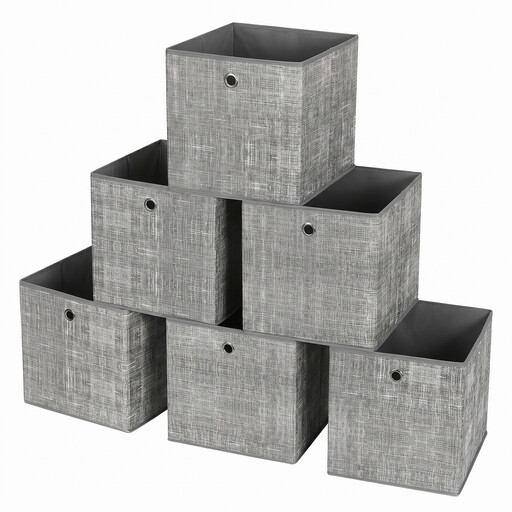
Why this choice suits this profile: This set of six 30 × 30 × 30 cm boxes lets you start organising a bedroom, living room or office without juggling multiple sizes. They're designed for compartments at least 30.5 cm wide.
The cardboard base and stated static load of 5 kg per box offer more concrete benchmarks than a simple storage promise.
A set of six boxes, grommet handles, a foldable structure and dimensions suited to shelving units.

Why this choice suits this profile: This set includes five 1,040 ml containers and five 370 ml containers in borosilicate glass. Perfect for preparing both family-sized portions and meals to take to the office.
The two capacities are clearly separated and the clip lids make portion organisation easy.
Borosilicate glass, ten pieces and sealed lids, according to the product description.
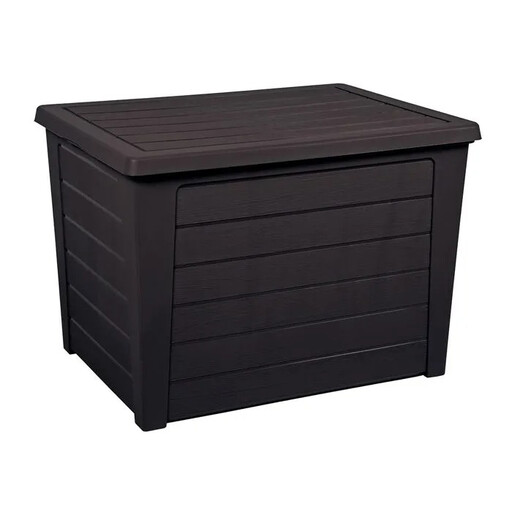
Why this choice suits this profile: With its 160 litres and dimensions of 72.5 × 54.5 × 51.5 cm, this chest is aimed at families who need to store cushions, toys or tools in a garage, on a patio or in the garden.
The product sheet states a weather-resistant, waterproof and UV-protected design. However, place the chest on a stable surface and follow the usage precautions.
A 160-litre capacity, reportedly manufactured in France and made from recyclable materials according to the product sheet.
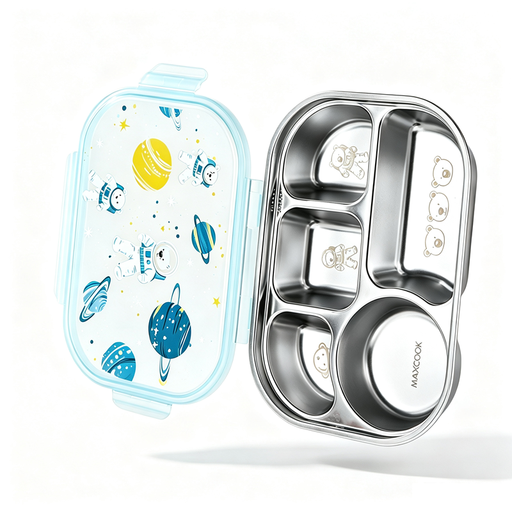
Why this choice suits this profile: Its five compartments are ideal for busy professionals, families and picnic lovers who want to keep different foods separate during transport.
The product sheet clearly states that this model is not suitable for microwaves or ovens and recommends hand washing. No risk of choosing the wrong programme or appliance.
316L stainless steel, four locking loops and well-separated compartments.
We've put together a comprehensive, real-time updated selection of products that meet these demanding criteria and European safety standards.
A compartmentalised lunch box is ideal for keeping your side dish, main course and toppings separate. Check the closure system, dimensions and care instructions. At the office, borosilicate glass makes it easy to see the contents, while a stainless steel model should stay away from the microwave.
Respect the stated maximum load and avoid placing a fabric box in a damp area. Let shoe boxes air out before storing wet shoes inside. For an outdoor chest, clean the surfaces regularly with a soft cloth and avoid abrasive products. Place heavy items at the bottom and keep frequently used items in an easily accessible box.
A PP camping box can carry accessories or certain pre-packaged foods. However, it may not necessarily replace a container designed for direct food contact. Before placing unpackaged food inside, check the product sheet, usage pictograms and the manufacturer's recommendations.