
Livraison le jour même ou le lendemain

Qualité garantie

Débloquez vos offres de bienvenue: Livraison GRATUITE | Jusqu'à -80 % | 30 jours d'essai gratuits à JoyPlus
Téléchargez l'application
A storage unit can transform a cluttered hallway, a poorly organised bathroom or a bedroom lacking built-in wardrobes. But some features that are presented as essential may not actually suit your needs. So before you place an order, be sure to check the dimensions, materials, weight capacity and assembly requirements.
A tall unit or one with lots of compartments isn't necessarily right for your home. A storage cabinet that's 173 cm high may offer plenty of volume, but its depth and placement still need to allow for walkways, skirting boards and door openings.
In a narrow corridor, a shallow shoe cabinet will often be more practical than a bulkier model. Always measure the available width, depth and height, and don't forget to leave enough space for drawers and doors to open.
A unit loaded with books, cleaning products or shoes puts a lot of strain on its structure. Tall models and chests of drawers must be placed on a level floor and, where the manufacturer provides for it, secured to the wall using an anti-tip device.
This precaution is especially important in a home with young children. Also stick to the maximum weight limit and put the heaviest items in the lower compartments.
A white, grey or wood-effect finish will blend easily into most interiors, but looks alone aren't enough to judge a piece of furniture's longevity. Check the main material, the quality of the fittings, the design of the legs and the moisture resistance if you're looking for a bathroom storage unit.
In a damp room, avoid letting water build up on the panels and keep the unit away from direct splashes.
To choose a storage unit for your home, start by measuring the available space precisely:
A specification sheet showing dimensions in centimetres makes it easier to compare different models.
Adjustable shelves let you adapt the height of compartments to store bottles, boxes, ring binders or high-top shoes. Drawers are particularly handy for small items, while doors offer extra protection from dust.
In a hallway, also check how many pairs the shoe cabinet can hold and whether it has a top surface. A shoe bench adds a useful seat, but remember to check the maximum weight and the overall stability.
Particle board, metal, plastic and polypropylene each suit different uses. Polypropylene works well in a utility space that's easy to clean. Particle board combined with a metal frame gives a warmer look, but requires careful assembly.
Always check:
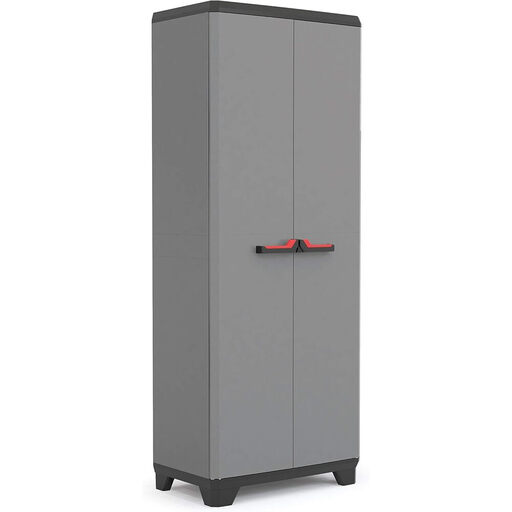
Why this suits this profile: Its vertical design works well in a home office, kitchen or utility room that lacks floor-level storage.
The spec lists four compartments, one adjustable shelf and a maximum load of 45 kg, making it easy to distribute items.
Two doors, a padlock included, 173 cm height and a polypropylene structure.
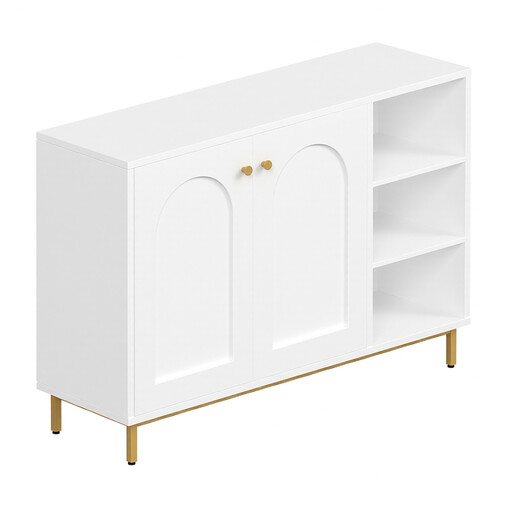
Why this suits this profile: This low unit combines closed storage, open shelves and a white-and-gold finish for a well-organised bathroom.
Its three levels of adjustable shelves make it easy to adapt the space for bottles and boxes of different sizes.
Dimensions 35.5 × 100.5 × 75.5 cm, raised base of 12.5 cm and anti-tip device included.
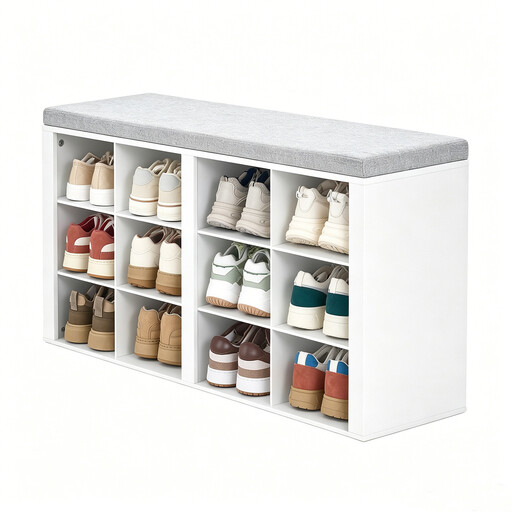
Why this suits this profile: This shoe bench is ideal for families who want somewhere to sit in the hallway while storing several types of footwear.
The adjustable shelves can accommodate trainers, boots or heels without forcing a fixed organisation.
Dimensions 30.5 × 104.5 × 49.5 cm, removable cushions and a stated load capacity of 150 kg.
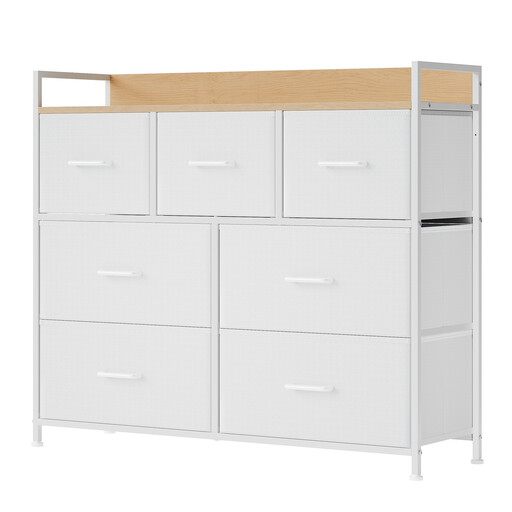
Why this suits this profile: Its separate drawers let you organise clothes, accessories, linen and everyday items in a bedroom or living room.
The adjustable feet and anti-tip kit improve stability, provided the wall fixing is done correctly.
Seven drawers, stated static load of 71 kg and a top surface supporting up to 50 kg.
We've put together a comprehensive, real-time selection of products that meet these demanding criteria and European safety standards.
First assemble the unit on a level floor, then find a solid anchor point in the wall. Use wall plugs suitable for the surface — concrete, brick or plasterboard — and follow the instructions provided. Check the fixing after installation, and again whenever the unit has been moved.
It depends on the material, the weight it carries, the humidity and the quality of assembly. Avoid exceeding the stated limits, distribute the weight evenly and tighten the fittings regularly. In a bathroom, wipe off splashes quickly and clean the unit with a slightly damp cloth.
Start by measuring the space you actually have available. A tall storage cabinet works well in utility areas, while a narrow hallway unit or a chest of drawers can make the most of a walkway. For shoes, a model with a seat or adjustable shelves lets you combine two functions without adding extra furniture.