
Livraison le jour même ou le lendemain

Qualité garantie

Débloquez vos offres de bienvenue: Livraison GRATUITE | Jusqu'à -80 % | 30 jours d'essai gratuits à JoyPlus
Téléchargez l'application
A pristine kitchen, an organized garage, your week's meals prepped and ready… Our daily organization often relies on a seemingly simple accessory: the storage container. Yet, faced with an overwhelming selection, it's easy to make the wrong choice and buy disappointing products. Warping lids, questionable seals, plastic that cracks at the first thermal shock: these mishaps are unfortunately common.
As a product expert at Joybuy, my mission is to help you see things more clearly and find solutions that are both practical and durable. Let's review the pitfalls to avoid and the essential criteria for making the right choice, fully informed.
Before falling for a promotional set, it's best to know the deal-breakers that can turn a bargain into future trash.
To avoid these disappointments, here are the technical points to inspect closely. They determine the quality and suitability of a storage container for your needs.
The choice of material depends entirely on your primary use.
The seal of an airtight container depends on one duo: the lid and its gasket.
Think about your overall routine. Do you need to put a dish directly in the oven to brown the top? Do you need to stack your prepped meals in an already full freezer? Opting for a set of storage containers in different sizes but the same format is often the smartest solution for coherent organization and optimal space-saving.
Rather than an endless list, we have identified three typical user profiles and the most suitable solutions, based on our criteria for functionality and durability.

Why it's the right choice: This set is perfect for batch cooking enthusiasts. The two sizes (1040 ml and 370 ml) are ideal for separating main dishes and sides. The borosilicate glass goes from the oven to the microwave, simplifying the entire prep workflow.
Borosilicate glass withstands thermal shock, eliminating the risk of breakage. The clip-lock system ensures a perfect seal—goodbye, leaks!
Its total versatility (oven, microwave, freezer) and a 10-piece set for flawless organization.
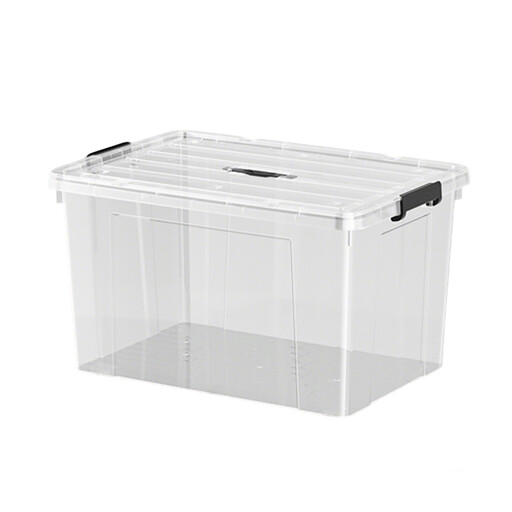
Why it's the right choice: Perfect for storing off-season clothes, tools, or archives. The large volume and transparency allow you to identify contents at a glance. Their design is specifically engineered for stable and secure stacking.
The thickened PP plastic (2.5 mm) and its reinforcing ribs prevent any risk of breakage. The flat lid and non-slip bottom design is the perfect solution to the problem of unstable stacking.
Large capacity, reinforced structure for heavy loads, and perfectly stable stacking to optimize vertical space.
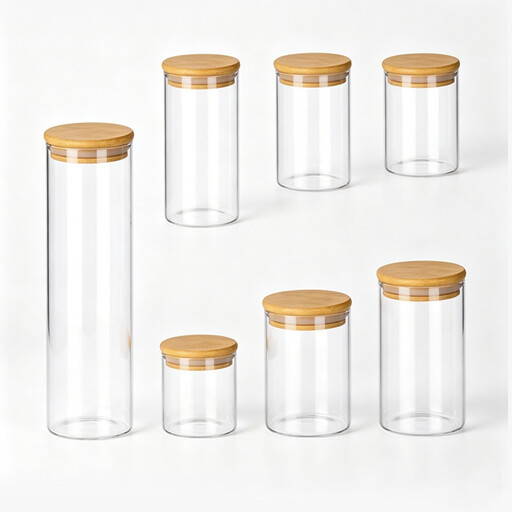
Why it's the right choice: For those who want a kitchen that is as beautiful as it is organized. This set of glass jars with their wood-look lids is ideal for showcasing pasta, cereal, or legumes, all while protecting them from moisture.
The airtight lid is designed for optimal preservation of dry goods—no more lost freshness. The elegant design and variety of sizes make them a true decorative piece, far more than just a simple container.
An elegant design, a healthy and hygienic glass material, and a set of 7 sizes to organize your entire pantry.
Discover our full selection of products that meet our strict selection criteria and current safety standards.
Standard glass (soda-lime glass) is what our drinking glasses are made of. It handles rapid temperature changes very poorly and can crack or even shatter if moved from the refrigerator to the oven. Borosilicate glass, enriched with boron trioxide, has far superior resistance to thermal shock. This is what allows it to go from the freezer to the oven, and then to the microwave, completely safely.
To ensure its longevity and perfect hygiene, it's best to remove it from the lid for cleaning. A simple hand wash with soapy water is sufficient. Rinse it well and, most importantly, let it air dry completely before putting it back. This will prevent moisture from getting trapped, which can lead to bad odors or mold.
Absolutely not; vigilance is key. Always look for the "food safe" logo (a glass and fork symbol) and the "BPA-free" (Bisphenol A) label. Polypropylene (PP), often identified by the number 5 inside a recycling triangle, is the most recommended plastic for food containers as it is known to be stable and safe.