
Livraison le jour même ou le lendemain

Qualité garantie

Débloquez vos offres de bienvenue: Livraison GRATUITE | Jusqu'à -80 % | 30 jours d'essai gratuits à JoyPlus
Téléchargez l'application
A spotless kitchen, a clutter-free office, a fridge organised down to the last millimetre... The secret often comes down to one detail: the right storage container. Yet, with an overwhelming number of options available, the pitfalls are numerous: lids that no longer seal, plastics that warp, and organisational promises that turn into a frustrating puzzle. As a product expert at Joybuy, my mission is to decode the market for you and guide you towards solutions that truly meet your needs.
Before you pull out your credit card, let's review the deal-breakers that can turn a bargain into a purchase you'll regret after just a few months.
To make the right choice, focus on a few technical specifications that make all the difference.
Each material has its strengths and weaknesses. The ideal choice will depend on your daily use.
The secret to a truly... airtight airtight container? A power duo: a high-performance locking system and a flawless seal.
A good home storage solution must adapt to your daily life.
bento box) or as a kitchen organiser for sorting small items like tea bags or spices.Here is our selection of standout products, designed for very specific needs.

Why we chose it: This set is designed for those who prepare their meals in advance. The borosilicate glass allows you to go directly from the refrigerator to the microwave (or oven, without the lid), with no risk of staining or retaining odours. The different sizes are suitable for main courses as well as snacks.
Glass is the definitive solution to the problem of plastics that warp and stain. It guarantees long-term hygiene and durability.
Thermal versatility (oven, microwave, freezer) and a non-porous material that preserves the flavour of your food.
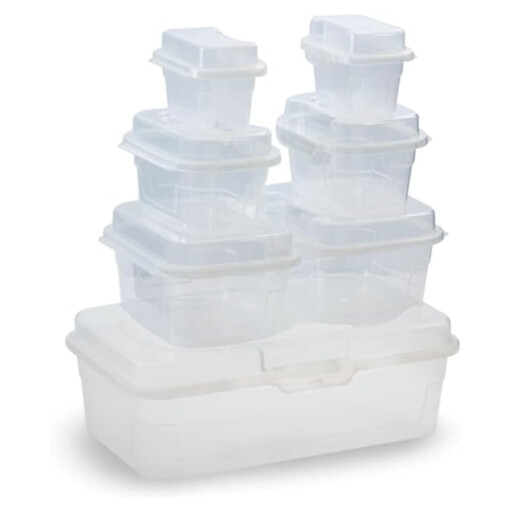
Why we chose it: This 7-piece set of assorted sizes is an excellent starter kit for organising the entire home. From the large container for dry goods in the kitchen to the smaller ones for screws or craft supplies, it covers multiple needs at a great value.
It overcomes the inefficient stacking pitfall with a design engineered for perfect nesting and stacking, maximising space-saving.
A highly versatile set of storage boxes with 7 different sizes, offering excellent value for organising everything at home.

Why we chose it: For those who prioritise durability and food safety, stainless steel is a top-tier choice. This set is perfect for transporting meals (bento), storing leftovers in the fridge, or keeping dry foods. The 316 steel is a high-quality grade, renowned for its superior corrosion resistance.
It completely eliminates the risks associated with plastic (warping, stains, odours, BPA). Its robustness protects it from impacts, unlike glass.
Unbreakable, lightweight, and hygienic. A durable solution for on-the-go or home use (excluding the microwave).
Explore our full selection of products that meet our quality charter and the strictest safety standards.
1. How do I remove stubborn odours and stains from a plastic container? A time-tested tip: make a paste with baking soda and a little water. Apply it, let it sit for several hours, then rinse. Another option: soak it overnight in a mixture of water and white vinegar. Guaranteed to work!
2. Can a container really go from the freezer to the microwave? Only certain containers, typically those made of borosilicate glass, can handle this. The golden rule: always check the manufacturer's instructions. Thermal shock (a sudden shift from very cold to very hot) can shatter lower-quality glass or warp plastic. And never forget: always remove the lid before putting a container in the microwave.
3. What is the difference between PP and PET plastic? To put it simply: polypropylene (PP) is the workhorse. Often opaque or translucent, it handles heat well, making it generally safe for the dishwasher and microwave (check the packaging to be sure!). PET (polyethylene terephthalate) is the clear, aesthetic plastic (the kind used for water bottles). It's less comfortable with heat, so it should be reserved for cold storage (fridge) or dry goods (cupboards), but never for cooking or reheating.