
Livraison le jour même ou le lendemain

Qualité garantie

Débloquez vos offres de bienvenue: Livraison GRATUITE | Jusqu'à -80 % | 30 jours d'essai gratuits à JoyPlus
Téléchargez l'application
The dream of a pristine kitchen and delicious homemade meals can quickly turn into a nightmare because of one simple storage container? We all know the story: the lid that leaks in your bag, the plastic stained by tomato sauce on day one, or that chaotic cupboard where nothing stacks properly. It's frustrating, and in the long run, it's a waste of money.
I'm the Head of Product Recommendations at Joybuy, and my job is to do the groundwork for you. Let's skip the marketing jargon and get straight to the point. Here are the pitfalls to avoid and the criteria that truly matter, so you never make the wrong choice again.
Before you even start comparing models, you need to know how to spot the design flaws that turn a bargain buy into a useless gadget in the long run.
To make a smart purchase, focus on these three fundamental points.
The choice of material for your food container depends primarily on how you'll use it.
A truly airtight container is identified by its locking system. The holy grail? A removable silicone gasket (for easy cleaning) integrated into the lid, combined with four sturdy locking clips. This mechanism ensures uniform pressure around the entire rim, creating an infallible barrier against air and liquids. It's a non-negotiable feature for long-term food storage and accident-free transport.
Successful kitchen organisation comes down to optimising every square inch. Well-designed stackable containers have lids and bases that interlock perfectly. The best systems offer modular sizes (for example, two small containers that take up the same footprint as one large one), guaranteeing a pantry or fridge that is organised with military precision.
Here are a few models that meet specific needs, all vetted against our criteria for quality and practicality.
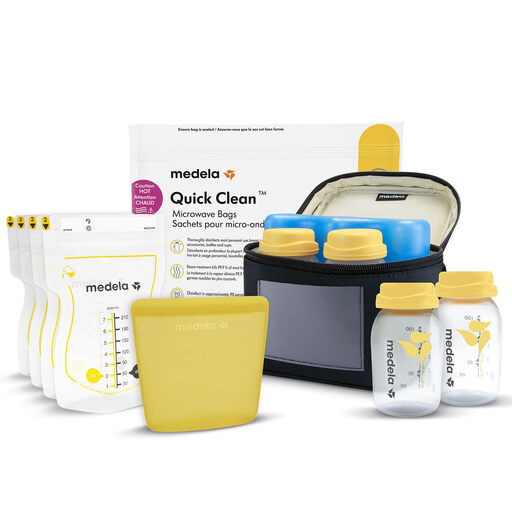
The ideal choice for this profile: This kit is the all-in-one solution for breast milk storage. It includes bottles, freezer bags, an insulated cooler bag, and even a microwave sterilisation bag. It's everything you need to radically simplify logistics for new parents.
Designed for such a precious liquid, a leak-proof seal is the absolute priority here. The bags and bottles are specifically engineered for zero leaks and impeccable hygiene, a critical point that generic containers often overlook.
A complete system that covers storage, transport, and sterilisation. The materials are guaranteed BPA-free and designed specifically for infant food contact.

The ideal choice for this profile: This insulated food jar is perfect for bringing a hot meal to the office or a fresh salad on the go. Its double-walled stainless steel construction maintains the temperature for hours, offering far more versatility than a simple lunch box.
Its screw-top lid with a silicone gasket guarantees a rock-solid seal, even when shaken in a backpack. The 316 food-grade stainless steel won't retain odours or stains, even after holding a curry.
Maintains temperature (hot or cold) for several hours. Robust and hygienic stainless steel construction, delivered with its own insulated carrying case.
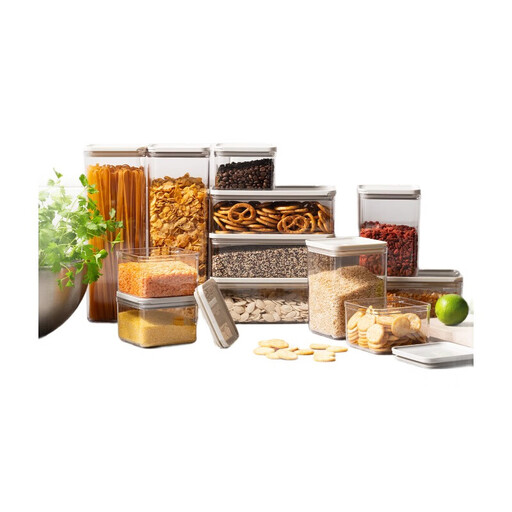
The ideal choice for this profile: This set of 12 storage jars is the turnkey solution for transforming a cluttered cupboard into a harmonious and functional space. The different sizes adapt to every need, from spices to pasta.
The Scandinavian design isn't just for style: the lids and bases are designed to nest perfectly, ensuring stable and secure stacking. No more Tower of Pisa in the cupboard!
A complete and aesthetically pleasing 12-piece set for instant kitchen organisation. The airtight lids are ideal for preserving the freshness of dry goods (flour, sugar, coffee...).
We have curated a complete selection of products that meet our selection criteria and food safety standards.
Glass is an inert material: it doesn't react with food, doesn't stain, and retains no odours. It can withstand very high temperatures, making it perfect for oven cooking. BPA-free plastic, on the other hand, is lighter, cheaper, and less fragile, which is a plus for transport. For daily, on-the-go use, a high-quality plastic is often the best compromise. For cooking or long-term storage (especially for acidic or fatty foods), glass remains the gold standard.
For stains (like tomato sauce), make a paste with baking soda and a little water. Apply it to the stained area, let it sit for several hours, then wash as usual. To combat persistent odours, fill the container with a 50/50 mixture of water and white vinegar. Let it sit overnight before rinsing thoroughly.
Absolutely not. You should never put any metal object, including a stainless steel container, in a microwave oven. You risk causing sparks, damaging your appliance, or even starting a fire. To reheat your meal, simply transfer it to a microwave-safe dish: a glass bowl, a ceramic plate, or a suitable plastic container.