
Livraison le jour même ou le lendemain

Qualité garantie

Débloquez vos offres de bienvenue: Livraison GRATUITE | Jusqu'à -80 % | 30 jours d'essai gratuits à JoyPlus
Téléchargez l'application
Whether it's for storing dinner leftovers, taking lunch to the office, or simply organising your cupboards, a good storage container is a life-changer. The problem? The market is flooded with products that make tempting promises but often fall short. Leaky lids, plastic that warps after one trip to the microwave, precarious stacking… these mishaps are all too common. To avoid buyer's remorse, here are the pitfalls to avoid and the criteria to look for when investing in a truly practical and durable solution.
Trusting the "?airtight?" label without inspecting the seal: Many containers claim to be airtight, but few are truly leak-proof. A runny sauce or soup can spell disaster if the locking system is poorly designed. The culprit is almost always the same: the silicone seal. If it's too thin, ill-fitting, or worse, non-removable, it loses all effectiveness and becomes a breeding ground for bacteria that's impossible to clean.
Overlooking the quality of the plastic: A plastic container with a lid labelled "microwave-safe" can turn into a nightmare: stubborn tomato sauce stains, warping from the heat, lingering odours… Low-quality plastics degrade quickly, rendering the container fit for the bin.
Underestimating the importance of stable stacking: A stackable container is a huge plus for optimising kitchen storage or fridge space. But if the containers slide off each other at the slightest movement, the advantage turns into a real headache. A good stacking system is simple: flat lids and bases that nest perfectly with no wiggle room.
To find the perfect container, whether you're looking for a food storage container or a desk organizer, focus on these essential technical points.
The choice of material determines your container's use, durability, and maintenance. Here's an overview.
A good lid must provide a foolproof seal to maintain freshness and say goodbye to leaks. Systems with four-sided locking clips, paired with a removable silicone seal, are usually the winning combination. They distribute pressure evenly and allow for impeccable cleaning of the seal, which prevents mould growth.
For storage that breathes efficiency, opt for a set of storage containers with complementary shapes and sizes. Square or rectangular formats are the champions of space optimisation in cupboards and the fridge, far more so than round containers. Also, check that the design allows for stable stacking, both empty and full, to make use of every square inch.
Rather than searching for a one-size-fits-all container (which doesn't exist), it's better to choose a model designed for a specific use. Here are our recommendations for different profiles.
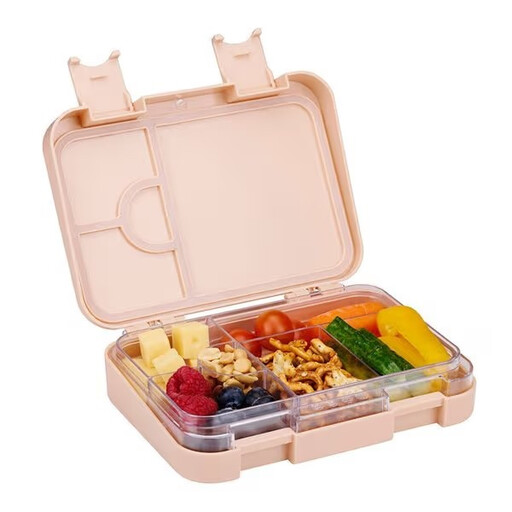
Why we recommend it: Perfect for meal prep enthusiasts who like every ingredient to stay in its place. Its design facilitates portion control and allows you to pack a complete, well-organised meal.
Its fixed compartments prevent flavours and textures from mixing. No more main course making the salad soggy! It's the perfect answer to the chaos of single-compartment containers where everything ends up as mush.
Precise meal organisation thanks to its 6 compartments. Dishwasher-safe for hassle-free cleaning.

Why we recommend it: Its large capacity and borosilicate glass construction make it the ultimate all-in-one dish: store, freeze, reheat, and even bake Sunday casseroles.
Unlike plastic containers that warp or stain, borosilicate glass can withstand temperatures up to 400 °C (without the lid) and doesn't retain odours or colours. A guarantee of durability and impeccable hygiene.
Goes from the freezer to the oven (without the lid), and then straight to the table. Its 4-clip locking system with a removable seal ensures a perfect seal.

Why we recommend it: This set is designed for general storage: clothes, toys, papers, or tools. Transparent and spacious, these boxes are the secret weapon for decluttering and organising everything.
No more dealing with unstable stacking. Thanks to their flat lids and interlocking bases, these boxes stack securely, allowing you to utilise vertical space without fearing a collapse.
An ultra-stable stackable design thanks to its reinforced structure. The clear plastic allows you to identify the contents at a glance.
Explore our full selection of products that meet our quality criteria and current safety standards.
For plastic containers, a quick wash after each use is the best prevention. If an odour lingers, fill the container with a mixture of warm water and white vinegar, or sprinkle it with baking soda. Let it sit for a few hours before rinsing. Don't forget to remove the silicone seal to clean it separately and prevent residue from getting trapped.
The "BPA-free" label guarantees that the product does not contain bisphenol A, an endocrine disruptor whose use in food containers is highly regulated by the European Union. Opting for food-grade plastics like polypropylene (PP, #5) or high-density polyethylene (HDPE, #2) that carry this label is an essential precaution for food contact.
Yes, most borosilicate glass containers are freezer-safe. However, one precaution is essential: always leave 2 to 3 cm of empty space at the top of the container. As liquids freeze, they expand and could shatter the glass if the container is filled to the brim. Also, be sure to avoid thermal shock: never move a container directly from the freezer to a preheated oven.