
Livraison le jour même ou le lendemain

Qualité garantie

Débloquez vos offres de bienvenue: Livraison GRATUITE | Jusqu'à -80 % | 30 jours d'essai gratuits à JoyPlus
Téléchargez l'application
A pristine kitchen, a finally organised cupboard, food that genuinely stays fresh longer... Choosing the right storage container? It seems like child's play. In reality, the market is saturated with marketing promises that often lead to disappointment. A lid that leaks in your bag, plastic that warps after the first microwave use, supposedly "stackable" boxes that create a leaning tower... These scenarios are probably all too familiar.
As the Head of Product Recommendations at Joybuy, my role is to help you see things more clearly. Let's forget the marketing jargon. Let's focus on what truly matters for a smart and sustainable purchase. This guide breaks down the common pitfalls to avoid and the technical points to check, so you can finally find the perfect storage container for your needs.
Before you pull out your credit card, learn to spot the seemingly good ideas that are actually marketing traps.
To avoid being misled again, here are the three technical points to inspect closely.
The choice of material determines the container's use, durability, and maintenance.
The entire effectiveness of a food storage container depends on its lid. Prioritise a 4-clip locking system combined with a removable silicone seal. This combination is the only one that ensures uniform pressure around the entire rim, creating a foolproof barrier against air and liquids. The seal should be removable to allow for deep cleaning and prevent mould growth.
A good storage system is, above all, one that saves you space. For truly effective cupboard storage, opt for ranges where different sizes share common dimensions (width or length). This allows you to arrange them like Tetris blocks. Also, check that the lids have rims or grooves that lock onto the base of other containers for a perfectly stable stack.
Here is our selection of products that tick all the boxes for specific needs.

Why we chose it: Perfect for preparing, cooking, storing, and reheating a single portion. Its borosilicate glass body allows it to go safely from the fridge to the oven, radically simplifying weekly *meal prep*.
Its 4-clip locking system with a silicone seal ensures a leak-proof experience. No more spills! Its glass body withstands everything: it won't warp or stain from tomato sauce, unlike low-quality plastics.
Absolute versatility: it's oven-safe (without the lid), microwave-safe, freezer-safe, and dishwasher-safe. One container for everything, from prep to serving.
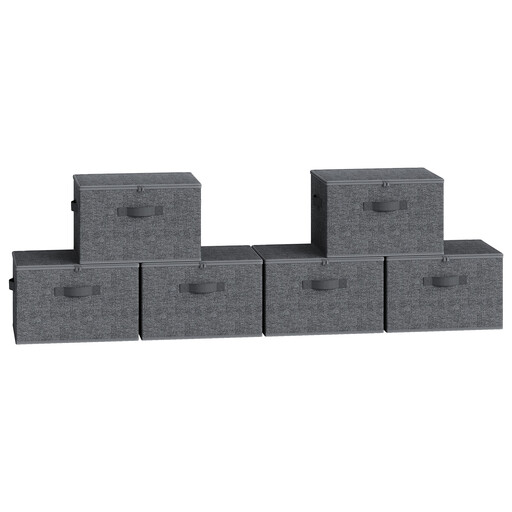
Why we chose it: Ideal for organising clothes, linens, or accessories. Its handles make it easy to grab, and its foldable design allows for flat storage when not in use.
Unlike open baskets, these boxes feature zipped lids that protect contents from dust. Their semi-rigid structure is designed for textiles, offering a storage solution that is both stable and aesthetically pleasing for shelves.
Maximum optimisation: a generous 30L capacity per box and a foldable design for optimal space-saving when empty.
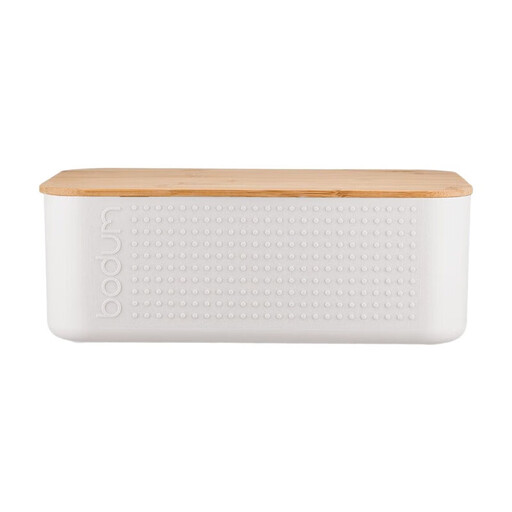
Why we chose it: It combines effective preservation with a clean, Scandinavian aesthetic. This is a beautiful object to display proudly on the countertop, not just a container to hide in a cupboard.
This product avoids the trap of purely functional and often unsightly storage. It provides a specialised, high-quality solution that fully contributes to the kitchen's decor, using sustainable materials (BPA-free plastic and bamboo).
Smart 2-in-1 design: its durable bamboo lid doubles as a cutting board. Ingenious and incredibly practical.
We have curated a complete selection of products that meet our demanding selection criteria and current safety standards.
Look for the microwave-safe icon (often wavy lines) or the #5 (PP) recycling code, usually engraved on the bottom of the container. Always remember to remove the lid or at least open it before heating: this allows steam to escape and prevents any risk of pressure build-up.
With proper care, a silicone seal can last for years. To maximise its lifespan, remove it regularly and wash it by hand to dislodge any residue. Avoid high-temperature dishwasher cycles, which could warp it. If it cracks or loses its elasticity, it's time to replace it.
For long-term storage and preserving flavour, glass is often the best choice. It's an inert material: it doesn't react with food, won't stain, and doesn't absorb odours. Its transparency is also a plus for identifying contents at a glance. However, for transport, high-quality plastic or stainless steel remain lighter and less fragile alternatives.