
Livraison le jour même ou le lendemain

Qualité garantie

Débloquez vos offres de bienvenue: Livraison GRATUITE | Jusqu'à -80 % | 30 jours d'essai gratuits à JoyPlus
Téléchargez l'application
A spotless kitchen, food that stays fresh longer, and a pantry where you can find anything at a glance. The promise of a good storage container is simple, but the reality is often more complex. Between lids that warp in the dishwasher, materials that stain permanently, and seals that are airtight in name only, disappointment is all too common.
My role, as Head of Product Recommendations at Joybuy, is to help you cut through the noise and find solutions that are as practical as they are durable. Let's forget the marketing jargon and focus on what really matters. We'll break down the pitfalls to avoid and the essential criteria to check to make the right choice.
Before you choose, it's helpful to know the design flaws that can render a storage container useless after just a few months.
To avoid these setbacks, you just need to keep an eye on a few key points. Great kitchen organisation starts with the right container.
The choice of material has a direct impact on the use, durability, and maintenance of your food storage container.
A container's effectiveness depends on its lid. A good locking system must guarantee a perfect seal, especially for liquids. Four-sided locking clips with a removable silicone seal are often the most reliable. The seal ensures it's leak-proof, and the fact that it's removable allows for deep cleaning, which is essential to prevent mould growth.
For a well-organised pantry or refrigerator, the stackability of containers is fundamental. A stackable box with a lid that is flat and has stable edges allows you to maximise vertical space. Also consider sets of storage boxes in different sizes. They often nest inside one another for significant space saving when stored away. An open storage bin can be used to group items or cleaning products.
There's a solution for every need. Here are a few options we recommend, designed for specific uses.

Why we love it: This set is designed for those who prep their meals for the week. The borosilicate glass allows you to reheat dishes directly in the microwave or oven (without the lid), and the two available sizes are practical for separating a main course from a side.
The glass won't warp, stain, or retain odours. The clip-lock system ensures a perfect seal for transport.
Total versatility: freezer, oven (without lid), microwave, and dishwasher safe. One container to store, transport, reheat, and serve.
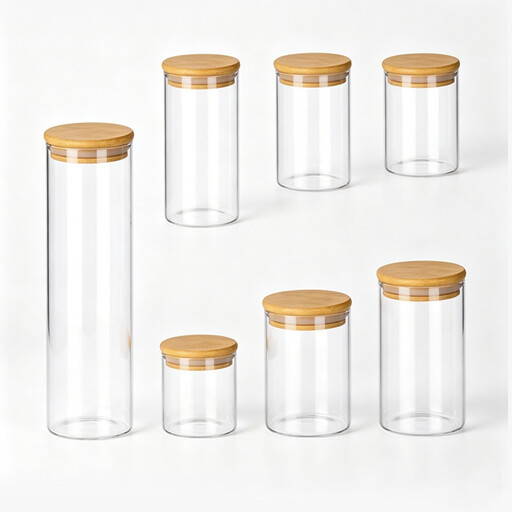
Why we love it: For those who buy in bulk (pasta, rice, lentils, cereal), this set of glass jars is both beautiful and functional. The different sizes adapt to all needs, and their transparency lets you see stock levels at a glance.
Perfect for stationary storage, these jars protect dry goods from moisture and pests with a simple, effective lid, without the complexity of a seal designed for transport.
The elegant design with a wood-effect lid adds a decorative touch to the kitchen, turning storage into a style element.
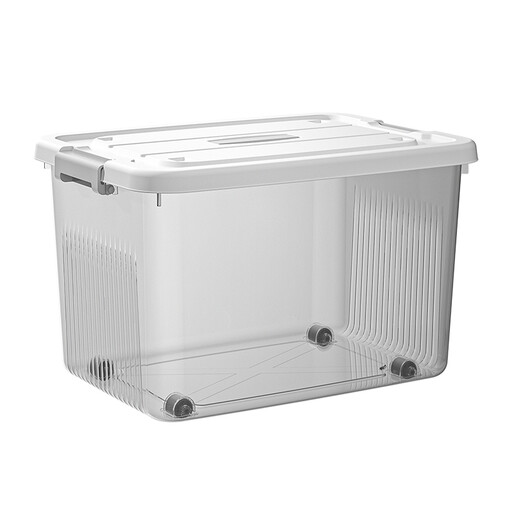
Why we love it: For storing off-season clothes, kids' toys, or tools in the garage, you need volume and durability. This set of large, reinforced PP plastic bins is the perfect solution. They are transparent, stackable, and feature integrated handles.
The PP plastic is thickened (2.5 mm) and the structure is reinforced with ribs. This prevents the walls from deforming under weight and stops the plastic from becoming brittle over time.
An excellent volume-to-price ratio. The stackable design with a non-slip base allows you to create a truly stable and secure storage tower.
We've put together a complete selection of products that meet our quality criteria and current safety standards.
For stubborn stains like tomato sauce, fill the container with a mixture of hot water and baking soda (or white vinegar). Let it sit for several hours, or even overnight, before washing as usual. Another trick is to expose the clean, empty container to sunlight for a few hours; the UV rays can help fade the stains.
It depends on the material. A borosilicate glass container can usually handle this thermal shock, but it's always safer to let the dish return to room temperature for a few minutes. For a plastic storage box, this is strongly discouraged. The sudden temperature change can weaken it, cause it to crack, or release unwanted compounds. Always remove the lid before microwaving any container.
Although the two terms are often used interchangeably, there is an important nuance. An airtight container prevents air from getting in, which is ideal for keeping dry foods fresh (biscuits, cereal). A leak-proof container prevents liquids from escaping, which is essential for transporting soup or a saucy dish. A good on-the-go food container needs to be both.