
Livraison le jour même ou le lendemain

Qualité garantie

Débloquez vos offres de bienvenue: Livraison GRATUITE | Jusqu'à -80 % | 30 jours d'essai gratuits à JoyPlus
Téléchargez l'application
A storage box may seem simple to choose… until the lid does not close properly, the size does not fit in the cupboard or you can no longer identify what is inside. To avoid impractical purchases, start by distinguishing between food storage, household organisation and long-term storage needs.
Here are the main pitfalls to avoid, the criteria to consider and a selection of boxes suited to different uses.
A clip-on lid is not necessarily airtight. For soups, sauces, leftovers or moist foods, check for a silicone seal and a proper locking system. A closure that is too loose can allow odours to escape or cause leaks in the fridge.
For dry foods, a box with a well-fitting lid may be sufficient. For liquids, it is better to choose airtight containers with a multi-point closure.
A 2 or 4-litre box may seem appealing, but its external dimensions are often more important than its stated capacity. Measure the depth of the shelves, the height between levels and the space available in the fridge.
Stackable boxes are only useful if their shape allows them to be stacked securely. A domed lid, protruding handles or incompatible sizes can reduce the space that is actually usable.
A transparent box makes it easy to identify the contents at a glance, but it is not suitable for every situation. For clothes, toys or seasonal items, an opaque model can protect the contents from light and create a more uniform look.
Fabric or felt baskets are suitable for lightweight items. However, they are no substitute for a lidded box in a cellar, garage or any other area exposed to dust.
For boxes designed for food storage, check the manufacturer's information regarding food contact, the dishwasher, freezer and microwave use. Polypropylene, often marked « PP », is lightweight and impact-resistant. Borosilicate glass is heavier, but generally does not retain odours and provides good visibility of the contents.
Take care with combined uses: a container suitable for the freezer is not necessarily designed for a conventional oven. In the microwave, the lid will generally need to be removed or left ajar to allow steam to escape.
When transporting a meal or storing a liquid preparation, look for:
The LocknLock food storage boxes featured in this selection use a four-sided locking mechanism and a silicone seal. This is a combination well suited to everyday food storage, provided that the usage instructions are followed.
For boxes intended for household use, check the thickness of the plastic, the presence of reinforcements, the strength of the handles and the maximum permitted load. Large plastic models are practical for duvets, clothes, toys or accessories, but they should not be filled beyond their limits.
Care depends on the model. Some baskets can only be cleaned with a damp cloth, while certain food storage boxes are dishwasher-safe. When the seal can be removed, it is easier to clean and helps prevent residue from building up.
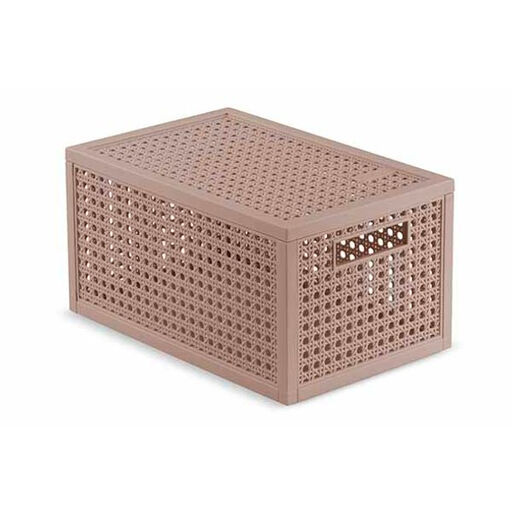
Why this choice suits this type of user : Measuring 31.3 × 19.7 × 6.5 cm, this lightweight basket is ideal for small items, accessories, magazines or laundry on a shelf or in a cube unit.
Its clearly stated size prevents you from overestimating its capacity. Its breathable design is better suited to dry items than to storing liquids or food.
Lightweight construction, recycled material stated by the manufacturer and easy cleaning with a damp cloth.

Why this choice suits this type of user : This 2-litre transparent borosilicate glass container is suitable for meal preparation, family leftovers and storage in both the fridge and freezer.
The material and permitted uses are clearly explained. However, the lid must be removed in the microwave and significant thermal shock should be avoided.
2-litre capacity, removable seal and stated compatibility with the dishwasher, freezer and microwave.
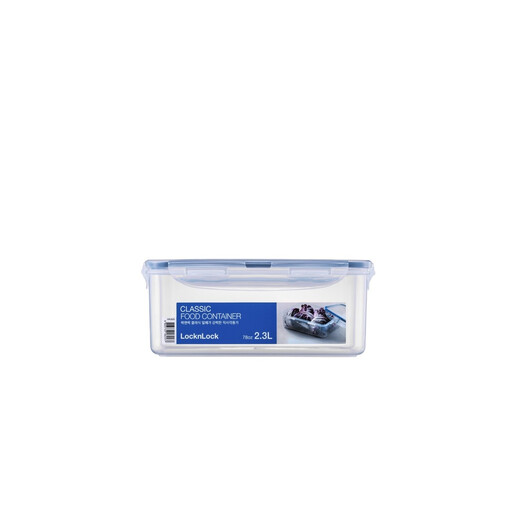
Why this choice suits this type of user : This large LocknLock container is suitable for families, meal preparation and storing large quantities in the fridge or freezer.
Its large capacity comes with precise dimensions and a four-sided locking system, so you are not relying on a simple promise of leak-proof performance.
2.3-litre capacity, transparent body, dishwasher-safe design and stated compatibility with the fridge, freezer and microwave.

Why this choice suits this type of user : Measuring 50.4 × 37.6 × 28.8 cm, these boxes are designed for clothes, toys, baby items or equipment in a wardrobe, cellar or boot.
The reinforcements, non-slip base and integrated handles address common shortcomings of bulky boxes, which can warp or slide when stacked.
Stated 2.5 mm thickness, press-fit lid, integrated handles and stackable design.
Start by sorting items according to how often they are used. Everyday items should remain easy to access. Decorations, seasonal clothes and leisure equipment can be stored higher up.
In the kitchen, choose matching sizes to make stacking easier. Small boxes, such as the Bisfree Modular Plus 450 ml, are ideal for individual portions and leftovers. Bodum 2-litre boxes can hold pasta, cereals or dry foods, but always check the instructions for the specific model before putting hot food inside.
For laundry, toys and accessories, the Curver Style baskets in 6, 18 or 30 litres are easy to pick up thanks to their handles. Clean them with a damp cloth and never use them as a seat or as a support for a child.
PP plastic is lightweight, durable and practical for everyday use. Borosilicate glass is better suited to those who prioritise visibility and a surface that retains few odours. In both cases, check the instructions regarding microwave, freezer and dishwasher use.
Clean the seal regularly, remove it when the model allows this and let every part dry completely before closing the box. Avoid abrasive sponges, unauthorised temperatures and using a container that is cracked or misshapen.
No. Compare the height, depth and shape of the boxes with those of the furniture. A transparent box with a lid can improve visibility, but a model that is too tall or too heavy will remain difficult to handle, even if it is stackable.