
Livraison le jour même ou le lendemain

Qualité garantie

Débloquez vos offres de bienvenue: Livraison GRATUITE | Jusqu'à -80 % | 30 jours d'essai gratuits à JoyPlus
Téléchargez l'application
Is clutter taking over, and are you dreaming of a miracle solution to end it? The storage box seems like the obvious answer. Yet, impulse buys often end in disappointment: lids that no longer snap shut, plastic that cracks, or worse, boxes that collapse miserably when stacked.
As a product expert for Joybuy, my mission is to guide you through the jungle of options to make a truly informed choice. Let's forget the marketing jargon. Let's focus on what matters: what turns a simple plastic crate into a true ally for your daily organisation. Here's how to avoid the common pitfalls and choose the model that will truly meet your needs.
Before you check out, keep an eye out for these design flaws that turn a good deal into a future headache.
To ensure you make the right choice, carefully examine these three technical points. They are the guarantee of practicality and longevity for your future boxes.
The choice of plastic determines the box's durability and its potential uses.
A good stacking system is crucial for utilising vertical space. Ensure the lid has grooves or defined edges that lock perfectly into the base of the box above it. A non-slip base is a real plus for safety, especially if you're aiming for taller stacks.
A transparent storage box is a game-changer when it comes to identifying its contents. It's a precious time-saver for items you use often. However, be aware that for light-sensitive items (photos, certain textiles), an opaque box is still essential.
Rather than a random list, we've selected models that meet specific needs, strictly applying the quality criteria we've just discussed.
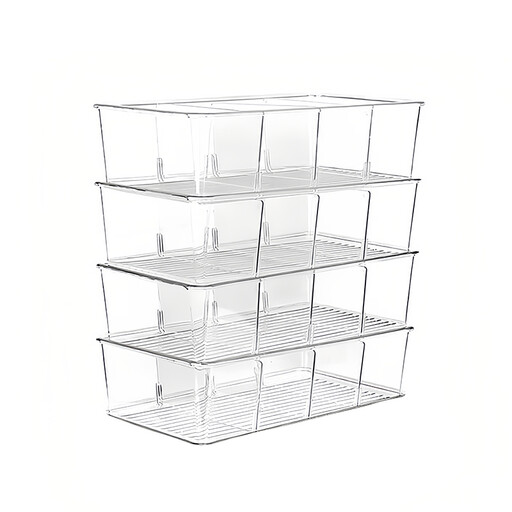
Why we love it: Ideal for taming the chaos of small items. This set is perfect as a desk organiser (pens, cables), for kitchen storage (tea bags, coffee pods), or for compartmentalising bathroom drawers.
Its PET material, both rigid and transparent, eliminates the risk of brittle plastic. It offers perfect visibility: no more emptying everything out to find what you're looking for.
Its modular and open design provides immediate access and highly visual organisation for small everyday accessories.

Why we love it: Perfect for major decluttering projects: seasonal clothing, kids' toys, archives, or DIY equipment. This large-volume set is designed to support heavy loads and optimise space in cupboards, the basement, or the attic.
This model tackles the problems of fragility and unstable stacking head-on. Its body made of 2.5mm-thick PP plastic, its reinforcing ribs, and its lids that lock together perfectly guarantee a stable and sturdy column.
Its reinforced structure and high load capacity allow for secure stacking to utilise every square inch.
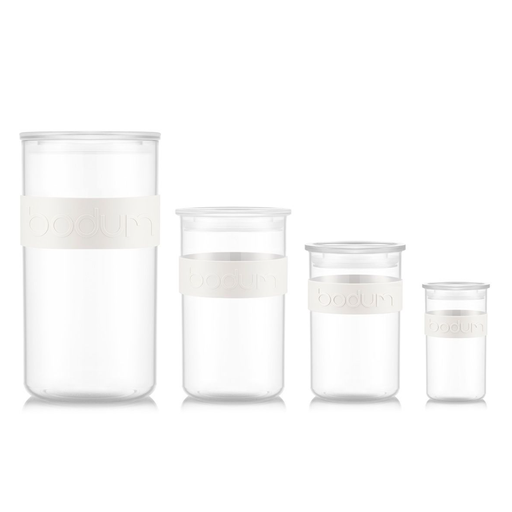
Why we love it: This set is the ultimate all-in-one solution for kitchen storage. With 12 containers in 4 different sizes, it's ideal for storing dry foods (pasta, rice, flour) while bringing a touch of visual harmony to cupboards and the pantry.
It bypasses the pitfall of unreliable lids with an airtight seal that preserves food freshness and prevents spills. Its BPA-free plastic is certified food-safe, a guarantee of safety and durability.
Its airtight sealing system and the versatility of a 12-piece set, perfect for outfitting the entire kitchen.
Discover our full selection of products that meet our strict standards for quality and safety.
Start by measuring the destination space (shelf, cupboard, under the bed). Then, estimate the volume of the items you need to store. A tip: it's often better to opt for several medium-sized boxes rather than one very large one, which can quickly become too heavy and impossible to handle.
Absolutely not. For a food container, make sure it is labelled "food-safe" and, ideally, "BPA-free" (Bisphenol A). This information is mandatory and must be on the packaging or product sheet. Never use a standard storage box to store food.
Avoid leaving them in direct sunlight: UV rays will eventually weaken the plastic. A simple wipe with a damp cloth and mild detergent is enough to clean them. Finally, don't overload them, especially if you stack them, or you risk them warping.