
Livraison le jour même ou le lendemain

Qualité garantie

Débloquez vos offres de bienvenue: Livraison GRATUITE | Jusqu'à -80 % | 30 jours d'essai gratuits à JoyPlus
Téléchargez l'application
A well-organised home isn’t just about how many storage boxes you own. A container that’s the wrong size, too flimsy or awkward to clean can quickly become extra clutter. Before you start comparing baskets, cubes and lidded boxes, it’s worth working out which features really matter.
A large box isn’t necessarily right for your shelf or cupboard. Handles, rims and the lid can eat into the interior space. So measure the depth, width and height you have available, leaving a few millimetres of clearance so you can easily pull the container out.
Fabric storage boxes are ideal for clothes, lightweight linen and accessories. They’re often foldable and easy to move, but they can’t replace a rigid box for heavy items or damp rooms.
Plastic, on the other hand, can be wiped clean in a flash and naturally belongs in a garage, cellar or on a balcony. However, it can look less elegant in a living room. Covered cardboard and woven paper offer a warmer finish, but must be kept away from moisture.
A stackable box needs to stay stable when full. Check the maximum load stated by the manufacturer, look for a reinforced base and make sure the lid and base are compatible. A box designed for toys or documents shouldn’t be used as a step stool or seat, even if it feels sturdy enough.
For a cupboard organiser or a shelving unit with cubbyholes, compare the product’s external dimensions with the compartment’s measurements. Storage cubes of 30 × 30 × 30 cm are generally designed for furniture with similar-sized cubbies, but you should still check the available depth.
For seasonal clothes, duvets and bulky accessories, large lidded boxes are the most practical. For jewellery, stationery or small tools, go for a compartmentalised model that stops everything getting mixed up.
Storage boxes with handles are especially useful when their contents need to move from room to room or be placed on a high shelf. A clip-on lid offers better protection against dust, while an open basket gives you instant access.
To make the most of your space, choose a stable base and a flat lid. A non-slip base can also make a real difference when boxes are stacked. Transparent models make it easy to see what’s inside, particularly for clothes, seasonal decorations or office supplies.
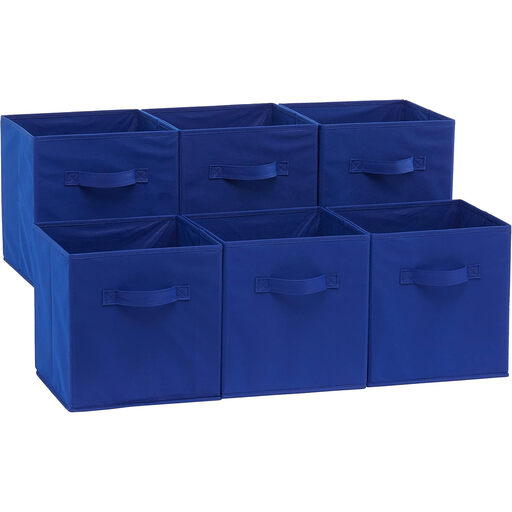
Why this choice suits this profile: This pack of six fabric boxes makes it easy to sort clothes, accessories and small items in a cupboard or bookcase with cubbyholes.
The individual 8.5-litre size limits mixing between different categories, while the handles stop you pulling directly on the fabric.
Six lightweight boxes, individual dimensions of 26.7 × 26.7 × 27.9 cm and easy cleaning with a damp cloth.
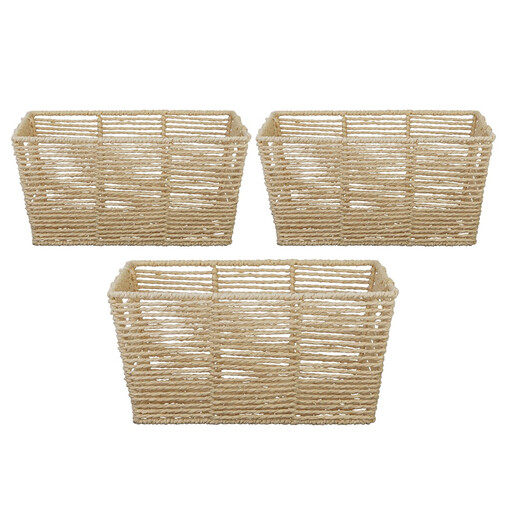
Why this choice suits this profile: Their woven finish blends easily into a living room, office or bedroom where storage also needs to look good.
The metal frame provides better support than a simple soft basket, while dry cleaning helps preserve the woven paper.
Metal frame, woven paper construction and versatile use for decorative items as well as personal belongings.

Why this choice suits this profile: This size is ideal for the garage, pantry, balcony or storing seasonal clothes, where stacking and quick identification are top priorities.
The 2.5 mm thick PP body stated by the manufacturer, reinforced ribs and non-slip base help reduce the risk of warping and slipping.
Clip-on lid, integrated handles, stackable design and dimensions of 50.4 × 37.6 × 28.8 cm per box.
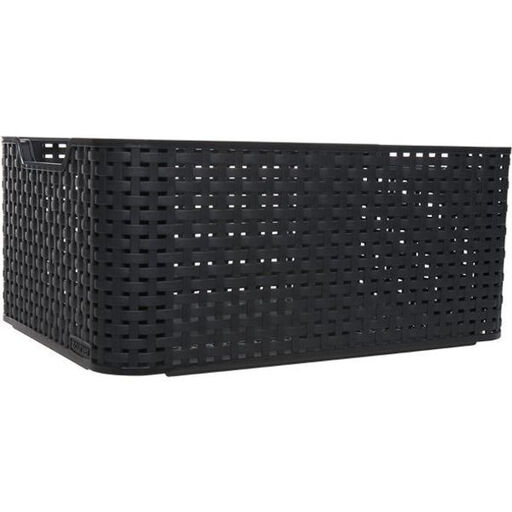
Why this choice suits this profile: This open basket with handles easily holds toys, throws, books or accessories used every day in a living room or bedroom.
The open top means you don’t have to fiddle with a lid every time you use it, and the plastic can be simply wiped clean with a damp cloth.
30-litre capacity, integrated handles, rattan-effect finish and a stated maximum load of 8 kg evenly distributed.
We’ve put together a full selection, updated in real time, of products that meet these criteria and European safety standards.
For clean, seasonal clothes, foldable fabric boxes and plastic models with lids are particularly practical. Fabric works well on interior shelves, while plastic offers better protection against dust. When it’s transparent, it also lets you spot the contents at a glance.
Respect the maximum load stated, put heavy items in the bottom boxes and avoid stacking them too high. A flat surface, a rigid lid and a non-slip base all improve stability. Never place a heavy object on a soft box that isn’t designed for stacking.
Wipe plastic models with a damp cloth and mild soap, then dry them thoroughly. For fabric, spot-clean without soaking and let the box air dry. Cardboard and woven paper should be kept away from moisture, excessive heat and abrasive products.