
Livraison le jour même ou le lendemain

Qualité garantie

Débloquez vos offres de bienvenue: Livraison GRATUITE | Jusqu'à -80 % | 30 jours d'essai gratuits à JoyPlus
Téléchargez l'application
A wardrobe that’s bursting at the seams, toys scattered everywhere, or seasonal clothes you can never find – storage boxes can make daily life much simpler, provided you pick the right model for your needs. A box that’s too flimsy for heavy items, a lid that doesn’t close properly, or dimensions that don’t fit your shelves can quickly turn a good idea into a clutter problem.
Before you start comparing prices, take a moment to consider the features that really matter: sturdiness, how easy it is to access the contents, and how the box will fit into your space.
A large capacity doesn’t guarantee the box will suit your home. A 160 L storage box, for example, takes up a lot of space and can become difficult to move once it’s full. In a cupboard, measure the available width, depth and height, leaving a few centimetres of clearance to remove the lid or grab the handles.
On the other hand, smaller containers are more practical for accessories, documents and toys. However, they can mean more handling if you’re trying to store duvets, coats or other bulky items.
A fabric box, a decorative basket and a plastic storage box are not designed to bear the same weight. Soft-sided models are fine for lightweight clothes, linen and small objects. For books, tools or archives, check the maximum static load stated by the manufacturer.
Also, avoid filling a box to the brim if you plan to stack it. The combined weight can distort the lid and make the pile unstable.
Some products are sold as stackable storage boxes, but their stability depends on the shape of the lid, the rigidity of the base, and whether there’s an anti-slip system. A tall, narrow box will tip over more easily than a low, wide one.
In a cellar, garage or on a balcony, choose a box with a lid that closes properly, walls that are rigid enough, and a stable base. On an open shelf, a basket with handles can be more practical than a heavy chest.
Start by measuring the piece of furniture or storage area. For clothes, blankets and household linen, choose containers that are deep enough and have a wide opening. Storage boxes for clothes should also be easy to pull out without having to move the whole stack.
In a shelving unit, the 30 × 30 × 30 cm size is very common. Still, check the internal dimensions of each compartment: a few millimetres can make the difference between a box fitting or not.
For small items, open storage baskets make everyday access easier. Decorative models in polypropylene or fabric can easily find a place in a living room, bedroom, bathroom or home office.
PP plastic, or polypropylene, can usually be cleaned with a damp cloth. It works well in areas exposed to dust or splashes. A clear storage box lets you see the contents at a glance, without having to open every lid.
Non-woven fabric and cardboard are lighter and often foldable. They are suitable for shelves and wardrobes, but must be kept away from moisture. Check the care instructions: some baskets can only be cleaned with a damp cloth and must never be submerged.
Cardboard reinforced with metal elements offers a more polished look for documents, keepsakes or craft supplies. However, it is less suitable for damp rooms.
A storage box with a lid protects its contents better from dust, but it should still be easy to open. For items you use every week, an open basket or a box with a clip-on lid will often be more convenient.
Side handles are particularly useful when the container needs to be moved. For a large chest, consider its weight once filled and avoid placing it high up. With foldable storage boxes, check that the base stiffens properly after assembly and that the box holds its shape well.
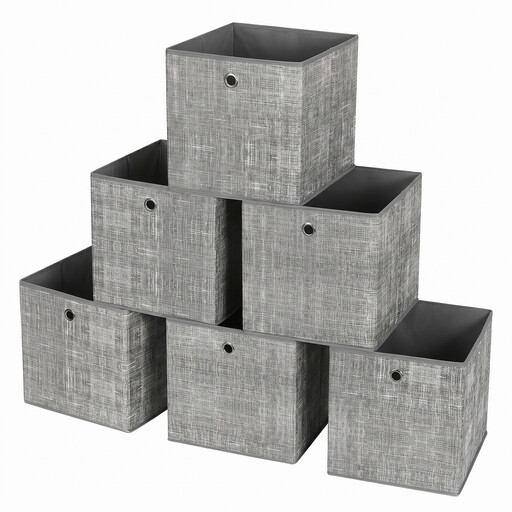
Why this choice suits this profile: With their 30 × 30 × 30 cm size, these boxes fit into many shelving units. They work equally well for clothes, books and everyday small items.
The removable base improves each box’s stability on a shelf. When not in use, they fold flat to take up minimal space.
A set of six boxes, eyelet handles, 80 g/m² non-woven fabric and a stated static load of 5 kg per box.

Why this choice suits this profile: This model is designed for those who want to quickly spot their clothes, accessories or supplies, whether stored in a wardrobe, a storage room or the boot of a car.
The clip-on lid, non-slip base and reinforcing ribs reduce the risk of slipping and warping when stacking.
PP material, stated wall thickness of 2.5 mm, integrated handles and a size of 50.4 × 37.6 × 28.8 cm per box.
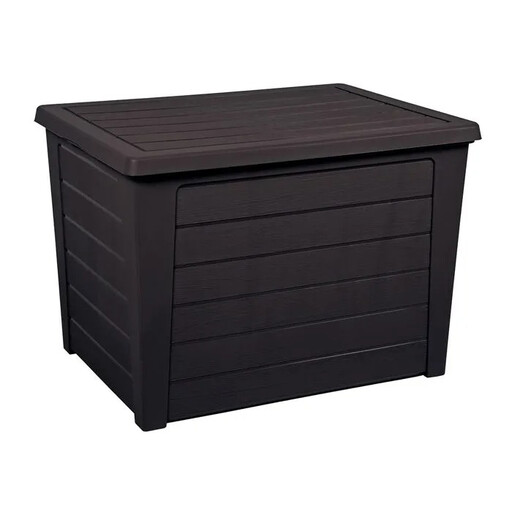
Why this choice suits this profile: This chest is designed for bulky storage in a garage, conservatory, garden or on a patio. It can hold cushions, toys and garden accessories.
Its clearly stated capacity and dimensions let you assess its footprint before buying. However, it should not be used as a seat or step stool.
A 160 L volume, dimensions of 72.5 × 54.5 × 51.5 cm, recyclable plastic, UV protection and a design stated for both indoor and outdoor use.
We’ve put together a comprehensive, real-time updated list of products that meet these demanding criteria and comply with European safety regulations.
A closed container that’s deep enough and easy to stack is generally suitable for coats, jumpers and household linen. A clear box lets you quickly identify its contents. For lightweight textiles, foldable fabric boxes offer a space-saving solution when not in use.
Yes, provided the manufacturer allows their use in that type of environment. Check their resistance to moisture, UV rays and temperature changes. Even a chest described as weather-resistant should be placed on a stable surface and closed properly.
Sort items by category and how often you use them: clothes, toys, documents, tools or accessories. Place regularly used items at eye level and reserve higher areas for seasonal items. Open baskets can complement boxes with lids to keep everyday essentials within easy reach.