
Livraison le jour même ou le lendemain

Qualité garantie

Débloquez vos offres de bienvenue: Livraison GRATUITE | Jusqu'à -80 % | 30 jours d'essai gratuits à JoyPlus
Téléchargez l'application
A home can quickly feel cluttered when every item does not have its own place. Out-of-season clothing, toys, household linen, accessories and paperwork can end up piled in cupboards or on shelves. Storage boxes can help restore order, provided you choose a model suited to the space available and the weight of the items you want to store.
A capacity given in litres is not enough to tell you whether a box will fit your furniture. For example, a 30-litre model may be too tall for a low shelf or too deep for a narrow cupboard. Always check the external dimensions — length, width and height — then compare them with the space you actually have available.
Storage baskets made from fabric, felt or woven paper can easily find a place in a living room or bedroom. However, they cannot support the same loads as a rigid plastic box. The recommended maximum weight, the presence of a frame and the strength of the handles are much more useful indicators than a simple claim of durability.
An open box is convenient for quickly accessing toys or laundry. However, it offers less protection against dust than a model with a lid. Conversely, a closed container placed somewhere damp or poorly ventilated can trap odours. The right choice therefore depends on the room, how often the box will be used and the type of items being stored.
Start by measuring:
For clothing, blankets and lightweight accessories, fabric storage cubes and foldable boxes are easy to move. For books, tools or items stored in the garage, it is better to choose a rigid structure with a clearly stated load capacity.
Polypropylene (PP) is very common for plastic storage boxes. It can generally be cleaned with a damp cloth and is suitable for cupboards, utility rooms and garages, within the temperature and load limits recommended by the manufacturer.
Fabric, felt and woven paper add a warmer touch. However, they require spot cleaning and should be kept away from moisture, flames and sources of heat. A textile box should not be immersed in water or machine-washed unless the instructions specifically allow it.
Stackable storage boxes are particularly useful in small spaces, as they allow you to make the most of a cupboard’s height. Check that the lid stays securely in place and that the base does not slide when several containers are stacked on top of one another.
Integrated handles make it easier to remove a box stored high up or at the back of a shelf. For heavy items, choose a model with sturdy handles and respect the recommended maximum load. Transparent boxes let you see their contents at a glance, while opaque baskets do more to hide visual clutter.
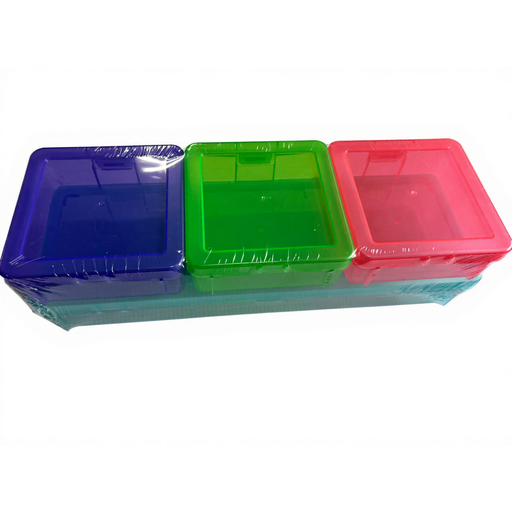
Why this choice suits this profile : This set of four containers is a simple way to start organising your home, with one box for the living room, bedroom, home office or hallway.
Buying a set avoids building up a collection of mismatched containers and makes it easier to sort items by category.
Set of four boxes, versatile uses and a uniform design for organising smaller items.
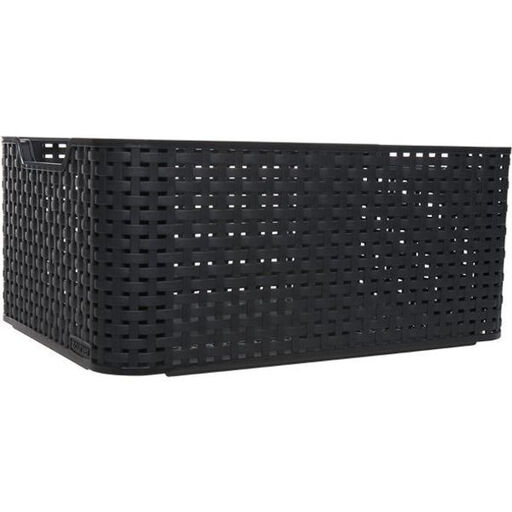
Why this choice suits this profile : Its faux-rattan look is designed to be left on display in a living room, bathroom or bedroom, without looking like a purely utilitarian storage box.
Its plastic structure is easier to clean than a natural-fibre basket exposed to splashes.
30-litre capacity, integrated handles and a stated maximum load of 8 kg, evenly distributed.

Why this choice suits this profile : Seasonal clothing, baby-care items and garage accessories benefit from a closed, stackable container.
The clip-on lid and transparent plastic help keep out dust while allowing you to identify the contents without opening every box.
PP plastic, stated 2.5 mm walls, integrated handles and a stackable design.
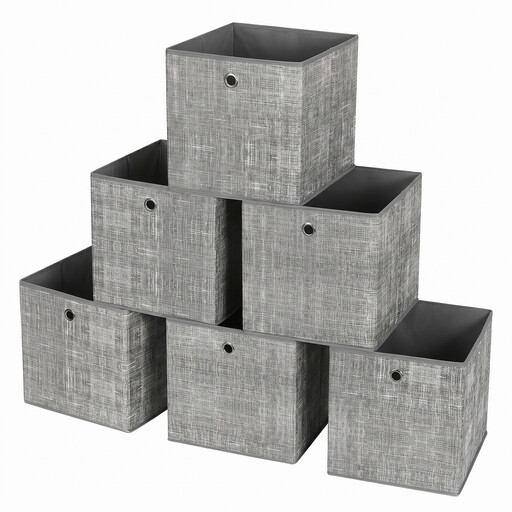
Why this choice suits this profile : These 30 × 30 × 30 cm cubes are ideal for renters and families with a cube shelving unit, or anyone looking to quickly declutter a cupboard.
The removable base and foldable design reduce clutter when the boxes are not in use.
Set of six, eyelet handles, stated static load of up to 5 kg per box and cleaning with a damp cloth.
We have put together a comprehensive, real-time updated selection of products that meet these strict selection criteria and European safety regulations.
To prevent clutter from building up again, label each container and keep regularly used items within easy reach. Seasonal items can be stored in the boxes that are least accessible.
For clothing, fabric boxes, breathable baskets and foldable cubes work well on shelves and in cupboards. For long-term storage, a lidded model can help limit dust build-up. Textiles should be clean and completely dry before being put away.
Yes, they can hold lightweight tools, accessories and seasonal items, provided you respect the maximum load and the manufacturer’s recommendations. Avoid high temperatures, prolonged exposure to sunlight and persistent damp. Regular ventilation is still recommended for enclosed storage areas.
Do not overload it, avoid sharp objects and handle the grips without pulling them suddenly. Clean each material according to its care instructions: use a damp cloth for fabric and felt, and a cloth with mild soap for plastic, without immersing it when this is not recommended. Finally, regularly check the stitching, frame and any cracks.