
Livraison le jour même ou le lendemain

Qualité garantie

Débloquez vos offres de bienvenue: Livraison GRATUITE | Jusqu'à -80 % | 30 jours d'essai gratuits à JoyPlus
Téléchargez l'application
Who doesn't dream of a perfectly organised and functional home? Yet, with an overwhelming number of options on the market, buying storage boxes can quickly become a headache. Make the wrong choice, and what was meant to be a solution becomes a source of frustration: collapsing stacks of boxes, lids that won't stay on, or damaged belongings.
As the Head of Product Recommendations at Joybuy, my mission is to help you see things more clearly and identify the storage solutions that truly meet your needs. Let's forget the marketing jargon and focus on the criteria that make all the difference. This guide breaks down the common pitfalls to avoid and the essential features to look for, so you'll never make the wrong choice again.
Before you start shopping, be wary of these deal-breaking design flaws that can render a product useless in the long run.
plastic storage box will quickly warp, making it impossible to close or stack.storage box with a lid that doesn't snap on securely offers no real protection against dust, moisture, or pests. Your belongings aren't truly safe, which defeats the entire purpose of the box.stackable storage crate should guarantee safety and optimise vertical space. If the lids aren't designed to interlock perfectly with the base of the box above, the stack quickly becomes wobbly and dangerous, especially around children.To make the right choice, scrutinise these three criteria before any purchase.
The choice of material is crucial for the durability and intended use of your box.
food container, check that it is BPA-free. A wall thickness of over 2 mm is a good indicator of sturdiness.wardrobe organiser for clothes, linens, or light toys. These boxes are often foldable, which is a plus for storing them when empty. Make sure they are reinforced with rigid cardboard to help them keep their shape.In day-to-day use, it's the design details that make all the difference.
food container or for storage in a damp place like a cellar.Rather than accumulating mismatched boxes, it's often wiser to invest in a storage box set. This ensures aesthetic consistency and, most importantly, a perfectly compatible stacking system. Transparent boxes allow you to see the contents at a glance, while opaque models protect light-sensitive items.
To illustrate these criteria in practice, here are a few products that meet specific needs.
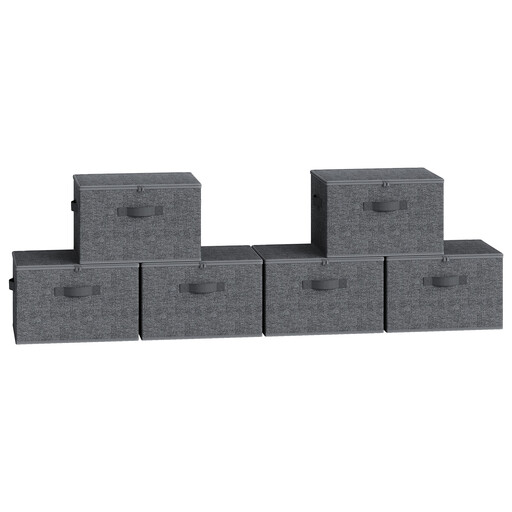
Why it's a great choice: Ideal for organising clothes, linens, or toys in a wardrobe or on a shelf. The set format allows you to create a harmonious storage system. Its foldable design is a major advantage for small spaces or seasonal storage.
The zipped lid is far more reliable than a simple loose lid, offering effective protection against dust. The reinforced cardboard structure ensures the boxes hold their shape for textiles, preventing the sagging typical of low-end boxes.
Excellent value (set of 6), foldable design for maximum space-saving, and front and side handles for easy handling.

Why it's a great choice: Perfect for meal prep, storing leftovers, or packing lunch. Glass is a safe material that goes from the fridge to the microwave without worry, and the 10-piece set of various sizes offers maximum versatility.
No more ill-fitting lids! Here, the locking clips and silicone gasket guarantee a 100% airtight seal. The borosilicate glass proves to be infinitely more durable and hygienic than any low-end plastic.
Safe borosilicate glass material (stain-proof, odour-proof), fully airtight locking lids, and a versatile 10-piece set (1040 ml and 370 ml sizes).
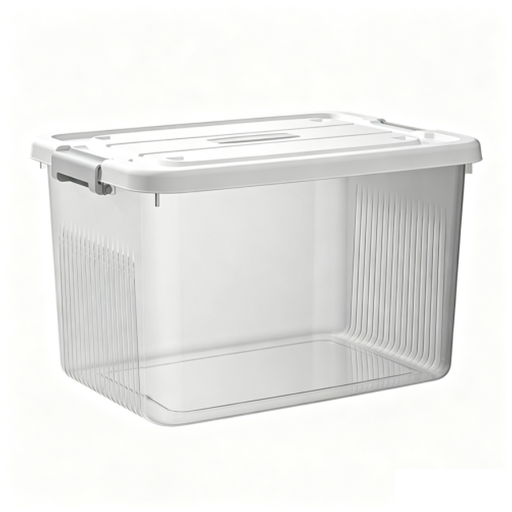
Why it's a great choice: Designed for those who need to store heavy items, tools, or archives in the garage, cellar, or attic. Here, the absolute priority is sturdiness and perfectly stable stacking.
This model avoids the two classic pitfalls: fragile plastic and unstable stacking. Its 2.5 mm thick wall and reinforcing ribs prevent any warping. The lid and base are engineered for an ultra-secure, interlocking fit.
Reinforced structure for a high load capacity, stable and secure stacking, and integrated ergonomic handles for effortless transport.
We have selected a full range of products for you that meet our strictest quality and safety criteria.
What is the lifespan of a plastic storage box? The longevity greatly depends on the quality of the plastic and its use. A good quality polypropylene (PP) box, used indoors and not overloaded, can last for many years. Conversely, a low-end model exposed to UV rays (sunlight) or frost can become brittle in a single season.
How can I prevent bad odours in storage boxes? Ensure that everything you store, especially textiles, is perfectly clean and dry. For a food container, choose non-porous materials like glass or high-quality plastic that do not absorb odours. For clothing, adding lavender sachets or cedar blocks can help maintain a fresh scent.
Are fabric boxes a good option? They are an excellent solution for a wardrobe organiser intended for soft, lightweight items (clothes, scarves, plush toys). Their main advantages are their light weight and their often-foldable nature. However, they are not suitable for heavy or sharp objects and offer much more limited protection against moisture than an airtight plastic box.