
Livraison le jour même ou le lendemain

Qualité garantie

Débloquez vos offres de bienvenue: Livraison GRATUITE | Jusqu'à -80 % | 30 jours d'essai gratuits à JoyPlus
Téléchargez l'application
A tidy home often starts with a simple act: buying a storage box. However, this choice is far less trivial than it seems. Who hasn't cursed at a plastic crate that cracks at the first impact, a fabric basket that sags pathetically after a few weeks, or a set of supposedly stackable boxes that form a wobbly tower?
These nasty surprises aren't inevitable. They are often the result of well-honed marketing traps or design flaws that are easy to anticipate. Before you start shopping, let's review the three most common mistakes that turn a good intention into a regrettable purchase.
To avoid falling for these traps, it's better to rely on concrete criteria than on lofty promises.
Choosing the right home organisation solution comes down to analysing a few key technical features. Here are the points to check to ensure a practical and long-lasting purchase.
The choice of material determines the durability, use, and even the aesthetic of your box.
A smart design makes everyday use easier.
Rather than a one-size-fits-all solution, effective storage depends on matching the product to your needs. Here is a selection of products tailored to distinct user profiles.
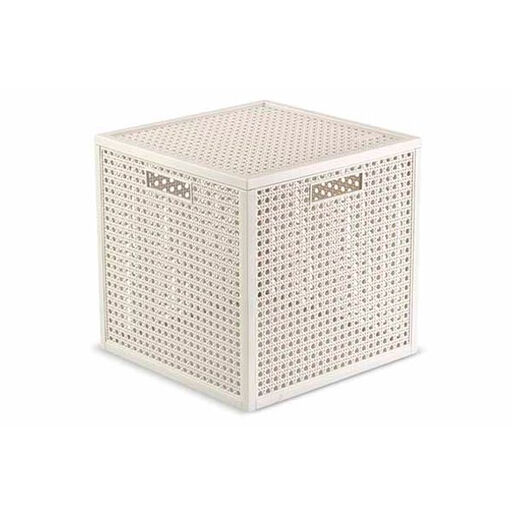
Why it's the right choice: Ideal for those looking for decorative storage to integrate into a living space. Its minimalist design and cubic shape fit perfectly into open shelves or modular furniture (like Kallax), allowing you to elegantly hide clutter (magazines, remote controls).
Unlike low-end fabric baskets that collapse, this model is designed with a structure that holds its shape. Its breathable fabric construction prevents moisture buildup, a plus for storing linens or toys.
Elegant aesthetics and versatility. Made from recycled materials, it combines style with a more responsible approach.
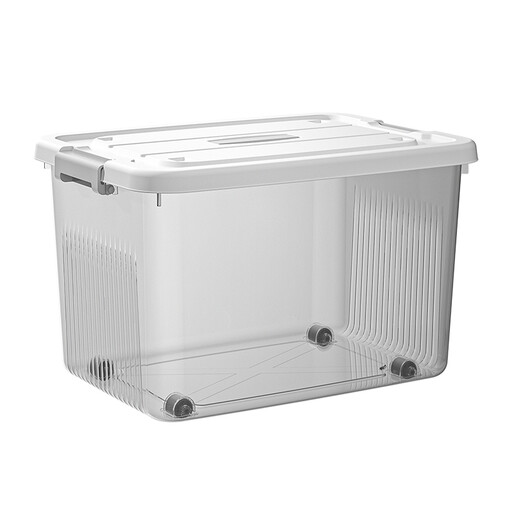
Why it's the right choice: Perfect for organising the garage, basement, or storing off-season clothes. Here, the priority is on robustness, capacity, and efficient stacking to maximise vertical space.
This model counters the fragility trap with a thickened 2.5 mm body and reinforcing ribs. It also solves the problem of unstable stacking with a flat lid and a non-slip base designed to interlock securely.
Reinforced structure for a high load capacity and secure stacking. The transparent version allows you to identify the contents at a glance.
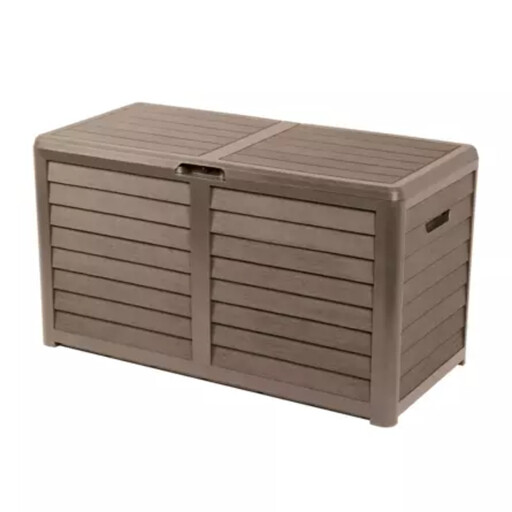
Why it's the right choice: Designed for those who need to store gardening equipment, patio cushions, or pool toys. Its large 420 L capacity and robust design are built for year-round outdoor use.
This chest is specifically made from UV and frost-resistant polypropylene, which prevents it from degrading in the sun and cold, unlike a standard box. It is also lockable (padlock not included) for added security.
Large capacity and weather resistance. The ventilation system prevents condensation and mould, and it is certified with the "Origine France Garantie" (Made in France Guarantee).
For more specific uses, like organising a garden shed, we have selected a full range of products that meet our quality and safety criteria.
The first thing to do is scrutinise the technical specifications. The terms to look for are "UV-treated" and "frost-resistant." A good garden storage chest should also have a discreet ventilation system (often via the handles) to prevent condensation, and a design that prevents rainwater from pooling on the lid.
Polypropylene (PP) is one of the most common plastics for storage boxes due to its good resistance to impact, fatigue, and chemicals. It is more robust than polystyrene (PS), which is often limited to disposable products, and more flexible than ABS, making it less brittle. For maximum durability, look for high-quality PP, often identifiable by a greater thickness or structural reinforcements.
That's a very bad idea. Interlocking systems are specific to each manufacturer and are not designed to be compatible with each other. Mixing brands and models is a guarantee for an unstable and dangerous setup. For secure and optimised storage, it is always best to invest in a set of identical boxes.