
Livraison le jour même ou le lendemain

Qualité garantie

Débloquez vos offres de bienvenue: Livraison GRATUITE | Jusqu'à -80 % | 30 jours d'essai gratuits à JoyPlus
Téléchargez l'application
Is clutter taking over, leaving you dreaming of a miracle solution to optimize your space? The storage box is often the first thing that comes to mind. But be warned: the market is a jungle of models with tempting promises, and it's easy to end up with products that just don't hold up. As a product specialist for our editorial team, my mission is to cut through the noise and guide you toward a smart, practical, and truly durable choice.
Before you dive in, let's review the most common traps that too often turn a promising purchase into a real disappointment.
To avoid these disappointments, here are the technical points that make all the difference. They are your guarantee of a storage solution that will finally deliver on its promises.
The choice of material is dictated by your intended use.
Anticipate how you will use and store your boxes on a daily basis.
The tape measure is your best friend! Always measure the destination space before you buy: height, width, and depth of your shelves, your wardrobe, or the space under your bed. Many furniture items, like Kallax-style cube shelves, are designed for standard dimensions (e.g., 30?x?30?x?30?cm). A storage cube with the right measurements will nestle in perfectly, creating a flawless visual look and optimizing every last centimetre.
Here are a few models that meet specific needs, all vetted against our criteria for quality and practicality.
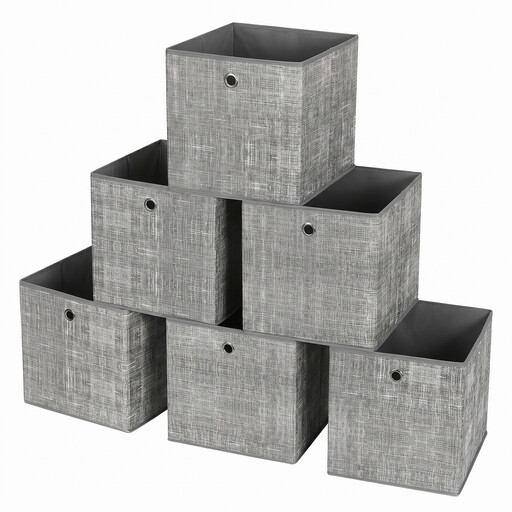
The Verdict: Perfect for students or for organizing a cube shelf on a budget. The 30x30x30 cm format is a universal standard, and the set of six allows you to outfit an entire unit with a uniform look.
Its structure of cardboard and 80 g/m? non-woven fabric provides decent rigidity for everyday use. Designed to fit inside a cubby, it leans on the furniture's walls, which greatly limits the risk of sagging.
Its dimensions are perfectly calibrated for standard cube shelving units. Being foldable, it stores flat when not in use.
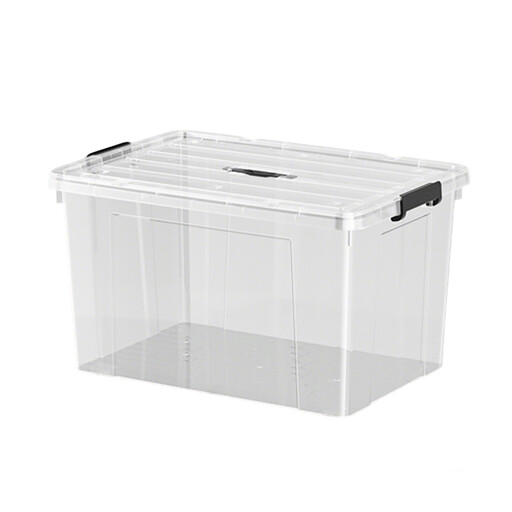
The Verdict: For families or anyone needing to store heavy items (tools, archives, equipment) in demanding places like a basement or garage. Here, the absolute priority is robustness and capacity.
Its shell is made of thick PP plastic (2.5 mm), reinforced with ribs. The flat lid is designed to interlock with the base of the bin above it, ensuring a stable and secure stack that won't buckle under a heavy load.
A rock-solid structure and a large capacity. Its transparency allows you to identify the contents without having to unstack everything.
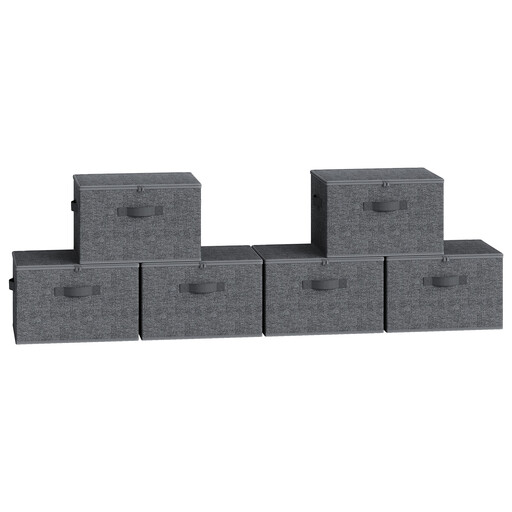
The Verdict: For those who want an organizational solution for the closet or bedroom that is as beautiful as it is practical. The lid is a must-have for protecting clothes from dust.
Its 2 mm cardboard structure gives it good rigidity. The zippered lid and reinforced handles place it well above simple open-top fabric boxes in terms of practicality and durability.
Its polished design (linen-look fabric) and zippered lid make it a box you won't be afraid to leave in plain sight. Handles on the front and sides make it easy to grab.
Explore our full selection of products that meet our quality criteria and current standards.
It all depends on its design and what you put in it. A good model, with thick cardboard walls (2?mm or more) and sturdy handles, can last several years for storing lightweight items (clothes, linens). The secret to making it last: don't overfill it and avoid heavy or sharp objects.
For a plastic storage bin, simplicity pays off: a soft cloth (microfiber) or a non-abrasive sponge, warm water, and a little neutral soap (like castile soap). Rinse well and let it air dry. Above all, never use scouring powder or the green side of a sponge, which will leave permanent scratches, especially on transparent models.
That's a very bad idea. Each manufacturer designs its stackable boxes with a proprietary interlocking system (grooves, ledges, etc.). Trying to mix them is a guarantee for an unstable and dangerous stack. For safe stacking, stick to one single product line.