
Livraison le jour même ou le lendemain

Qualité garantie

Débloquez vos offres de bienvenue: Livraison GRATUITE | Jusqu'à -80 % | 30 jours d'essai gratuits à JoyPlus
Téléchargez l'application
A well-organised home starts with the right storage boxes. The problem? Between models that crack at the slightest impact, lids that no longer close, and stacks that threaten to collapse, it's hard to know what to choose. This guide is here to help you identify the criteria that really matter and invest in a durable solution, whether you're organising your kitchen, decluttering your garage, or prepping your meals for the week.
I'm the Head of Product Recommendations at Joybuy, and my mission is to share my advice to help you sort through the options and avoid disappointment.
Before you head to the checkout, keep an eye out for these recurring flaws that quickly turn a good deal into a purchase you'll regret.
To avoid getting duped again, here are the technical specifications that make all the difference.
This is the number one criterion. For a storage bin that will live in the garage or cellar, a sturdy plastic like polypropylene (PP) is an excellent choice: it handles impacts and temperature changes well.
For kitchen storage, the options are broader. For a plastic storage box, always check for a "BPA-free" label—an absolute must for any food container. Borosilicate glass is a premium alternative: it resists odours and stains from your bolognese sauce and goes from the freezer to the oven without a problem (just remember to remove the lid).
A good lid is just as important as the box itself. For storing papers or toys, a simple press-on or clip-on lid will do. But for your lunch box or storing leftovers, aim for something better: a four-latch system with a silicone seal is the only truly reliable option. It's your guarantee of a perfect seal to maintain freshness and prevent disasters in your backpack.
To save space, stable and secure stacking isn't an option—it's a must. Make sure the lid has grooves or raised edges that nest perfectly with the base of the box on top. Another detail that makes a difference? Transparency. There's nothing better for seeing what's inside without having to unpack everything.
Every need is unique. Here are a few options that cater to specific uses, keeping in mind the quality criteria we've just covered.

Why we chose it: Perfect for storing winter duvets, mountains of toys, or archives. This set offers a large volume and a robust design, built for heavy-duty use in cupboards, the cellar, or the garage.
Its thick 2.5 mm plastic and reinforcing ribs prevent it from cracking. The non-slip base and flat lid ensure perfectly stable stacking. No more leaning towers!
Its reinforced structure and integrated handles make them easy to move, even when full to the brim. Bonus: their transparency helps you find your things in a flash.

Why we chose it: The perfect partner for those who prep their meals for the week. Borosilicate glass is a healthy material and a champion of thermal shock resistance: it goes from the fridge to the microwave without skipping a beat.
The glass won't retain odours or stains from curry or tomato sauce. The "snap-lock" lids and their silicone seals provide a foolproof seal. Zero risk of leaks in your bag.
This 10-piece set includes two sizes (370 ml and 1040 ml), offering maximum versatility for main dishes, sides, or snacks.
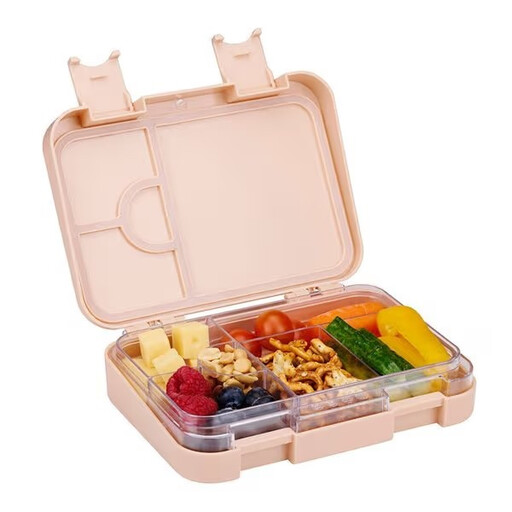
Why we chose it: The perfect lunch box for those who like compartmentalised meals where nothing gets mixed up. Ideal for the office, school, or picnics.
No more salad mixing with your dessert! Its 6 fixed compartments keep each food item in its place (main, veggies, fruit, dressing...) to preserve flavours and textures until it's time to eat.
It helps you better manage portions for a balanced meal. Its compact size (21 x 15 x 4.5 cm) fits easily into any bag.
Discover our full selection of products that meet all our quality criteria and European safety standards.
1. Can a plastic container really go in the microwave? Yes, but not just any container. Look for the official pictogram (often wavy lines) that indicates it's microwave-safe. Polypropylene plastic (PP, code 5) is generally compatible, but always check the manufacturer's instructions. When in doubt, the safest bet is to transfer the food to a plate. Also, remember to never seal the lid tightly during heating to allow steam to escape.
2. How do I get rid of stubborn odours in plastic? Plastic is porous, so it tends to absorb odours and colours (we're looking at you, tomato sauce!). The first step: rinse the container with cold water immediately after use. For a deep clean, fill it with a mixture of hot water and baking soda, let it sit for a few hours, then wash. An old-school trick that works: let the open container dry in the sun.
3. What is "BPA-free" plastic, and why is it so important? BPA (Bisphenol A) is a chemical sometimes used to make certain plastics. The problem is that it can migrate into food, especially when heated. As a precautionary measure, European regulations have strictly limited its use in food containers. Choosing a food container labelled "BPA-free" ensures that the product is made without this controversial substance.