
Livraison le jour même ou le lendemain

Qualité garantie

Débloquez vos offres de bienvenue: Livraison GRATUITE | Jusqu'à -80 % | 30 jours d'essai gratuits à JoyPlus
Téléchargez l'application
Is clutter taking over, leaving you dreaming of a magic bullet for a tidy, functional home? The storage box is the obvious solution. But who hasn't regretted an impulse buy? Cracked lids, wobbly stacks on the verge of collapse, plastic warping under weight... it's a familiar story.
Before you fill your cart, it's best to know the pitfalls that turn a good investment into future waste. Here’s how to sort through the options and choose solutions that will stand the test of time.
To make an informed choice, focus on a few technical features that make all the difference.
The choice of material depends entirely on its intended use.
A good stackable box is a major advantage for optimising vertical space, whether in a wardrobe, garage, or cupboard.
A solution for every need. Here are a few options we recommend, tailored to specific user profiles.
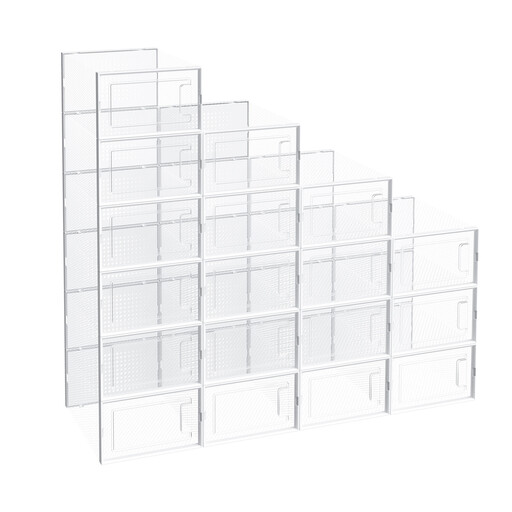
Why it's a great choice: Perfect for transforming a pile of shoes into an organised, visible collection. The transparent front door lets you spot and grab any pair without unstacking everything. An excellent wardrobe organiser for a closet or entryway.
Its design is engineered for perfectly stable vertical stacking. The front door solves the typical accessibility problem of classic stacked boxes.
The ultra-practical front access and integrated ventilation to keep shoes aired out. This makes shoe storage both visual and efficient.

Why it's a great choice: For those who need to store various items (seasonal clothing, tools, archives) in the basement, garage, or attic. These storage crates are built for heavy loads and long-term stacking.
The thickened 2.5 mm PP plastic and reinforcing ribs prevent any warping under weight. The flat lid and structured base ensure stable stacking, a far cry from wobbly, low-end models.
Its reinforced structure, designed for high load capacity and rock-solid durability. The integrated handles make it easy to move.

Why it's a great choice: Ideal for taking hot or cold meals to the office, school, or on the go. This food thermos is designed to maintain temperature and, most importantly, prevent leaks in your bag.
Made from 316 stainless steel, it is ultra-durable and resists both odours and stains. Its vacuum insulation technology ensures effective temperature retention (4-6 hours, according to the manufacturer), where a standard container would fail.
Its wide mouth is very practical for filling, serving, and cleaning. The lid is designed for a perfect, leak-proof seal and secure transport.
Discover our full selection of products that meet our quality criteria and current safety standards.
Start by measuring the space where you plan to keep the boxes (shelf, cupboard, etc.), noting the height, width, and depth. Then, estimate the volume of the items you need to store. Our advice: it's better to opt for several medium-sized boxes rather than one very large one, which can quickly become heavy and unwieldy.
No, and this is a crucial point. To store food, you must look for the "food-safe" label (or the fork and glass symbol) and "BPA-free". Only these plastic jars or boxes guarantee that no harmful substances will leach into your food. Never use a standard storage crate for unwrapped food.
The golden rule: always place the heaviest boxes at the bottom. Use boxes of the same brand and model, designed to interlock perfectly. Finally, never exceed the manufacturer's recommended stacking height and ensure the stack is stable on a flat, level surface.