
Livraison le jour même ou le lendemain

Qualité garantie

Débloquez vos offres de bienvenue: Livraison GRATUITE | Jusqu'à -80 % | 30 jours d'essai gratuits à JoyPlus
Téléchargez l'application
Is clutter taking over and you're looking for a simple solution to end it? A storage box seems like the obvious answer. Yet, an impulse buy often ends in disappointment: warped lids, cracked plastic, or boxes that ultimately take up more space than they save.
As a product expert at Joybuy, my mission is to help you navigate the overwhelming number of options to find solutions that are both practical and durable. Before you rush into a purchase, let's break down the pitfalls to avoid and the criteria that really make a difference.
The 3 pitfalls to avoid when buying storage boxes:
To make the right choice, rely on objective features rather than marketing claims. Here are the three fundamental points to analyse.
The ideal material depends primarily on how you plan to use it.
Beyond the material, it's the features that determine your box's everyday practicality.
Every organisational need is unique. Here are a few recommended options, matched with user profiles to help you better understand their suitability.

Why it's a great choice: The perfect partner for those who prepare their meals in advance. The borosilicate glass allows you to go from the refrigerator to the microwave without risk, and the 10-piece set in two different sizes offers plenty of flexibility for main dishes and sides.
The clip-lock system and silicone gasket ensure a foolproof seal, preventing leaks in your bag. The glass won't warp or retain odours, not even from tomato sauce.
Healthy and durable material (borosilicate glass). A comprehensive and versatile set for immediate organisation.
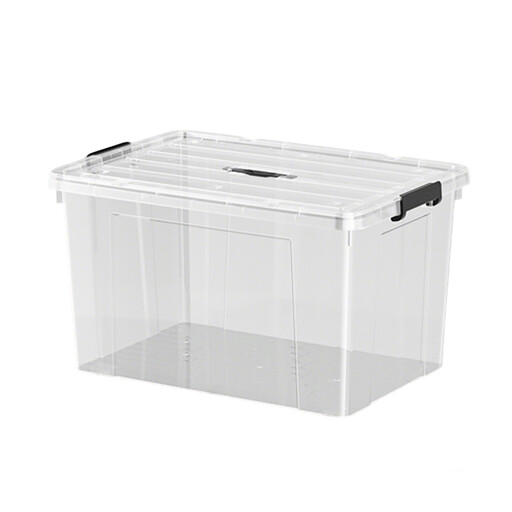
Why it's a great choice: Essential for organising the garage, cellar, or for storing duvets, out-of-season clothing, and toys. The large capacity and sturdy construction allow you to safely store heavy or bulky items.
The thickened PP plastic (2.5 mm) and reinforcing ribs prevent warping. The flat lid and non-slip base guarantee stable and secure stacking, unlike low-end models.
Reinforced structure for a high load capacity. Transparent design for quick content identification.
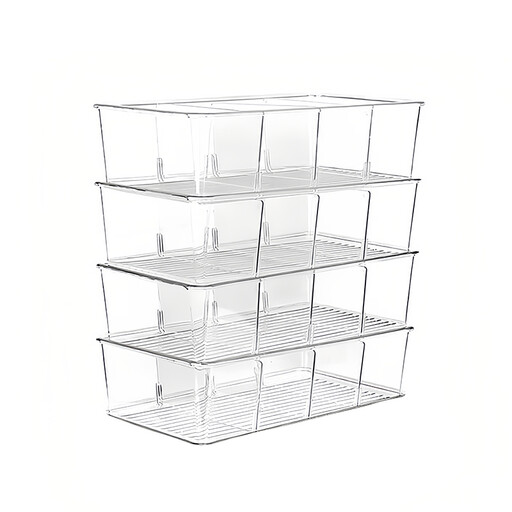
Why it's a great choice: The solution for taming the small items that create chaos: tea bags, coffee pods, stationery, makeup, or craft supplies. Its compact size fits perfectly on a desk or in a cupboard.
Instead of one large box where everything gets mixed up, this organiser offers fixed compartments for effective sorting. The transparent PET plastic means you don't have to open everything to find what you're looking for.
Compartmentalised design for detailed sorting. Transparent material for instant visibility.
Explore our full selection of products that meet our quality criteria and current safety standards.
Start by defining exactly what you want to store (clothes, A4 documents, food, tools) and measure the space where the boxes will be kept (shelf, cupboard, car boot). For more flexibility, sets containing multiple sizes are often a wise solution to adapt to different needs.
Absolutely not. For food use, it is imperative to choose boxes explicitly labelled as "BPA-free" (Bisphenol A). Prioritise stable plastics like polypropylene (PP, recycling code 5) or PET (polyethylene terephthalate, code 1), which are recognised as safe for food contact.
The golden rule: always follow the manufacturer's recommendations. As a general rule, avoid abrasive sponges that can scratch surfaces, especially plastic. If a box is microwave-safe, do not overheat it and always vent the lid. For glass, avoid major thermal shocks (like moving it directly from the freezer to very hot water) to prevent it from becoming fragile. Proper care is the key to the longevity and hygiene of your containers.