
Livraison le jour même ou le lendemain

Qualité garantie

Débloquez vos offres de bienvenue: Livraison GRATUITE | Jusqu'à -80 % | 30 jours d'essai gratuits à JoyPlus
Téléchargez l'application
A well-organised home often starts with the right storage boxes. Yet, behind this apparent simplicity lies a vast market where the best products are mixed in with the worst. Warped lids, collapsing stacks, plastic that shatters on first impact—unpleasant surprises are all too common and can quickly turn good intentions into a frustrating puzzle.
As a Product Expert at Joybuy, my mission is to help you cut through the noise. Let's skip the marketing jargon and get straight to the point. Here’s how to identify a reliable storage solution and put an end to buyer's remorse.
Before you make a purchase, watch out for these three critical flaws that render many boxes useless after just a few months.
To avoid these pitfalls, carefully examine these three key points before every purchase.
Everything depends on your intended use.
Design makes all the difference. The lid should lock with a distinct “click,” which signals a secure seal. For stackable boxes, make sure the base of the upper box nests perfectly into a purpose-built groove on the lid below it. Some models even feature a non-slip bottom for maximum stability.
A transparent storage crate allows you to see the contents at a glance—a valuable time-saver. Opaque boxes, meanwhile, are perfect for protecting light-sensitive items. Finally, choose a volume that fits your needs: not so large that the box becomes unmanageable, and not so small that you waste space.
To put this advice into practice, here are a few models that meet specific needs.

Why we chose it : Ideal for organising clothes, toys, or archives in closets, the basement, or the garage. Its transparency lets you spot the contents in the blink of an eye.
The 2.5 mm thick body and reinforcing ribs prevent the plastic from becoming brittle. The clip-on lid ensures a reliable seal, and the non-slip bottom guarantees stable stacking.
Reinforced structure to support heavy loads and ergonomic integrated handles for easy transport, even when full.
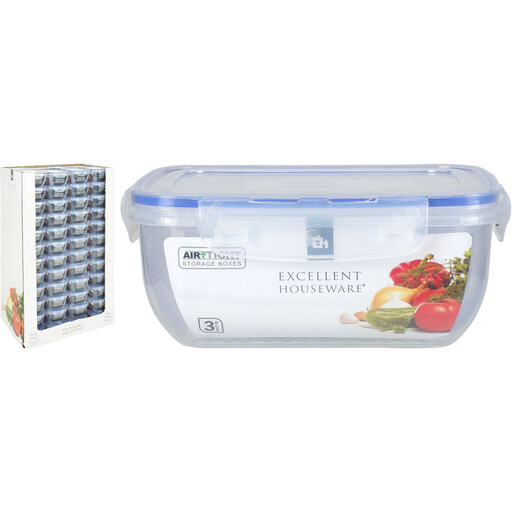
Why we chose it : Specially designed for food preservation, this set is perfect for storing leftovers or preparing your weekly meals (meal prep).
The polypropylene material is guaranteed BPA-free. Most importantly, its rotary locking system with a silicone seal ensures a perfect seal. Goodbye to the gaping lid pitfall!
Perfectly airtight to preserve freshness and prevent leaks. Refrigerator and freezer safe for short or long-term storage.

Why we chose it : For those who demand durability, hygiene, and a zero-plastic food contact surface. A true long-term investment.
316 stainless steel is virtually indestructible in household use: it won't crack, warp, or stain. The secure lids effectively preserve freshness.
Professional food-grade material, ultra-resistant to corrosion and odours. The set of three sizes adapts to all your storage needs.
We've handpicked a selection of products that meet our exacting standards, specifically chosen for kitchen organisation.
To neutralise stubborn odours, fill the box with a mixture of warm water and baking soda (or white vinegar). Let it sit for several hours, rinse thoroughly, and then let it air dry with the lid off.
This is not recommended, as the stack will be unstable. For maximum safety and stability, always use boxes from the same product line, which are designed to nest perfectly together.
PP (polypropylene) is the material of choice for storage boxes due to its excellent balance of rigidity, heat resistance, and cost. It is far more durable than PS (polystyrene), which is often brittle, and better suited for reusable storage than PET, which is typically reserved for single-use bottles. For food-related use, just ensure it is certified BPA-free.