
Livraison le jour même ou le lendemain

Qualité garantie

Débloquez vos offres de bienvenue: Livraison GRATUITE | Jusqu'à -80 % | 30 jours d'essai gratuits à JoyPlus
Téléchargez l'application
A well-organised home isn’t just about how much furniture you have. The containers you choose matter just as much: a box that’s too narrow will end up at the back of a cupboard, a flimsy basket will quickly lose its shape, and an ill-suited chest could let moisture in. Whether you’re a student, a tenant, a homeowner or a parent, storage boxes and baskets need to meet a practical need first – before they can stand out for their looks.
A storage box might look very roomy on a product page, but its external dimensions don’t always reflect the actual usable space. Handles, thick walls and the lid can significantly reduce the interior capacity.
Before ordering, measure:
For shelf storage baskets, even a few centimetres’ difference can stop a drawer or door from working properly.
Woven paper, fabric and natural fibres give a warm finish, but they aren’t all suited to damp rooms or heavy items. A basket intended for a bedroom won’t necessarily be right for a bathroom or utility room.
Check the material and the care instructions. Woven paper models generally need to be kept away from moisture. Textile baskets can often be cleaned with a slightly damp cloth, while wooden crates need protecting from standing water and direct heat.
A foldable box is easy to move, but it isn’t necessarily designed to hold books, shoes or particularly heavy items. Similarly, a stackable crate needs to stay stable once it’s full.
Avoid overloading your storage organisers and check the strength of the handles, seams, frame and interlocking systems. A chest or basket should never be used as a seat, step stool or footstool.
For wardrobe storage, cube-shaped boxes fit neatly into standard compartments and make it easier to sort by category: socks, accessories, toys or linen. Models with handles are especially handy when they need to be taken out regularly.
In a hallway, stackable shoe boxes that are transparent let you spot pairs at a glance while protecting them from dust. Just remember to measure your largest shoes before choosing a size.
For laundry, a laundry basket with removable compartments makes sorting and carrying easier. In the kitchen or for children, a compartmentalised lunch box should be chosen based on its dimensions, how it’s cleaned and any instructions about contact with food.
For a product intended to hold food, look for compliance information about food contact and follow the stated temperature limits. A compartmentalised box must not go in the oven or microwave if the manufacturer explicitly forbids it.
A large container isn’t always the most practical. A bin that’s too deep can turn items into a pile that’s hard to sort through. For small accessories, several storage bins of a medium size make organising easier and stop you having to empty everything to find a single item.
On the other hand, blankets, cushions, bulky toys and gardening tools need a more generous chest. For an outdoor storage chest, check the stated waterproofing, UV protection, locking system and where you plan to put it.
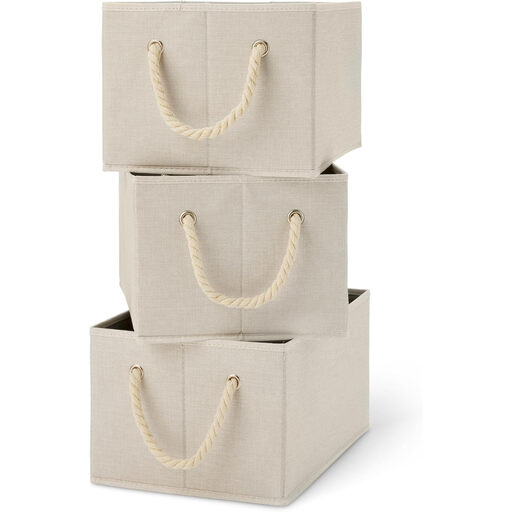
Why this choice suits this profile: This set of three foldable bins is ideal for students, small homes and anyone who wants to start sorting their belongings by category without adding extra furniture. The handles make it easy to move them between the bedroom, wardrobe and home office.
The foldable design saves space when the bins aren’t in use. Each bin measures approximately 37.5 × 26 × 20.3 cm; measure your intended spot before buying.
Three containers, rope handles and easy cleaning with a damp cloth. The manufacturer recommends avoiding heavy or sharp objects.
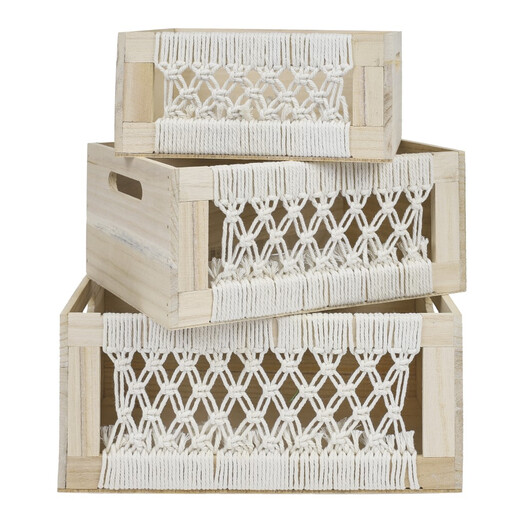
Why this choice suits this profile: These wooden crates are designed for those who want to combine storage with decorative display in a living room, bedroom or home office.
The nesting system lets you store all three crates inside one another when empty, without taking up extra space. The wood and woven details should be kept away from prolonged damp.
Three nesting sizes, stackable design and a neutral finish that suits multiple rooms.
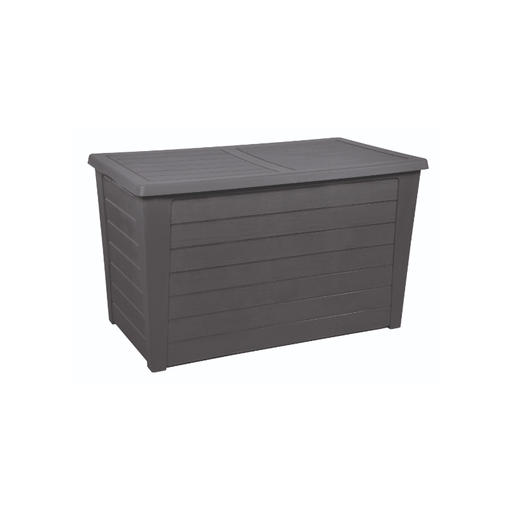
Why this choice suits this profile: With a stated capacity of 250 litres, this chest can hold cushions, toys, garden accessories or bulk supplies.
Its design, stated as weather-resistant and UV-protected, meets the demands of a balcony, patio or garage. The chest should not be used as a seat or step stool.
250-litre capacity, dimensions of 97.5 × 54.7 × 60 cm and assembly described as simple. A sheltered spot will help preserve the chest over time.
We’ve put together a complete, real-time updated selection of products that meet these exacting criteria, while complying with European safety regulations.
Start by grouping items by use, then choose a container suited to each category. Boxes with handles work well for things you use regularly. Open baskets make accessories easy to reach, while closed boxes protect seasonal items from dust.
It all depends on the material, the weight placed inside and the environment. A textile box kept in a dry place can stay functional for years, whereas a woven paper basket exposed to damp will deteriorate more quickly. Following the recommended weight limit and care instructions helps reduce wear and warping.
They’re especially useful when your storage needs change with the seasons or when space is tight. Once folded flat, they take up much less room. For everyday use with heavy items, though, check the rigidity of the walls, the quality of the handles and the stability of the base.