
Same-day & Next-day Delivery

Quality Guaranteed

Unlock Your Welcome Offers: FREE Delivery | Up to 80% OFF | Free 30-day JoyPlus trial
Download the APP
Getting organized is a universal quest, but the journey is often disappointing. You buy a stack of plastic boxes, convinced you've finally found the solution, only to find a few months later that the lids are cracking, the tower is threatening to collapse, and the clutter has returned. Choosing the right storage box with a lid isn't just about dimensions; it's about knowing how to avoid the common pitfalls that turn good intentions into buyer's remorse.
Before you buy, watch out for these three classic mistakes:
To make the right choice—one that will last for years—focus on a few decisive technical points.
The type of plastic is the primary indicator of durability. Most boxes are made of polypropylene (PP) or polystyrene (PS).
For storing children's toys or food items, check for a "BPA-free" (Bisphenol A) label for peace of mind. Fabric boxes, on the other hand, are a good alternative for a closet organizer, but they offer less protection from moisture and impact.
A good stackable storage crate isn't just able to be placed on top of another. It's designed for it. Look at the lid: does it have raised edges or grooves that interlock with the base of the box above? This is essential for creating a stable, secure column, allowing you to use the full height of your rooms without fearing a landslide. Reinforced walls also help the structure support weight without buckling.
Your needs dictate the form.
Rather than an endless list, here are models that meet specific needs, in line with the criteria for durability and smart design we've just discussed.
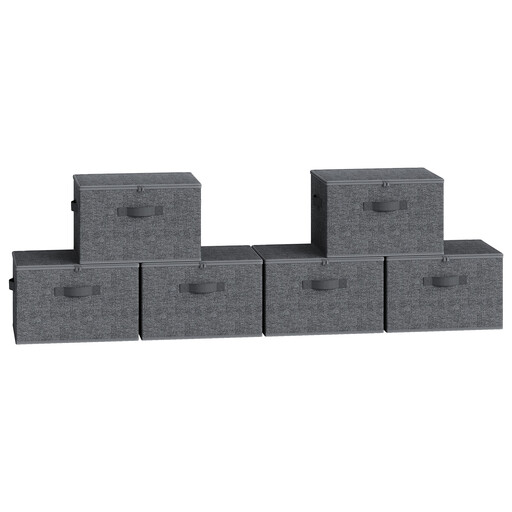
Why we chose it: Perfect for storing clothes, linens, or toys in a closet or on a shelf. Its main advantage is that it's foldable, a real plus when you don't know where to store the boxes once they're empty.
Its three-sided zippered lid ensures a dust-tight seal, which is much more effective than simple drop-on lids that can warp or slide off.
Foldable: Stores flat when empty. Multiple handles: One on the front to pull it from a shelf, and two on the sides for easy carrying.

Why we chose it: This is the solution designed for those who store items in tough conditions (garage, basement, attic). Its robust structure is built to last and stack without flinching.
This model directly counters the two worst flaws: brittle plastic and wobbly stacking. Its 2.5mm body made of PP plastic and its reinforcing ribs give it great strength, while the flat lid and non-slip bottom ensure a perfectly stable stack.
Reinforced structure: Designed to support heavy loads without deforming. Secure stacking: The lid design is optimized to create stable columns and maximize vertical space.
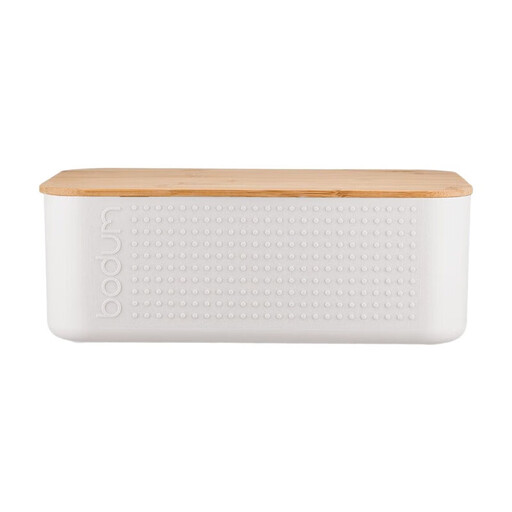
Why we chose it: For anyone who believes that practical shouldn't mean sacrificing aesthetics. Perfect on a kitchen counter, it proves that a storage box can be a true decorative object.
It avoids the trap of being a purely utilitarian object you want to hide. On the contrary, this is a designer piece that can be proudly displayed in the kitchen, while perfectly performing its function.
2-in-1 design: Its bamboo lid also doubles as a cutting board. Smart! Quality materials: BPA-free plastic and eco-friendly bamboo.
Explore our complete and up-to-date selection of products that meet our demanding selection criteria and current standards.
Warping is often caused by three factors: excessive load, direct sun exposure, or extreme temperatures. To prevent it: respect the recommended maximum load, store your boxes away from UV rays, and avoid places subject to significant temperature fluctuations (like a car in summer or an uninsulated garden shed in winter). Choosing a quality plastic like polypropylene (PP) also offers better resistance.
Generally, a rigid box will be structurally stronger, especially for stacking heavy items. However, a well-designed foldable storage box with reinforced sides and a solid base is perfectly suitable for lighter items like clothes, linens, or toys. Its main advantage remains the significant space it saves when empty.
That's a very bad idea. Manufacturers design the lids and bases of their boxes to interlock precisely. Attempting to stack models from different brands or product lines almost always results in an unstable and dangerous pile. For safe stacking, it's best to stick to a single product line.