
Livraison le jour même ou le lendemain

Qualité garantie

Débloquez vos offres de bienvenue: Livraison GRATUITE | Jusqu'à -80 % | 30 jours d'essai gratuits à JoyPlus
Téléchargez l'application
A storage box can quickly free up space in a bedroom, hallway, living room or garden. But a rushed purchase can also bring a few unwelcome surprises: overestimated capacity, an awkward lid, or a material ill-suited to its surroundings.
Before comparing models, it’s worth keeping three pitfalls in mind:
Start by measuring the available space: length, width, height and the clearance needed to open the lid. Under a bed, a few extra centimetres in height can make all the difference. The COMPACTOR model featured below measures 108 × 45 × 15 cm – a size that works well for duvets, seasonal clothing and blankets.
For outdoor use, also check the depth of your patio or balcony. A 420 L storage chest needs enough clear space to allow the lid to open fully.
The choice of material depends directly on how you plan to use it:
Terms like “waterproof” or “water-resistant” should always be interpreted in light of the intended use. For outdoor placement, also go for a hinged lid, adequate ventilation and a secure closure.
A storage box with a lid needs to stay easy to use day in, day out. Check the weight of the lid, the presence of handles and the overall stability. For an outdoor chest, a closure compatible with a padlock can be useful – though the padlock itself isn’t always included.
Never sit on a box that hasn’t been designed to bear weight. Some storage benches state a maximum load, but this usually assumes the lid is properly fitted and fully closed.
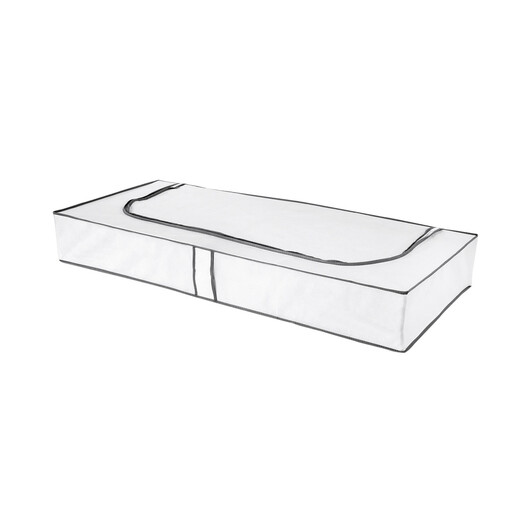
Why this suits this profile: Its low profile makes use of space that’s often left empty, without cluttering the room. It’s ideal for anyone wanting to start organising their bedroom with a lightweight solution that’s easy to pull out.
The dimensions are clearly stated: 108 × 45 × 15 cm. So you can check it fits under your bed before buying, rather than relying on an approximate capacity.
Non-woven polypropylene structure, dust protection and quick access by simply sliding it under the bed.
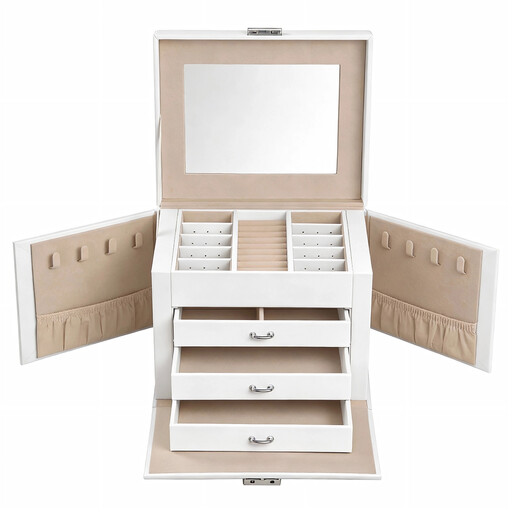
Why this suits this profile: This jewellery box focuses on presentation, separating accessories and offering a decorative finish that suits a bedroom or dressing table.
The four levels, three drawers and side hooks prevent small accessories and necklaces from getting tangled. The built-in mirror makes daily preparation easier.
Dimensions of 17.5 × 22.5 × 16.5 cm, velvet lining, lock with keys and a carry handle.
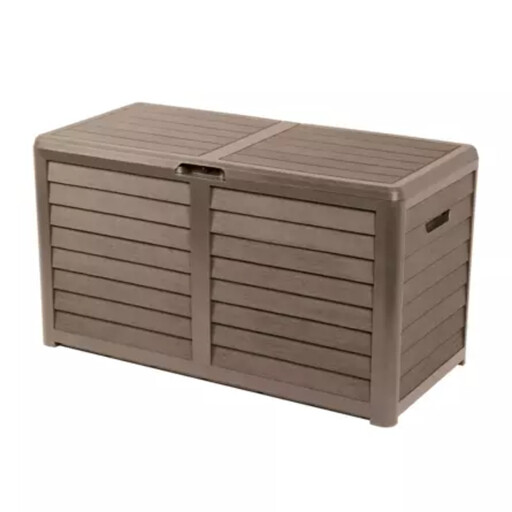
Why this suits this profile: Its volume lets you store garden cushions, pool accessories or small outdoor equipment together on a patio.
The product page specifies dimensions of 117.3 × 54.8 × 65.3 cm, permanent ventilation, UV and frost resistance, and the option to add a padlock.
420 L capacity, hinged lid, side handles and tool-free assembly, according to the manufacturer’s information.
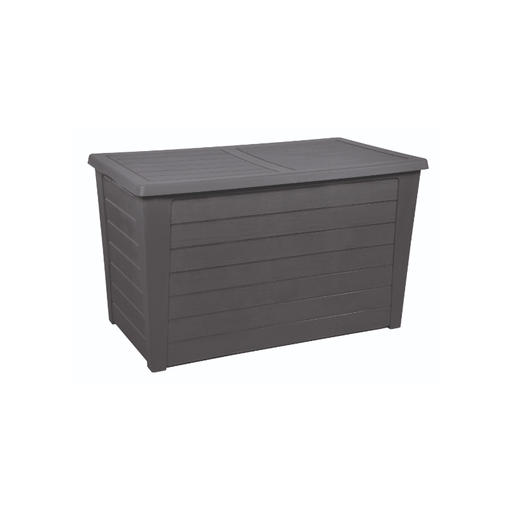
Why this suits this profile: This storage chest offers a good balance between footprint and capacity for toys, garden tools, cushions and accessories used regularly.
The 250 L volume comes with precise dimensions: 97.5 × 54.7 × 60 cm. This lets you compare the actual space needed, rather than just looking at the capacity figure.
Recyclable plastic as stated, UV protection, weather-resistant design and simple assembly.
We’ve put together a comprehensive, real-time updated list of products that fully meet these strict selection criteria and European safety regulations.
Place the chest on a slightly raised surface and avoid storing damp textiles inside. Built-in ventilation can help, but it doesn’t replace storing items in a completely dry location.
Its lifespan depends on the material, the weight it holds, sun exposure and how often it’s used. For an outdoor model, clean it with a soft cloth and avoid abrasive products. For a fabric box, limit contact with moisture and sharp objects.
A foldable storage box is handy when you need to store it away between uses or save space in a cupboard. On the downside, it’s generally less rigid than a plastic or MDF chest. So weigh up how often you’ll use it, the weight of the items you’ll store and the space available before making your decision.