
Livraison le jour même ou le lendemain

Qualité garantie

Débloquez vos offres de bienvenue: Livraison GRATUITE | Jusqu'à -80 % | 30 jours d'essai gratuits à JoyPlus
Téléchargez l'application
A storage box or safe doesn’t serve the same purpose whether you want to store toys, protect documents or secure a laptop. Yet product listings often mix up capacity, durability and security level, which makes comparison tricky.
Before you buy, three common pitfalls keep cropping up:
Start by identifying the main threat:
A portable safe with a cable may suit a hotel room or student accommodation, but it doesn’t offer the same level of protection as a steel model installed in a piece of furniture or bolted to the floor.
Measure the largest item you want to store. For A4-sized documents, a narrow safe can prove unusable despite a decent capacity. For a 160 L storage box, also check the space available on the patio, in the garage or under a shelter.
Dimensions are also crucial for:
A biometric safe opens quickly with a fingerprint, but it needs batteries and a backup solution. A key-operated model avoids electronic management, while a padlock or combination dial can be handy for occasional use.
For outdoor use, look for a design that’s resistant to water and ultraviolet rays. This doesn’t guarantee complete waterproofing, especially if submerged. The box should also be placed on a stable surface, away from repeated knocks and direct water run-off.
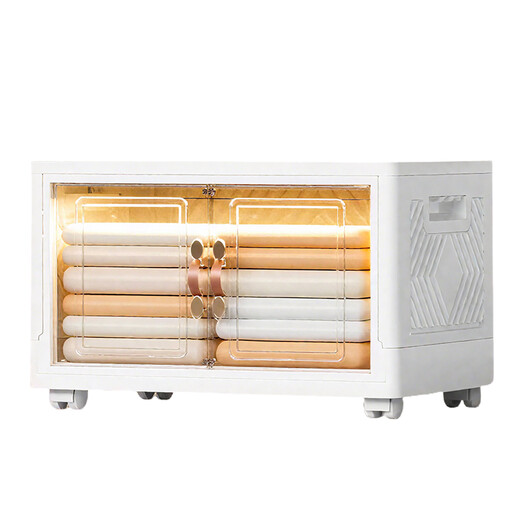
Why this choice suits this profile: this box is aimed at those who want to start organising their clothes, toys or accessories without investing straight away in a large rigid chest. Its foldable design means you can store it away easily when not in use.
It doesn’t claim to replace a safe: its strength lies in accessible, flexible storage. Check its stability and dimensions before placing heavy items inside.
A stated capacity of 84 L and a foldable design for flexible home use.
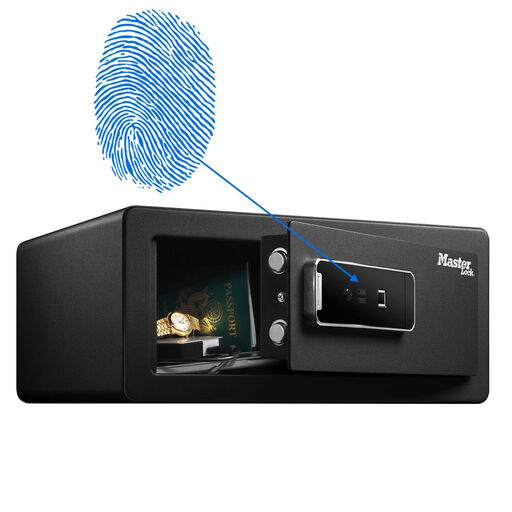
Why this choice suits this profile: this model is aimed at households and offices that need quick access to their documents, jewellery, cash or devices, while benefiting from a steel construction and a more permanent installation.
The backup key means you’re not solely reliant on batteries or the fingerprint reader. The included fixing hardware also reduces the risk of an unfixed safe being carried away.
The ability to store up to 30 fingerprints, two motorised bolts, a concealed hinge and interior lighting.
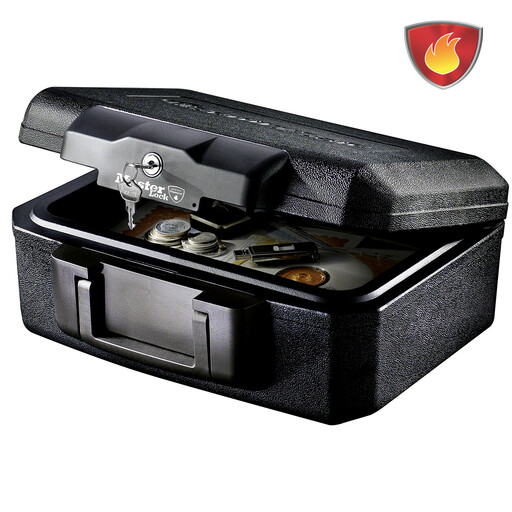
Why this choice suits this profile: this portable format is ideal for professionals, remote workers and families who want to keep their important papers or digital media together in a container that’s easy to move.
The UL and ETL certifications help you distinguish a precise technical specification from a vague promise of fire resistance. To meet its intended use, the lid must be fully closed and locked.
A 5 L capacity, integrated handle, key lock and stated protection for documents and digital media.
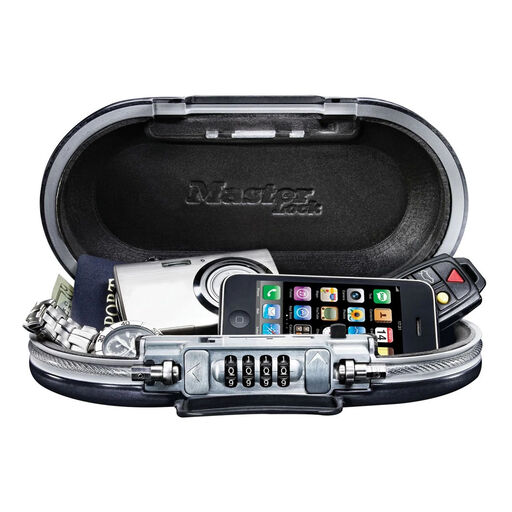
Why this choice suits this profile: this mini travel safe is designed for students, travellers and anyone who wants to protect a mobile phone, passport, cards or small devices in a bedroom, office or locker.
The integrated 50 cm cable lets you attach it to a fixed object. Its protection is nonetheless suited to small items and temporary use, not for storing bulky belongings.
An internal volume of 0.7 L, a resettable four-digit combination dial and a pass-through for charging cables or earphones.
We’ve put together a comprehensive, real-time updated selection of products that meet these strict criteria and European safety requirements.
The BAYA 160 L outdoor storage box is suitable for storing cushions, toys, garden accessories or tools. Its recyclable plastic construction, UV protection and stated weather resistance make it ideal for a patio, garage or garden. However, it doesn’t have the features of a safe designed to protect confidential documents.
For lightweight items used regularly, woven paper storage baskets with a metal frame can complement your home organisation. Just avoid damp conditions, abrasive products and excessive loads.
No. A storage box is mainly for organising your belongings and protecting them from dust or the elements, depending on its design. A safe adds a locking system, a rigid structure and, in some cases, fixing capability or fire resistance.
Choose a discreet, dry and stable location. For a steel model, use the supplied fixing hardware where possible. Avoid damp areas and check that the door or lid can open fully.
The lifespan depends on how often you open it, the quality of the batteries and storage conditions. Always keep the backup key, if the product includes one, in a separate place, and replace the batteries at the first sign of weakness.