
Livraison le jour même ou le lendemain

Qualité garantie

Débloquez vos offres de bienvenue: Livraison GRATUITE | Jusqu'à -80 % | 30 jours d'essai gratuits à JoyPlus
Téléchargez l'application
Is clutter taking over and you're dreaming of a magic bullet to optimise your space? The storage box seems like the perfect answer. But be careful, as the market is flooded with models making tempting promises that often prove disappointing in practice. An impulse buy can quickly become yet another item that creates more clutter than it clears. As a product expert at Joybuy, my mission is to guide you through this jungle of options to help you make a smart, practical, and long-lasting choice.
Before you dive in, it's essential to know the classic mistakes that turn a good idea into a purchase you'll regret. Here are three particularly common ones.
To avoid these setbacks, focus on a few key points that make all the difference in day-to-day use.
The choice of material depends entirely on what you plan to store in it and where you'll be keeping it.
Space optimisation is all about modularity. Before any purchase, there's one golden rule: measure! Think in "systems": a set of storage boxes from the same range is the best strategy. They are designed to stack with millimetre precision, creating a stable and visually clean unit. Foldable models are a godsend for small apartments or for seasonal storage (ski gear, Christmas decorations).
To put theory into practice, here's how these criteria translate into our product selection, tailored to specific needs.
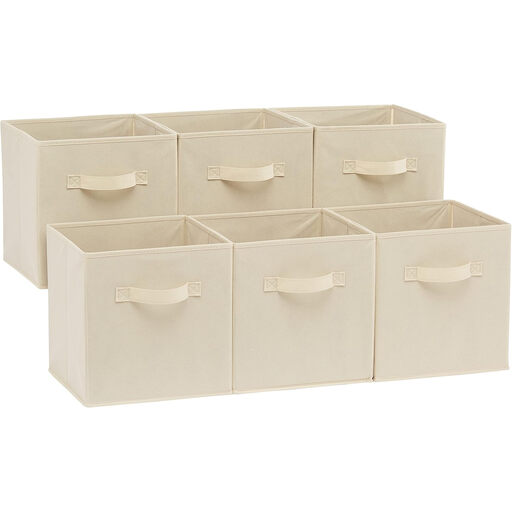
Why we chose it: The perfect solution for students or a first home. This set of six cubes provides a modular and budget-friendly storage base for clothes, books, or accessories. The big plus: they're foldable and become incredibly compact when empty.
Its fabric structure is reinforced with rigid cardboard, which prevents it from sagging. Sold as a set, it allows you to create a cohesive storage system and avoid the headache of mismatched boxes.
An unbeatable quantity-to-price ratio. The foldable design is a real space-saver in small apartments.
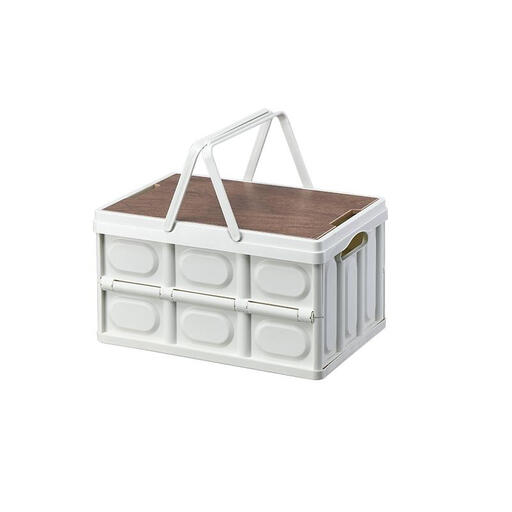
Why we chose it: For those who refuse to choose between style and substance. This clever basket combines a sturdy PP frame with a wooden lid that doubles as a small side table. It's just as at home on a picnic as it is serving as designer storage in the living room.
It proves that design and practicality can go hand in hand. The structure is solid (PP + MDF), and its dual function, thanks to the versatile lid, makes it much more than just a simple box.
Impressive versatility: storage, transport, side table. When folded, it takes up almost no space.
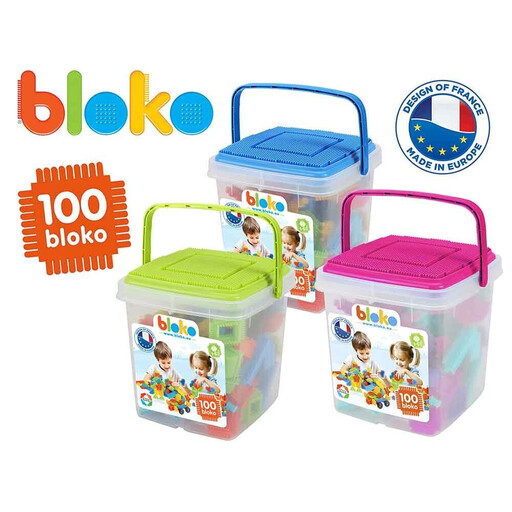
Why we chose it: The 2-in-1 solution to finally get stray toys under control. The barrel serves as a storage box for the 100 included building blocks, and its handle makes it easy to carry. A fun and effective way to teach children how to tidy up.
No unpleasant surprises here: the product is designed from top to bottom with children in mind. The plastic is flexible and safe (for ages 12 months and up), and the barrel is perfectly sized to hold all the blocks after playtime.
It turns tidying up into a game and empowers children with responsibility. Its large capacity is ideal for playdates or giant building projects.
Explore our full selection of storage solutions for kids' rooms, chosen for their durability, practicality, and fair price.
Forget the washing machine: their cardboard or metal frames can't handle it. The best solution is spot cleaning. Using a damp cloth and a touch of mild soap, gently rub the stain, then let it air dry. Above all, do not oversaturate the fabric.
Although the terms are often used interchangeably, the distinction is simple. A storage crate is rigid (hard plastic, wood), with straight sides and almost always a lid. It's the solution for archiving or long-term storage. A storage bin is often more flexible, sometimes lidless, and designed for easy and frequent access: a toy bin or a laundry basket are perfect examples.
This is a classic rookie mistake. Manufacturers design their product lines so that boxes nest and stack with perfect stability. Lids have grooves designed to accommodate the base of the box above. Mixing brands means risking wobbly, even dangerous, stacks, not to mention the questionable aesthetic result. For safe and clean stacking, stick to a single, matching range.