
Livraison le jour même ou le lendemain

Qualité garantie

Débloquez vos offres de bienvenue: Livraison GRATUITE | Jusqu'à -80 % | 30 jours d'essai gratuits à JoyPlus
Téléchargez l'application
We all dream of a clean and perfectly organised home. But choosing a simple storage box can quickly become a headache given the sheer number of available models. From plastics that crack at the first impact to lids that refuse to close, unpleasant surprises are all too common. This guide is here to help you avoid the pitfalls and find THE storage solution that truly meets your needs.
Before you even start comparing products, let's review the most common design flaws that can make a storage box unusable in the long run.
To make the right choice, focus on these key features that make all the difference in terms of practicality and longevity.
The material is the first indicator of a box's sturdiness. For a plastic storage box, two main options stand out:
A good stackable storage bin must guarantee rock-solid stability. Check that the lid is completely flat and that the base of the box above nests perfectly. Some models even offer a non-slip base to prevent any sliding: a real bonus for safety, especially with a stack of several boxes. This modularity is what will allow you to truly maximise your vertical storage space.
A storage crate with a lid must be as airtight as possible. Clip-lock systems are generally much more reliable than simple lift-off lids. Also consider accessibility: integrated ergonomic handles are a game-changer when it comes to carrying a full, heavy box.
Because every need is unique, here is our selection of products that cater to specific uses, all while meeting the quality criteria we've just discussed.
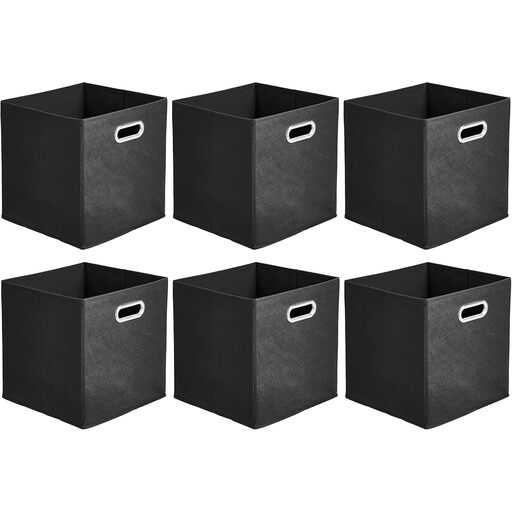
Why we chose it: This set of fabric storage cubes is an ultra-flexible solution for shelves, wardrobes, or children's rooms. Their standard format fits into most cube shelving units (like the Kallax type).
The reinforced fabric structure is designed to hold its shape and protect the contents from dust. When empty, the cubes fold flat for space-saving storage.
The six-pack allows you to create a visually harmonious setup and easily sort clothes, toys, or office supplies.

Why we chose it: Built for heavy storage, this crate is perfect for garages, cellars, or attics. Its reinforced structure and large capacity make it a reliable partner for archiving or storing bulky items.
This model checks all the boxes to counter fragility and stacking issues. The 2.5 mm thick body, reinforcing ribs, and shock-absorbent corners ensure rock-solid durability. The flat, clip-on lid guarantees stable and secure stacking.
Everything here is designed for load-bearing and durability. The integrated ergonomic handles make handling much easier, even when the box is packed to the brim.
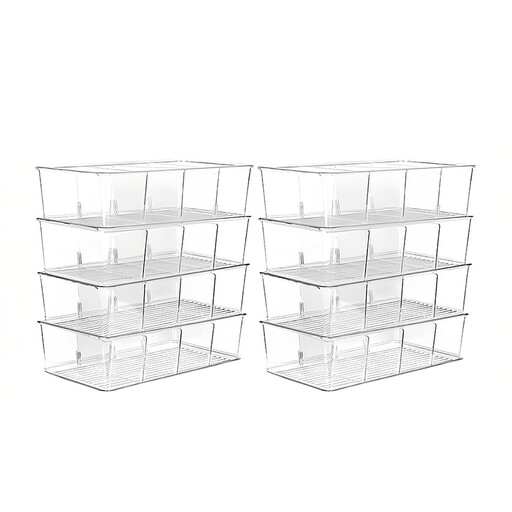
Why we chose it: This desk organiser is perfect for finally tidying up all those small items lying around: tea bags, coffee pods, stationery, makeup... It's the ultimate compartment box.
No more small items getting lost at the bottom of a large box! Its modular design allows you to create a custom configuration in a drawer or on a shelf.
The transparent PET plastic offers immediate visibility of the contents, saving precious time every day. The eight-pack allows you to organise multiple areas at once.
We have selected other products for you that combine practicality and durability to help you perfectly organise your space.
Most PP or PET plastic boxes are very easy to clean with a damp cloth and a bit of mild soap. Be sure to rinse and dry them thoroughly before storing your items again. Avoid abrasive products that could scratch the surface, especially on transparent models.
To put it simply: Polypropylene (PP) is more flexible and impact-resistant, ideal for storing heavy items or for demanding environments like a garage. Polyethylene terephthalate (PET), on the other hand, is more rigid and often perfectly transparent. It's commonly found in food containers or desk organisers where its clarity is a real asset.
Make sure the lid and base are well-designed for stacking. A flat lid with rims, or a base with grooves that nest into the lid below, is a tell-tale sign. Finally, a golden rule: always respect the load limit indicated by the manufacturer and place the heaviest boxes at the bottom of the stack.