
Livraison le jour même ou le lendemain

Qualité garantie

Débloquez vos offres de bienvenue: Livraison GRATUITE | Jusqu'à -80 % | 30 jours d'essai gratuits à JoyPlus
Téléchargez l'application
A well-organised living or workspace promises a clearer mind. Yet, the quest for the perfect storage box often turns into a headache: purchases that don't last, don't stack properly, or are ultimately too small. Before you start, let's review the classic traps that turn good intentions into a closet full of useless plastic.
Clutter isn't inevitable, but the wrong box can quickly make things worse. Here are the most common mistakes and, more importantly, how to avoid them:
To make an informed choice, you need to look beyond the price. Three technical parameters are crucial for the functionality and longevity of your office and home storage solution.
Most quality boxes are made of polypropylene (PP), a plastic known for its impact resistance and durability. But it's the wall thickness that makes all the difference. A plastic storage box with a 2.5?mm thickness and reinforcement ribs will support a much heavier load and better resist warping. For heavy-duty or long-term storage, this detail is non-negotiable.
The ability to stack boxes is critical. Make sure the top of the lid is completely flat and that it fits perfectly with the bottom of the box above it. Some stackable boxes with lids even have a textured or non-slip base to stabilise the column. Strong closing clips are also an excellent indicator of quality: they ensure the lid won't shift, even during transport.
Your needs dictate the format. To archive invoices, a document sorter or a metal desk organiser will be more suitable than a large storage bin. Conversely, to store duvets or tools, you'll need a large volume. Think about the end use: do you need to see the contents (transparent box) or hide them (opaque box)? A set of storage boxes from the same range is often a good idea for a solution that is both cohesive and aesthetically pleasing.
Because every need is unique, here are our recommendations, chosen for their ability to overcome the pitfalls we've just discussed.
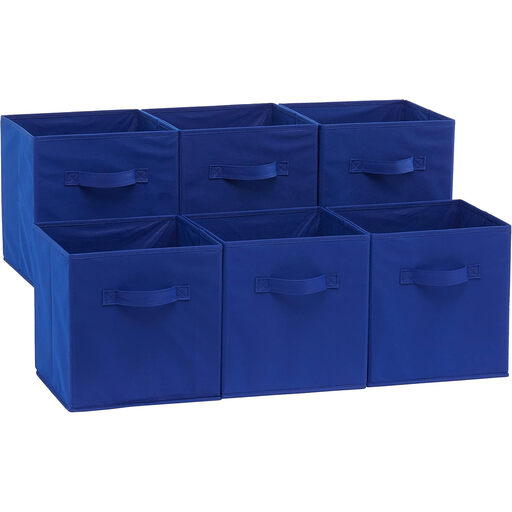
Why we chose it: A budget-friendly and versatile set of six, perfect for lightweight storage (clothes, toys, linens) in closets or on cube shelving (like Kallax).
As it's not made of rigid plastic, this collapsible solution is designed for lightweight items. It bypasses the problem of cracking due to heavy loads. The multi-pack format allows you to get organised cost-effectively.
Collapsible, these bins can be stored flat when not in use. Their handles make them easy to carry.
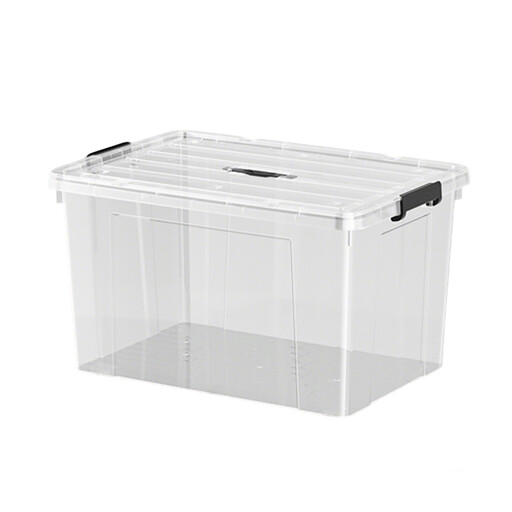
Why we chose it: The perfect solution for storing heavy items or protecting belongings long-term (garage, basement, attic). Its transparency lets you identify the contents at a glance.
Its thick 2.5 mm plastic and reinforcement ribs are the direct answer to the risk of cracking. The flat lid and non-slip base guarantee stable and secure stacking, avoiding the trap of low-quality lids.
Reinforced structure for high load capacity; stable and secure stackable design.
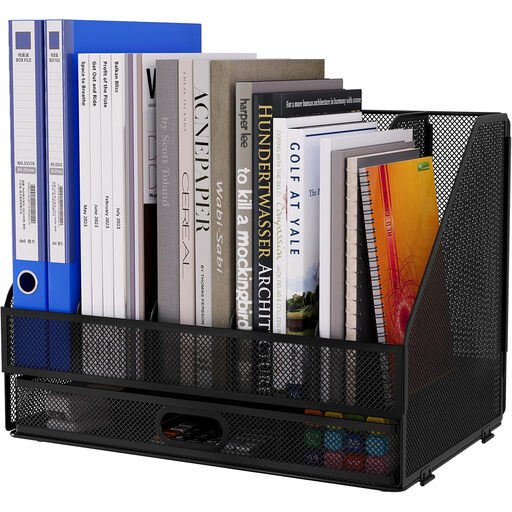
Why we chose it: An all-in-one solution for organising documents, files, and small supplies. It frees up desk space while keeping essentials within reach.
This organiser meets a specific need (A4 filing) and avoids the "misleading dimensions" pitfall by offering dedicated vertical compartments and a drawer. The space is maximised and 100% functional.
Multi-level design with an integrated drawer; sturdy metal structure for daily use.
Explore our full selection of products that meet our quality criteria and current safety standards.
The foolproof method: first, measure the space where the box will go (height, width, depth of the shelf), then measure the items you want to store in it. Always leave a small margin to handle the contents easily. When in doubt between two sizes, go for the larger one—it's often the safer bet.
It all depends on the quality of the plastic, its thickness, and how it's used. A good polypropylene model, used indoors away from the sun and not overloaded, can last for many years. However, a box exposed to frost, heat, or UV rays (garden, balcony) will degrade much faster.
Yes, this is their main weakness. Prolonged, direct exposure to the sun's UV rays causes the plastic to yellow and become brittle. For long-term storage, it is therefore crucial to place your boxes (even clear ones) away from direct light: in a closet, basement, or garage.