
Livraison le jour même ou le lendemain

Qualité garantie

Débloquez vos offres de bienvenue: Livraison GRATUITE | Jusqu'à -80 % | 30 jours d'essai gratuits à JoyPlus
Téléchargez l'application
A well-organised home often starts with a smart choice: the right storage box. But faced with a jungle of available models, it's easy to end up with a product that doesn't live up to its promises. Warping lids, plastic that breaks on the first impact, wobbly stacking... A purchase that's supposed to be practical can quickly turn into a nightmare.
As a product expert at Joybuy, I'm here to help you see things more clearly. Let's forget the marketing jargon and get straight to the point. This guide breaks down the pitfalls to avoid and gives you the keys to choosing storage boxes that are truly suited to your needs, whether for the kitchen, the office, or the garage.
Before you check out, it's best to know the design flaws that turn a good idea into a daily hassle.
To avoid these disappointments, you just need to check a few key points. This is your guarantee of investing in a durable and truly functional product.
The type of plastic is the number one criterion. For general use (garage, office, cupboards), polypropylene (PP) is a safe bet. It is known for its good resistance to impact, torsion, and temperature changes.
For a food storage container, caution is advised. It is imperative to check that the product is labelled "BPA-free" (Bisphenol A). Polypropylene is also an excellent choice for kitchen storage, as it can withstand the refrigerator, freezer, and often the microwave (just remember to leave the lid slightly ajar).
A good stackable box with a lid goes beyond a simple flat top. Look closely at the structure:
Buying a set of storage boxes from the same range is often a wise choice. Beyond visual harmony, it ensures perfect compatibility for stacking. The result: you optimise vertical space in your cupboards, garage, or pantry, with no wasted space.
Every storage situation is unique. Here are our recommendations, chosen for their intelligent design and their suitability for specific uses.

Why it's a great choice: This ultra-comprehensive set is designed for those who are serious about kitchen organisation. With four different sizes, it's perfect for storing dry goods in the pantry as well as for prepping meals for the week.
The airtight lids preserve freshness and prevent leaks. Say goodbye to unreliable seals! The durable, BPA-free plastic is perfectly suited for intensive food-related use.
A 12-piece set with 4 sizes (0.25L, 0.6L, 1L, 2L): it's the complete and cohesive solution for outfitting your pantry and refrigerator.

Why it's a great choice: Perfect for storing heavy and bulky items in the cellar, garage, or for archiving off-season clothing. Their large capacity and robust design are built for intensive use.
Its structure avoids two classic pitfalls: the 2.5mm thick body and reinforcements prevent any warping, while the non-slip base and engineered lid ensure stable and secure stacking.
A design engineered for heavy loads, with ergonomic handles that make transport easy, even when full.
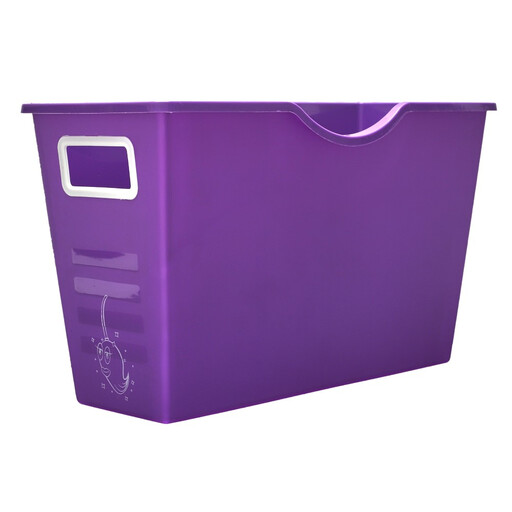
Why it's a great choice: This box meets a very specific need: making use of every last bit of wasted space. Its ultra-flat format is designed to slide under a bed, between two pieces of furniture, or in a car boot without getting in the way.
Its clever design bypasses the problem of standard boxes being too tall for narrow spaces. It's designed to fit where a classic box would never go.
An ultra-flat 10-litre format that is lightweight and easy to carry, transforming a wasted area into a highly functional storage zone.
We have curated a full range of products that meet our quality criteria and current safety standards.
Check the design of the lid and the base. The most reliable models have lids with indented edges or grooves on the bottom that allow the boxes to interlock. A simple flat lid on a flat bottom will always be a less stable solution.
Look for polypropylene (PP) that is labelled "BPA-free". This material is recognised as safe for food contact and holds up well to the low temperatures of the refrigerator and freezer. For microwave use, always check the manufacturer's recommendations on the packaging or product sheet.
Use a soft cloth or a non-abrasive sponge with warm water and mild soap. Avoid scouring powders, steel wool, or the abrasive side of sponges: they create micro-scratches that eventually make the plastic opaque. Air-drying or using a microfibre cloth is ideal.