
Livraison le jour même ou le lendemain

Qualité garantie

Débloquez vos offres de bienvenue: Livraison GRATUITE | Jusqu'à -80 % | 30 jours d'essai gratuits à JoyPlus
Téléchargez l'application
A tidy home leads to a clear mind. But the quest for perfect organisation is often fraught with pitfalls, starting with the choice of the ideal storage box. An impulse buy quickly turns into regret: plastic that cracks, lids that won't seal, or stacks of boxes that collapse at the slightest touch.
Before you invest, it's crucial to know how to spot the defects that will send a storage box to the landfill after just a few months.
Knowing how to spot these warning signs before you buy is the key to a lasting investment and an end to wasted money.
To make an informed choice, focus on a few technical details that make all the difference between a good and a bad product.
A box's durability is first judged by its material. For a plastic storage box, polypropylene (PP) is a classic. But be warned, its thickness and structure change everything. A 2.5 mm thick plastic, reinforced with structural ribs, guarantees far superior resistance to impact and heavy loads.
For a drawer organizer or desk tidy, PET (polyethylene terephthalate) is an excellent choice. Its perfect transparency and rigidity are ideal for seeing and grabbing what you need in the blink of an eye. Finally, for a food storage container, borosilicate glass remains the undisputed champion for its neutrality (no transfer of taste or odour) and its resistance to extreme temperatures.
A good lid must clip on firmly to seal the contents. Models with a silicone gasket ensure a perfect seal, a must-have for preserving food or storing items in a damp basement.
For a truly stackable design, the lid and base of the box must be designed to lock into one another. Look for grooves or raised edges that create a stable and secure column, optimising vertical space in a closet or cupboard.
Assess your needs precisely. A set of storage boxes of the same size is perfect for creating visual harmony and simplifying stacking. If your needs are varied, opt for modular ranges where different sizes nest and stack together. Consider large storage bins for duvets and garden tools, and reserve smaller formats for kitchen or bathroom drawers.
Because every need is unique, here are our targeted recommendations, tested and approved to help you avoid the pitfalls of low-quality products.
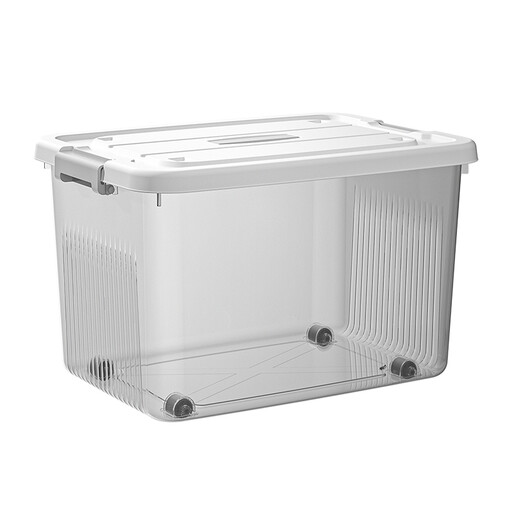
Why we chose it: Perfect for seasonal clothing, children's toys, or archives. This set creates a uniform look in closets, the garage, or the laundry room. Its transparency allows you to identify the contents at a glance without having to unpack everything.
Its thick 2.5 mm plastic, reinforced with structural ribs, resists warping and breakage. The clip-on lid and non-slip base ensure stable and secure stacking.
Its reinforced structure supports heavy loads and allows for optimised vertical stacking. The integrated ergonomic handles make transport easy.

Why we chose it: The ultimate ally for meal prep, storing leftovers, and transporting your lunch. This ultra-versatile container goes from the freezer to the oven, then to the microwave and straight into the dishwasher.
Its borosilicate glass won't warp with heat, stain, or absorb odours, unlike low-quality plastic containers. The clip-on lid guarantees a 100% airtight seal.
A healthy, BPA-free material that withstands thermal shock (hot/cold) and cleans effortlessly. The ultimate sustainable solution for food storage.
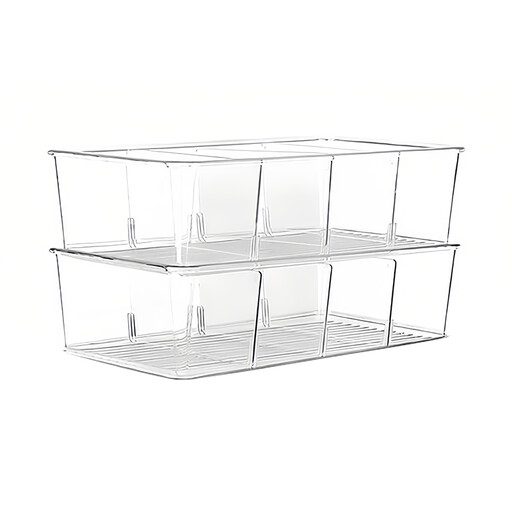
Why we chose it: Designed to end the chaos of small items: tea bags, coffee pods, stationery, makeup... It transforms any drawer or countertop into a model of organisation.
No more catch-all boxes where everything gets mixed up! Its compartmentalised structure imposes order. The PET plastic, both rigid and transparent, ensures perfect visibility and excellent durability.
Fixed compartments for efficient sorting and immediate access. Its clean, transparent design blends into any decor.
Discover our complete selection of products that meet our quality criteria and current safety standards.
Most PP or PET boxes can be cleaned very well with a damp cloth and a little washing-up liquid. Avoid abrasive sponges that could scratch the surface. For food containers, check if they are dishwasher-safe. In any case, make sure they are completely dry before closing them to prevent any mould growth.
Absolutely not. It is imperative to only use boxes certified for food contact. Look for the "food safe" mention or the glass and fork pictogram. Plastics like PP and PET are common, but check that they are guaranteed BPA-free (bisphenol A), especially if you plan to put hot food in them.
PP (polypropylene) is the quintessential all-purpose plastic: durable, flexible, and often opaque or translucent. It's perfect for large storage bins that need to support weight. PET (polyethylene terephthalate), the same material as our water bottles, is known for its crystal-clear transparency and high rigidity. It's the material of choice for organisers where seeing the contents is essential.