
Livraison le jour même ou le lendemain

Qualité garantie

Débloquez vos offres de bienvenue: Livraison GRATUITE | Jusqu'à -80 % | 30 jours d'essai gratuits à JoyPlus
Téléchargez l'application
A tidy home often leads to a tidy mind. Yet, choosing the right storage solution can be a genuine challenge. A storage box that looked perfect in the store cracks after just a few weeks, lids that refuse to close properly, or stacks of crates that threaten to collapse at any moment... These all-too-common frustrations are often the result of design flaws hidden behind attractive packaging.
To avoid unpleasant surprises, it's essential to know the most common pitfalls so you can make a truly informed choice.
Knowing how to spot these weak points is the first step toward focusing on the features that truly make a difference for effective and durable home organisation.
To make the right choice, three key parameters must be scrutinised. The durability, practicality, and suitability of the box for your needs depend on them.
The choice of material is paramount. The polypropylene (PP) plastic storage box remains the most common and versatile option. However, not all are created equal. Look for specifications on thickness: a value like 2.5 mm is often a sign of sturdiness. Models with reinforcing ribs also offer better resistance to warping.
For visible use in a living room or bedroom, a fabric storage basket or stylishly finished cardboard boxes will be far more aesthetic. Just keep in mind that they are susceptible to moisture and don't handle heavy loads well.
A good stackable crate is recognisable by a few key details. Ensure the lid has grooves or ridges designed to interlock with the base of the box placed on top. A non-slip bottom is a real bonus for stack stability.
The closing mechanism is just as crucial. The locking clips should be firm, but not require herculean strength to open or close. For storing food or protecting items from moisture, the presence of silicone seals and sturdy latches becomes a decisive advantage.
A transparent box allows you to identify its contents at a glance—a precious time-saver when looking for your off-season clothes, Christmas decorations, or archives. It's the practical choice for pure storage areas like the garage, cellar, or the back of a cupboard.
Conversely, opaque boxes create visual harmony and conceal their contents. They are therefore preferable for a desk organiser or for baskets left in plain sight in a living space. Also consider modular or compartmentalised solutions for organising smaller items.
Because every need is unique, here are a few solutions we've selected for their ability to meet specific use cases.

Why we chose it: This large-format storage box set is perfect for storing bulky items: children's toys, winter clothing, DIY equipment... Its robust design is built for heavy-duty use and long-term storage in the garage or attic.
Its thickened 2.5 mm body and structural reinforcing ribs prevent any warping under weight. The well-designed lid and non-slip bottom ensure stable stacking, a far cry from the precarious balance of low-end models.
Reinforced structure for excellent load capacity. Ergonomic handles for easy transport. Transparency to identify contents at a glance.
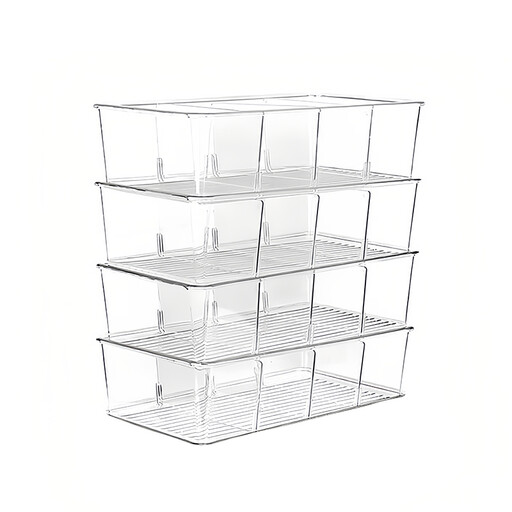
Why we chose it: Ideal as a desk organiser or for kitchen drawers. Its compartments make it effortless to sort tea bags, coffee pods, stationery, or cosmetics. No more chaos from small items!
Its quality transparent PET construction ends the frustration of having to open everything to find what you're looking for. Its rigid structure doesn't warp, unlike cheap, soft plastic organisers.
Open, compartmentalised design for immediate access. Transparent material for perfect visibility. Compact size ideal for shelves, drawers, and worktops.
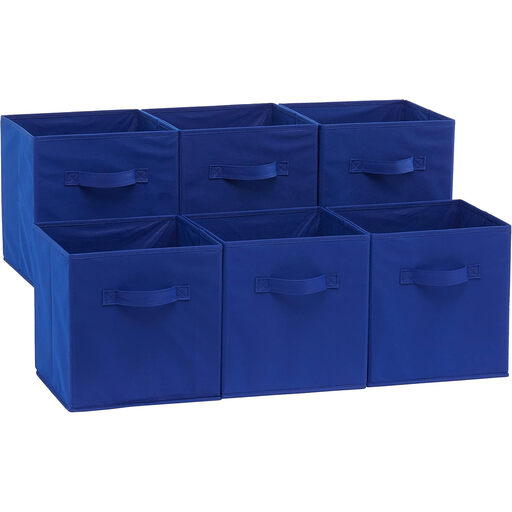
Why we chose it: The perfect solution for those who want storage to be an integral part of their decor. These fabric bins are sized to fit into standard cube storage units, making them perfect for a bedroom, living room, or playroom.
Unlike rigid plastic boxes, which are often bulky and ungraceful, these bins are foldable. They store flat when not in use, offering maximum flexibility.
Foldable for optimal space-saving. Integrated handles for easy handling. Lightweight fabric that blends into the decor.
We have curated a complete selection of products that meet our demanding selection criteria and current safety standards.
Before buying, measure the destination space (shelf, cupboard, under the bed...). Then, estimate the volume of the items you want to store. It's often smarter to opt for several medium-sized boxes rather than one very large one: the weight will be better distributed, and handling will be much easier.
Not just any box. To store foodstuffs, the box must be explicitly certified as "food-safe" and guaranteed BPA-free (Bisphenol A). If this information is not clearly stated on the packaging or product sheet, reserve it for non-food use as a precaution.
The load capacity varies enormously depending on the manufacturing quality. The most reputable manufacturers state this in the technical specifications. As a general rule for stacking, always place the heaviest boxes at the bottom. Also, remember to distribute the weight evenly inside each box to avoid warping the lid and compromising the stability of the stack.