
Livraison le jour même ou le lendemain

Qualité garantie

Débloquez vos offres de bienvenue: Livraison GRATUITE | Jusqu'à -80 % | 30 jours d'essai gratuits à JoyPlus
Téléchargez l'application
A well-organised home starts with the right storage solutions. However, the market for storage boxes is a jungle of products with often-broken promises. Between materials that wear out in record time, lids that no longer close, and impractical dimensions, it's easy to throw your money down the drain. The goal isn't to accumulate more boxes, but to find the right tools to optimise your space for the long haul.
Before you fall for a particular model, it's best to know the pitfalls to avoid. A low-quality box can quickly become another source of clutter. To keep from falling into the trap, here are the key points to watch out for.
To avoid these disappointments, focus on a few key features that make all the difference.
The choice of material depends primarily on how you plan to use it.
The effectiveness of a box, especially for food, relies on its lid.
To optimise space, nothing beats modular boxes. Those designed to stack or nest are your best allies for making use of every nook and cranny in your cupboards, shelves, or refrigerator. Favour ranges where multiple sizes share common dimensions (length or width) to create a coherent and stable storage system. Even a simple storage basket becomes much more practical this way.
Here are a few products that tick all the right boxes for very specific needs.

Why we chose it: Ideal for meal prep enthusiasts who want to transport their meals securely, hot or cold. Perfect for the office, travel, or picnics.
The 316 stainless steel is a premium, food-grade material: it doesn't warp and retains neither odours nor tastes. Its screw-on lid is designed for a perfect seal, unlike low-quality containers.
The vacuum insulation keeps food hot or cold for 4 to 6 hours. Its wide opening is a major plus, making it easy to fill, eat from, and clean.
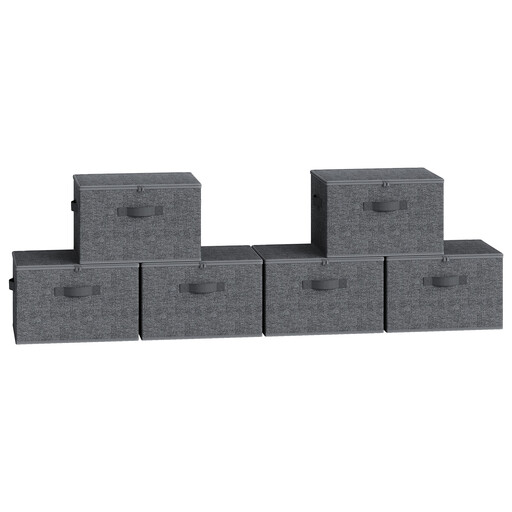
Why we chose it: A smart and stylish solution for organising clothes, linens, or accessories in a closet or on a shelf. Sold as a set, this collection ensures a visually harmonious organisation.
Its 2mm thick cardboard structure and reinforced handles prevent sagging, the deal-breaking flaw of budget fabric boxes. The zipper effectively protects contents from dust.
These boxes are foldable and can be stored flat when not in use. Their three handles (one front, two side) make handling incredibly easy, whether the box is on a shelf or being carried.

Why we chose it: For those looking for a healthy, versatile, all-in-one solution for cooking, storing, and reheating. Glass remains the reference material for food contact, being both safe and durable.
The borosilicate glass withstands heat without warping. The clip-lock system and its silicone gasket guarantee a perfect seal. Goodbye leaks and hello long-lasting freshness!
Its versatility is its greatest strength: this dish is oven, microwave (without lid), freezer, and dishwasher safe. A single container for everything, from prep to storage.
We have curated a complete list of products that meet our quality criteria and current safety standards.
Maintenance depends on the material. Glass and stainless steel boxes are generally dishwasher safe (for the lid, check the manufacturer's instructions). For fabric boxes or baskets, a simple wipe with a damp cloth is sufficient. Avoid immersing them in water to prevent damage to their cardboard structure.
It all depends on the model. Versions with a reinforced base and thick cardboard walls can support several kilograms (often up to 3-5 kg), which is more than enough for clothes, toys, or books. Always check the maximum load indicated by the manufacturer and avoid overloading the box to prevent it from deforming over the long term.
You should always choose plastic containers labelled as "BPA-free" (Bisphenol A). This chemical, once common in food-grade plastics, is now regulated due to potential health risks. Plastics like polypropylene (PP, symbol 5) are considered a safe choice for food contact.