
Livraison le jour même ou le lendemain

Qualité garantie

Débloquez vos offres de bienvenue: Livraison GRATUITE | Jusqu'à -80 % | 30 jours d'essai gratuits à JoyPlus
Téléchargez l'application
Achieving a tidy home and a functional kitchen often comes down to one crucial step: choosing the right storage solutions. But with an overwhelming number of options available, it's easy to make a mistake and turn a promising purchase into a real source of frustration. The storage box that looked perfect on the shelf can quickly become a daily nightmare.
To avoid buyer's remorse, let's review the most common pitfalls to avoid.
Knowing how to spot these flaws is the first step toward making an informed and, above all, lasting choice.
To stop making the wrong choice, focus on a few key technical features. This is what separates a gimmicky product from a long-term investment.
The type of plastic is the primary indicator of quality. Polypropylene (PP), identifiable by the number 5 inside the recycling triangle, is the gold standard. It is known for its durability, heat resistance, and food-safe properties. For a food storage container, a "BPA-free" (Bisphenol A) label is a non-negotiable prerequisite. The thickness of the plastic is also an excellent clue: a plastic storage bin with thick walls and reinforced corners will handle heavy loads and daily bumps much better.
A truly effective seal relies on a winning combination: a robust locking system and a quality gasket. The most reliable lids feature a silicone seal that fits snugly against the container's rim. Paired with firm locking clips on all four sides, this system guarantees zero leaks and protects food from air and moisture. This is a crucial feature for kitchen organisation and batch cooking.
A well-designed plastic box with a lid intended for stacking should have tell-tale details. Look for lids with raised edges or grooves that lock into the base of the box above. This interlocking system prevents any accidental sliding. A non-slip base and a rigid structure are also signs of stability—an essential point for any cupboard organiser looking to safely optimise vertical space.
Because every household has different needs, here is our selection of products that cater to specific uses while meeting our quality criteria.
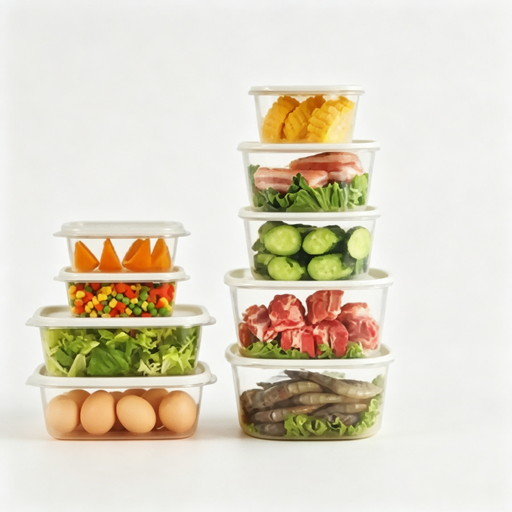
Why we chose it: This set is perfect for fans of meal prepping. With nine pieces in various sizes, it accommodates everything from individual portions to family-sized meals and goes from the freezer to the microwave without a hitch.
Its locking system is advertised as 100% airtight and leak-proof, a direct solution to the problem of lids that don't live up to their promises.
Its freezer and microwave compatibility offers maximum versatility for storing and then reheating meals.

Why we chose it: For storing bulkier items (clothing, tools, toys), this set of large, clear bins is an incredibly effective solution. Their structure is designed to support heavy loads and ensure stable stacking.
Its 2.5 mm thick walls and reinforcing ribs combat warping and cracking. The flat lid and non-slip base avoid the trap of precarious stacking.
Its reinforced structure and stackable design are perfect for optimising vertical space in a garage, basement, or wardrobe.
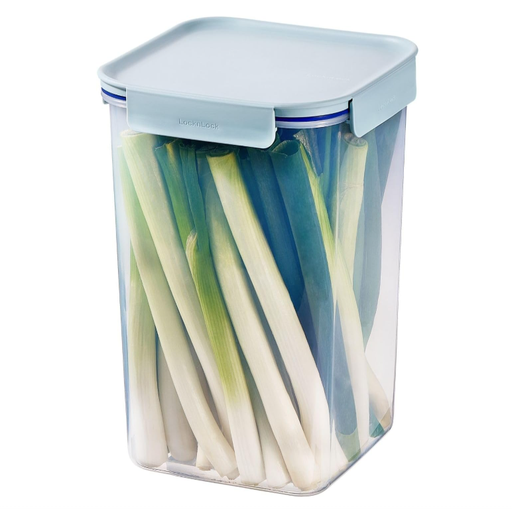
Why we chose it: When organising a pantry or kitchen cupboard, modularity is king. This container's square shape lets you use every square inch, while LocknLock's reputation for airtight seals provides peace of mind for storing dry goods (pasta, rice, flour...).
Its modular design is engineered for stable, space-saving stacking, putting an end to the chaos of mismatched boxes. The locking system is the brand's long-standing strength.
Its square, modular design maximises storage space in the tightest areas, like cupboards and shelves.
Explore our full selection of products that meet our quality standards and current regulations.
Look for the international "glass and fork" symbol, which certifies food-grade compatibility. Prioritise plastics like polypropylene (PP, #5) and insist on a "BPA-free" label for complete peace of mind, especially if the container will hold children's food or be heated in the microwave.
Not necessarily. The term "stackable" is often just a marketing buzzword. True stability depends on the design: a lid with interlocking edges, a solid base, and a structure that doesn't sag. A box simply placed on top of another without a locking mechanism can quickly become more dangerous than useful.
No, it is crucial to check that the manufacturer explicitly states it is freezer-safe. Some plastics become brittle in the cold and are at risk of cracking. Containers designed for freezing are made from materials that remain flexible even at sub-zero temperatures.