
Livraison le jour même ou le lendemain

Qualité garantie

Débloquez vos offres de bienvenue: Livraison GRATUITE | Jusqu'à -80 % | 30 jours d'essai gratuits à JoyPlus
Téléchargez l'application
A tidy home leads to a clearer mind. Yet, finding the ideal storage box often feels like an uphill battle. Between marketing promises and real-world use, it's easy to end up with solutions that warp, won't close properly, or worse, fail to optimise your space at all. As a Product Recommendation Manager at Joybuy, my role is to navigate you through this jungle and help you make a smart, practical, and durable choice.
Before you dive in, let's review the three most common pitfalls that turn a promising purchase into a costly disappointment.
To avoid these traps, focus on a few essential technical points. These are what will guarantee a storage solution that is tailored to your needs and built to last.
The choice of material depends entirely on what you'll be using it for.
If you want to optimise your vertical space, the lid design is paramount. Look for flat lids with rims or grooves that interlock perfectly with the base of the box above. This creates a stable and secure stack. For fabric boxes, a zippered lid is a plus for protecting the contents from dust, especially if they are stored on a high shelf or under a bed.
Handles, visibility, and modularity are aspects that should not be overlooked.
Because every need is unique, here are our recommendations, chosen for their smart design and suitability for different uses.
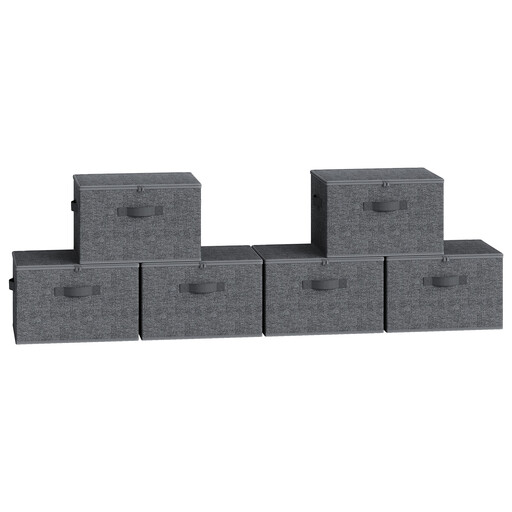
Why we chose it: Perfect for students or for optimising a closet. This budget-friendly set is great for storing clothes, bedding, or accessories. The foldable format is a major plus for small spaces, allowing them to be stored flat when not in use.
Its rigid cardboard structure and 80 g/m? non-woven fabric prevent it from sagging. The zippered lid protects it effectively from dust, much better than a simple lift-off lid.
A set of six 30L boxes offers a complete and economical solution. The reinforced handles (one front, two side) make them easy to carry.
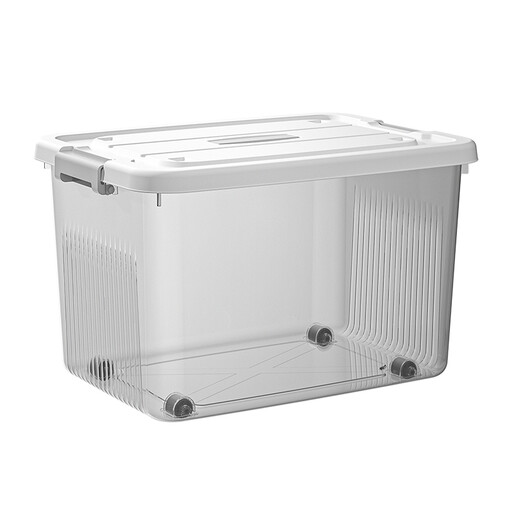
Why we chose it: For families or anyone needing a robust solution for the garage, laundry room, or kids' room. This plastic storage bin is designed to withstand heavy use and to be stacked securely.
Its 2.5 mm thick body and reinforcing ribs give it excellent strength. The flat, clip-on lid and non-slip bottom ensure stable stacking with no risk of sliding.
Its transparent PP plastic construction lets you see the contents without opening the box. The integrated ergonomic handles make it easy to carry, even when fully loaded.
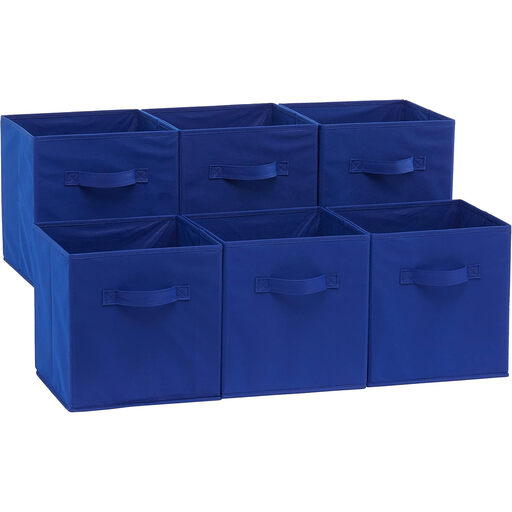
Why we chose it: Designed to fit perfectly into standard cube shelving and storage units (like Kallax). It's the ideal solution for transforming an open shelf into an organised and aesthetic system of drawers.
Its standard dimensions (approx. 27x27x28 cm) prevent the wasted space typical of ill-fitting boxes. The structure is foldable yet rigid once assembled, maximising the cube's usable volume.
The cube format and the set of six allow you to create a visually harmonious and highly functional organisation system. The handle makes it easy to pull the bin out of its compartment.
We've compiled a comprehensive list of products that meet our quality standards and current regulations.
The lifespan of a fabric storage box depends on its build quality and how it's used. A model with a thick cardboard structure and a good density non-woven fabric (80?g/m? or more) can last for several years under normal use. For maintenance, a simple dusting or cleaning with a damp cloth is usually sufficient. Avoid overloading them and machine washing, as this could warp the cardboard frame.
Safety is essential when stacking. Always start by placing the heaviest boxes at the bottom to create a stable base. Make sure the lid of each stackable crate is securely clipped on and that its design allows for a secure fit. Never exceed the height recommended by the manufacturer and regularly check the stability of the stack, especially in high-traffic areas or places accessible to children.
No, and the choice of material is crucial. Plastic boxes are versatile, but you should avoid storing delicate textiles in them for very long periods without ventilation, as moisture could condense inside. Conversely, fabric boxes are perfect for clothes because they "breathe," but they don't offer sufficient protection against moisture in a basement or garage. For food items, only use containers certified as food-safe.