
Livraison le jour même ou le lendemain

Qualité garantie

Débloquez vos offres de bienvenue: Livraison GRATUITE | Jusqu'à -80 % | 30 jours d'essai gratuits à JoyPlus
Téléchargez l'application
A well-organised space, whether at home or in the office, often hinges on a simple yet crucial choice: the right storage box. However, faced with an overwhelming selection, it's easy to fall into common pitfalls that turn a promising solution into an instant regret. A lid that warps, plastic that cracks, or dimensions incompatible with our standard cupboards... disappointments are frequent.
This guide is here to help you identify the essential criteria for an informed choice. We will break down the mistakes to avoid and the features to inspect to find THE storage solution that will durably meet your needs, whether for impeccable office organisation, optimised kitchen storage, or your meal prep.
Before you start, it's crucial to know the most frequent traps. Focusing solely on price or aesthetics often leads to bitter disappointment.
The "all-in-one" myth and unsuitable materials: Many boxes claim to be versatile, but the reality is quite different. A low-grade plastic designed for storing pens will never survive the stresses of a food storage container that shuttles between the freezer and the dishwasher. An unsuitable material is likely to stain, retain odours, or even degrade, making the product unusable for its primary purpose.
A non-functional design that wastes space: A box might look appealing on the shelf but prove to be a real nightmare to use. Rounded shapes that are impossible to stack, a lack of ledges for an easy grip, dimensions incompatible with standard shelves... these design flaws ruin any attempt at optimisation. A good storage solution should, on the contrary, integrate perfectly into your environment.
To avoid these disappointments, it's best to focus on a few objective technical characteristics. These are the true guarantee of quality and durability for your future storage box.
The choice of material is decisive: it depends entirely on your intended use.
A good storage box should save you space, not waste it. Before buying, keep these points in mind:
To help you see how these criteria apply in practice, here are a few models suited to specific user profiles.

Why we chose it: Ideal for those who prepare their meals in advance and demand a healthy, durable solution. The set of three sizes (600 ml, 1100 ml, 2200 ml) covers all needs, from a simple snack to a main course.
It avoids the pitfall of unsuitable materials by relying on 316 stainless steel, a food-grade benchmark known for its robustness and hygiene, unlike low-grade plastics.
Durability and food safety. The stainless steel does not retain odours or stains, and the lids provide a perfect seal to preserve freshness. Freezer and dishwasher-safe.
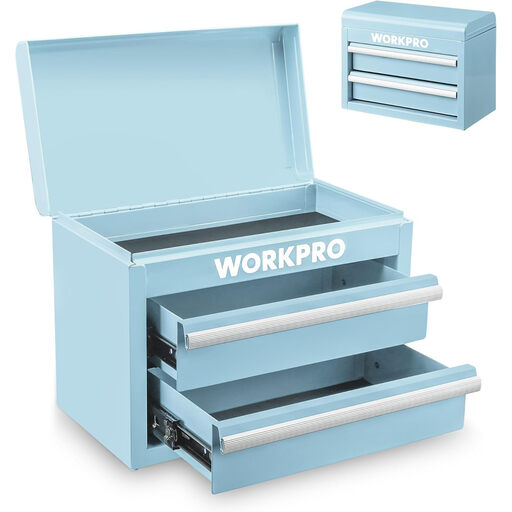
Why we chose it: For those seeking an office organiser that is as stylish as it is sturdy. Its metal structure and sliding drawers make it a long-lasting solution for small supplies, tools, or electronic accessories.
It avoids the pitfall of non-functional design with its ball-bearing drawers, which ensure smooth opening, and its central locking system that secures the contents during transport.
All-metal construction for maximum longevity and a sleek design that fits perfectly into a modern office. The removable mats protect both the items and the box.
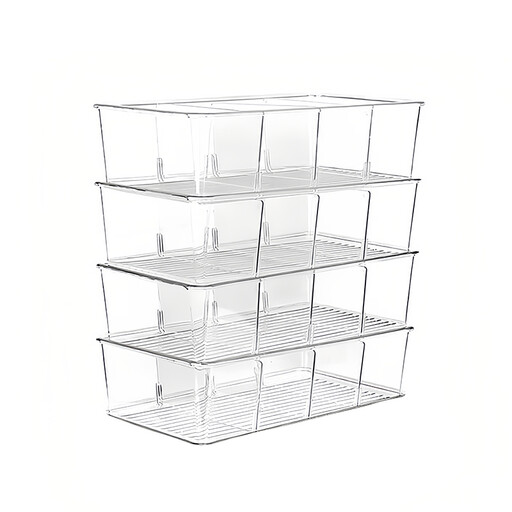
Why we chose it: Perfect for organising kitchen drawers, cupboards, or the office. The transparency of the PET plastic allows you to see the contents at a glance (tea bags, coffee pods, makeup, etc.).
It solves the problem of non-functional design by offering a standardised rectangular format that fits perfectly into drawers and onto shelves, creating a perfectly coherent drawer organiser system.
Modularity and visibility. The open, transparent format simplifies access and visual inventory. The set allows you to create a uniform organisation system in several areas of the home.
Beyond purely practical storage, there are boxes designed for the joy of collecting. Discover our selection of mystery boxes and other fun sets.
1. How do I clean and maintain my storage boxes to extend their lifespan? For plastic or metal boxes, hand washing with warm, soapy water is often sufficient. Most are dishwasher-safe, but always check the manufacturer's instructions. For glass, avoid extreme thermal shocks (do not pour boiling liquid into a container straight from the fridge). Always dry the boxes completely before storing them to prevent mould growth.
2. Is a plastic box safe for food? Yes, provided you choose a food-grade plastic. Look for the "BPA-free" (Bisphenol A) label or recycling symbols 2 (HDPE), 4 (LDPE), and 5 (PP), which are generally considered safe for food contact. As a precaution, avoid microwaving food in a plastic container unless explicitly authorised by the manufacturer.
3. How do I choose the right size storage box? Measure the destination space (height, width, depth of the shelf or drawer). Also, think about what you plan to store in it. For bulky items like winter clothes, opt for large boxes. For kitchen or office organisation, an assortment of small and medium-sized modular boxes often proves more effective.