
Livraison le jour même ou le lendemain

Qualité garantie

Débloquez vos offres de bienvenue: Livraison GRATUITE | Jusqu'à -80 % | 30 jours d'essai gratuits à JoyPlus
Téléchargez l'application
A well-organized interior ensures a more serene state of mind. Yet, optimizing space, especially in modern apartments and houses, can be a real headache. The storage bench emerges as a solution that is as clever as it is stylish: it serves as both extra seating and a discreet storage chest. But be warned, not all models are created equal. A poor choice can quickly lead to disappointment. We'll explain how to avoid the common pitfalls and select a piece of furniture that will truly serve you for years to come.
The market is flooded with seemingly attractive models, but a few design flaws can render your purchase useless in just a few months.
To avoid falling into these traps, it's best to focus on a few objective technical criteria. These are the true guarantors of your future bench's quality and longevity.
Expressed in kilograms (kg), this figure indicates the maximum weight the bench can support when stationary. It's a non-negotiable criterion.
The choice of materials directly impacts the bench's strength, aesthetics, and lifespan.
Before you decide, carefully measure the space you have available and think about how you will use it. A bench 80 cm long will suffice for a small entryway, while a 110 cm model will be more at home at the foot of a bed for storing duvets. Foldable models are perfect for small apartments: they fold flat for storage when not in use, offering maximum flexibility.
To help you see more clearly, here are a few concrete examples that illustrate how these criteria apply to different profiles and needs.
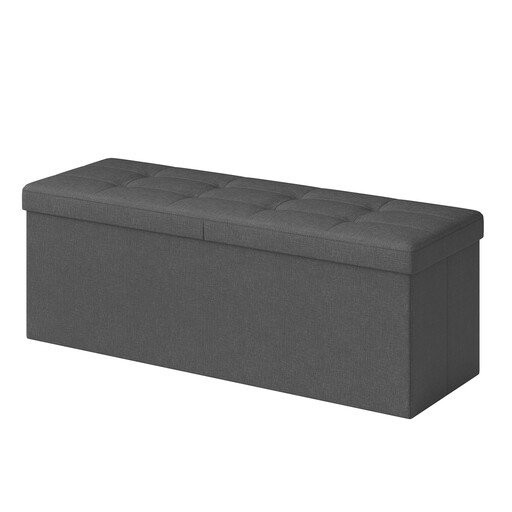
Why we love it: The perfect solution for those looking for flexible, occasional storage. This storage chest assembles in minutes and folds flat to slide under a bed or into a closet. It's the ideal multi-functional piece for a studio or a student's room.
Despite its foldable design, its structure of thick MDF panels and corner reinforcements gives it a static load capacity of 300 kg. This easily overcomes the pitfall of deceptive flimsiness.
Its 131 L interior volume is very generous for its category. The high-density foam padding ensures a comfortable seat that won't sag over time.
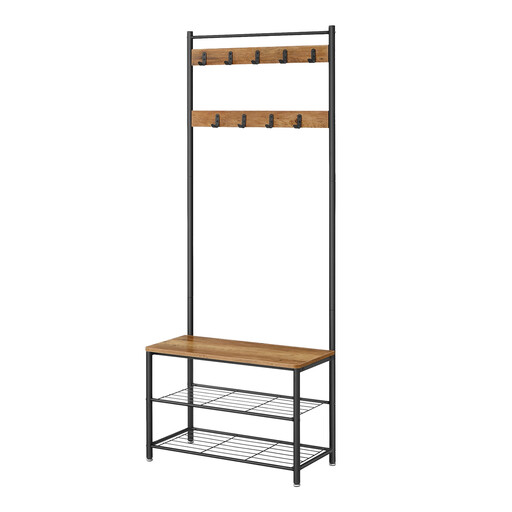
Why we love it: The ultimate 3-in-1 solution for busy entryways. It combines a coat rack, a bench for putting on shoes, and shoe shelves, centralizing everything the whole family needs when leaving and returning.
Its sturdy steel frame and adjustable feet ensure perfect stability. The included anti-tip kit is a real bonus for safety, especially with children around.
The bench supports up to 136 kg, more than enough for daily use. Its 9 hooks and two shelves help organize the entryway clearly and efficiently.
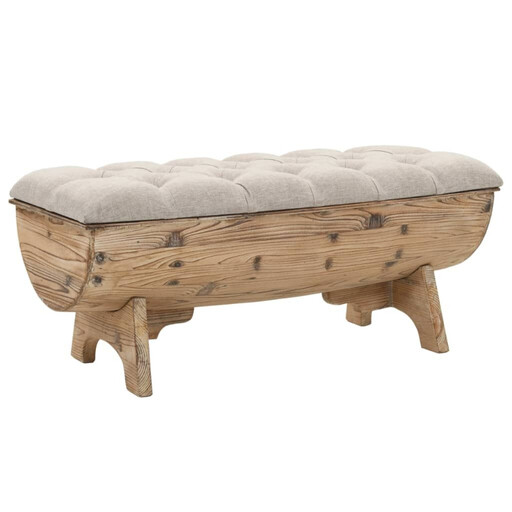
Why we love it: For those who prioritize aesthetics and natural materials above all else. Its barrel shape and solid spruce wood construction make it a statement piece, perfect for adding a rustic touch to a living room, bedroom, or entryway.
Its solid wood construction guarantees a level of sturdiness and longevity that is in a different league from particleboard products. This is a piece of furniture built to last, which won't warp over time.
Its unique design makes it as decorative as it is functional. The 6 cm thick padded seat offers comfort far superior to the average for this type of furniture.
Discover our complete and up-to-date selection of benches that meet our strictest quality and safety criteria.
Yes, as long as you carefully check its static load capacity. A model certified for 150 kg or more can easily serve as daily extra seating for an adult. For more intensive use by several people, opt for models that support 300 kg.
It all depends on the materials and usage. A well-maintained solid wood bench can last for decades. A good model made of MDF and steel, used within its maximum load capacity, will serve you well for many years. Conversely, entry-level models made with overly lightweight materials can show signs of wear in less than a year.
That's actually one of their biggest advantages: their simplicity. Assembly is usually done without tools and in under five minutes. You just unfold the frame, insert the bottom panel to stiffen the structure, and place the lid on top. It's incredibly straightforward.