
Livraison le jour même ou le lendemain

Qualité garantie

Débloquez vos offres de bienvenue: Livraison GRATUITE | Jusqu'à -80 % | 30 jours d'essai gratuits à JoyPlus
Téléchargez l'application
Whether you're trying to free up space in a small flat, store out-of-season clothes, or simply protect a suit from dust, the storage bag seems like a miracle solution. The problem? The market is saturated with products that make tempting promises but often end up being a disappointment. Between zips that break on the first use and materials that tear like paper, it's all too easy to make the wrong choice.
Our mission, as product experts at Joybuy, is to help you navigate the options. This guide breaks down the key points to check to choose a truly functional and durable bag, and how to avoid the most common marketing traps.
Before we even get into the technical details, let's review the design flaws that can turn a good idea into a purchase you'll regret within a few months.
To make the right choice, there are three technical points to watch closely. They are what make all the difference between a gimmick and a long-lasting investment.
The choice of material is crucial for properly protecting your belongings.
You can spot a good bag first and foremost by the quality of its seal.
The format of the bag should perfectly match what you want to store.
Here are a few options that meet specific needs, taking into account the quality and functionality criteria mentioned above.
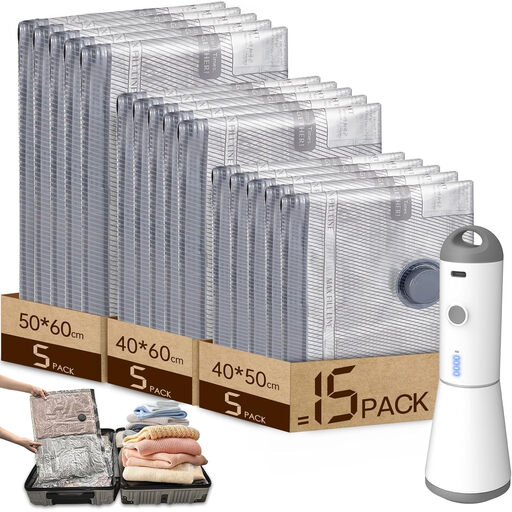
Why we chose it: This set is the perfect solution for nomads. Its compact, rechargeable cordless vacuum pump lets you compress your belongings anywhere, on the way there and on the way back, without needing a full-size vacuum cleaner. A turnkey solution for maximising space in a suitcase.
It solves the "one-time compression" problem by providing a reliable way to re-vacuum on the return trip. The PA+PE material and double-zip are designed for intensive, repeated use.
The included cordless pump offers complete autonomy. It's the very definition of a modern and practical travel compression bag.
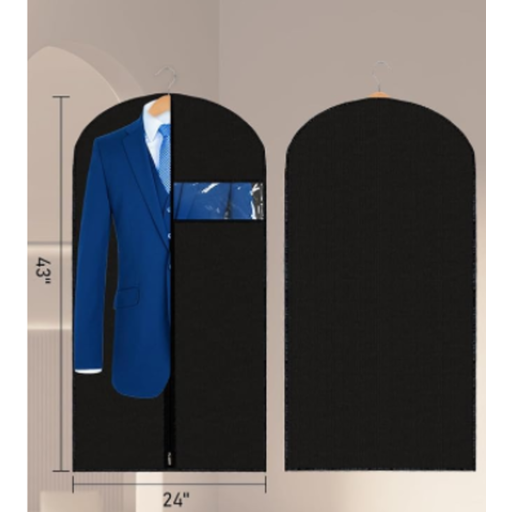
Why we chose it: Ideal for protecting suits, dresses, or coats from dust and creases, without any compression. It's the essential bag for preserving the shape and quality of delicate textiles over the long term.
It sidesteps the "unsuitable material" trap. Its EVA (Ethylene Vinyl Acetate) fabric is far more robust and durable than simple plastic, offering reliable protection without trapping moisture.
Protects from dust and wrinkles while allowing the garment to breathe: the number one criterion for a quality suit cover.
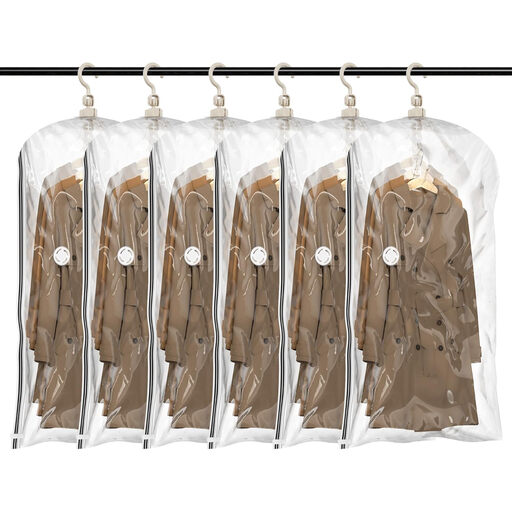
Why we chose it: The perfect solution for anyone with an overflowing wardrobe. By vertically compressing the bulkiest items (puffer jackets, winter coats), it frees up an incredible amount of space on the rail. The rotating hook makes accessing your items simple.
It tackles the "fragile seals" pitfall with a zip that changes colour to visually confirm that the bag is properly sealed. The hanging system is sturdy, designed to support the weight of several heavy garments.
Spectacular vertical space-saving. The ultimate hanging wardrobe bag solution, combining compression with suspended organisation.
We have curated a full selection of products that meet our quality criteria and current standards.
It all depends on the quality! A good vacuum storage bag can be reused dozens of times over several years. The keys to longevity are a robust material (look for the PA+PE blend), a solid valve, and a reliable seal. To make it last even longer, here's a tip: don't overfill it, avoid folding it at the valve, and keep it away from sharp objects.
That depends on the use case. For storage over a few months (for example, putting away winter clothes), a non-breathable vacuum bag is perfect: it provides an unbeatable barrier against moisture, dust, and moths. However, for very long-term storage or for delicate materials like leather or fur, always opt for a non-woven fabric bag. It will allow air to circulate and prevent condensation and musty smells from setting in.
For a duvet bag, the rule is simple. Fold your duvet (in four or six), then measure it. Choose a bag that is slightly larger, with about 5 to 10 cm (2 to 4 inches) of margin on each side. This will allow you to insert it easily without straining the seams or the zip. One last tip: be wary of labels like "Jumbo" or "XL" which don't mean much, and always check the exact product dimensions before buying.