
Livraison le jour même ou le lendemain

Qualité garantie

Débloquez vos offres de bienvenue: Livraison GRATUITE | Jusqu'à -80 % | 30 jours d'essai gratuits à JoyPlus
Téléchargez l'application
Choosing a storage bag may seem straightforward. Yet a zip that catches, material that is too thin or an unsuitable size can quickly turn a practical purchase into a poor choice. Seasonal clothing, household linen, frozen food, camping equipment and moving boxes all have different requirements.
Here are the key criteria to consider when choosing practical, durable storage bags suited to their intended use, rather than relying solely on marketing claims.
Water-resistant material can protect against splashes, dust and ambient humidity. That does not mean the bag is designed to be submerged or left out in the rain for long periods. For a wardrobe, dry cellar or cupboard, a translucent, moisture-resistant bag may be perfectly suitable. However, for transporting items in the rain, you need to assess the whole design: seams, fastening and any flap.
Storage bags with zips are easy to open and close, but the zip remains a vulnerable point. An overfilled bag puts considerable pressure on the teeth, seams and corners. An opening that runs along the entire length makes it easier to access the contents, while a double slider can be useful on some food storage bags.
It is better to stick to the stated capacity and spread bulky items across several bags than to squeeze too much into a single one.
A long garment bag is suitable for a dress, coat or suit, but much less so for shoes or folded blankets. Conversely, a large bag with handles may be ideal for linen while taking up too much space in a wardrobe. The right size therefore depends both on the available space and on the type of item being stored.
For clothing, translucent PEVA lets you see the contents immediately while creating a barrier against dust and ambient humidity. Garment bags are particularly useful for hanging items, formalwear and storing out-of-season clothing.
For food, food storage bags must be used exclusively for this purpose. Depending on their design, multi-layer bags made from PET, aluminium and PE can help limit the passage of light and odours. Always check the manufacturer's guidance on storage in the fridge and freezer.
Vacuum storage bags require a valve compatible with a pump or vacuum cleaner. They reduce the volume of some textiles, but do not protect against sharp objects or damp storage conditions.
Measure your storage space before ordering. For a wardrobe, compare the length of the garment bag with that of the rail. For a bed or shelving unit, check all three dimensions of the bag once it is filled.
Handles are particularly useful for moving storage bags, provided you do not exceed the stated maximum load. A rectangular shape makes stacking under a bed or in a boot easier. Removable compartments can also be invaluable for camping equipment, crockery or small accessories.
A washable bag should be cleaned with a mild product and then dried completely before being reused. Avoid storing laundry that is still damp: even moisture-resistant material cannot eliminate the risk of condensation or prevent unpleasant odours from developing.
For reusable freezer bags, leave some space when filling them, especially with liquids and foods that expand. Do not put them in the oven, microwave, on a naked flame or in boiling water unless the manufacturer explicitly permits these uses. Sharp foods and bones can also puncture the material.
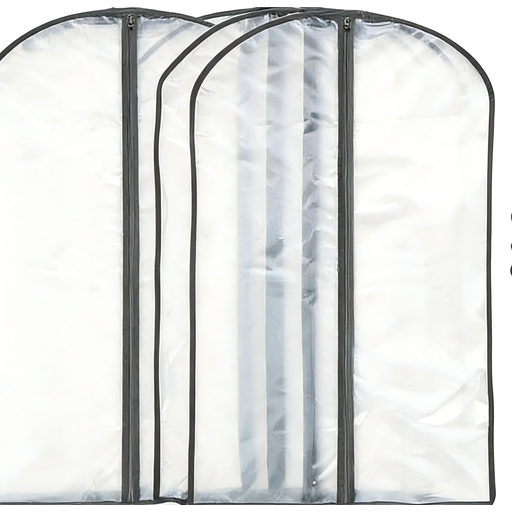
Why this choice suits this profile: This pack of three garment bags makes it easy to start organising coats, dresses and seasonal clothing in a wardrobe or suitcase.
The translucent material means you do not need to open every garment bag to identify its contents. The full-length fastening helps limit exposure to dust.
Translucent PEVA, stated moisture resistance, a pack of three and easy care with a simple wipe using a damp cloth.
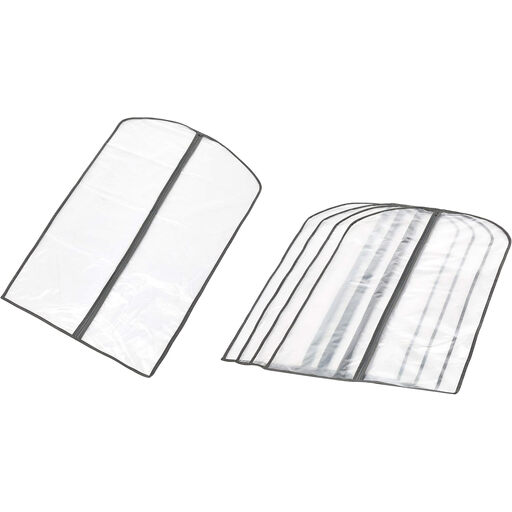
Why this choice suits this profile: With five garment bags, it is easy to organise your wardrobe by category: jackets, dresses, suits or travel clothing.
The contents remain visible, helping you avoid duplicate purchases and unnecessary handling. However, take care not to overfill the garment bags.
Pack of five, zip fastening, translucent PEVA and a design suited to both clothing and travel.
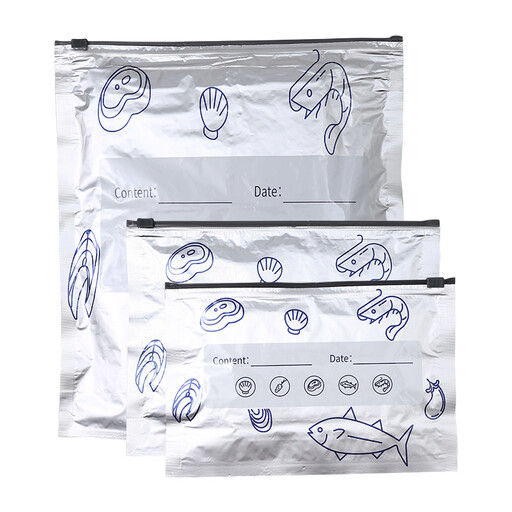
Why this choice suits this profile: The three sizes are ideal for households that regularly freeze different portions of meat, vegetables, prepared meals or seafood.
The different sizes mean you do not have to fill a large bag for a small portion. The labelling area lets you note the contents and date.
PET, aluminium and PE construction, sizes from 20 × 13 × 5 cm to 26 × 29 × 7 cm, stated temperature range from -20 °C to 100 °C.
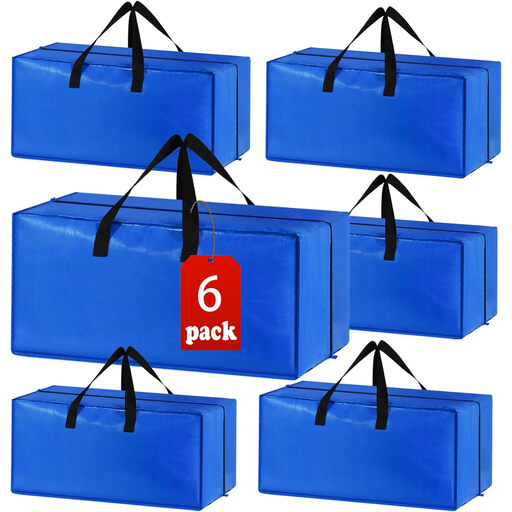
Why this choice suits this profile: Measuring 73 × 34 × 37 cm, these bags can hold duvets, bulky clothing and items to be moved between a bedroom, garage or vehicle.
The handles make carrying easier, while the lid and fastening help limit textiles' exposure during transport.
Six units, integrated handles, lids and a capacity suited to household linen as well as moving house.
We have put together a comprehensive, real-time updated selection of products that meet these strict criteria and European safety regulations.
Only store items that are clean and completely dry. Allow camping utensils to cool before placing them in their bag, and dry food storage bags after washing them. Regularly airing the cupboard or storage area also helps limit condensation.
This mainly depends on the humidity, temperature and condition of the clothes when they are stored. For long-term storage, fold or hang dry textiles, avoid filling the garment bag to the brim, and regularly check the condition of the fastening and the contents.
They can reduce the need to buy single-use bags if used in line with the manufacturer's recommendations and cleaned properly. Their lifespan varies according to the foods stored, how often they are washed and how they are handled. Replace any bag with a puncture, leak or fastening that no longer seals properly.