
Livraison le jour même ou le lendemain

Qualité garantie

Débloquez vos offres de bienvenue: Livraison GRATUITE | Jusqu'à -80 % | 30 jours d'essai gratuits à JoyPlus
Téléchargez l'application
An overflowing wardrobe, a suitcase that simply will not close or camping gear piling up in the hallway? Storage bags can make everyday life much easier, provided you choose a model suited to the volume, weight and intended use. A bag designed for folded clothes will not meet the same requirements as a large-capacity travel model or storage for bulky textiles.
Before placing your order, it is worth keeping three common pitfalls in mind:
Start by measuring the available space: under the bed, on a shelf, in the car boot or inside a suitcase compartment. For clothing storage bags, a rectangular shape makes stacking easier. Duvet storage bags should be wide enough to hold folded textiles without putting excessive strain on the fastening.
Dimensions also matter when you need to transport the bag. A 73 × 34 × 37 cm model may be practical for moving house or storing household linen, but become cumbersome on public transport. Conversely, suitcase packing cubes in several sizes make it possible to separate clothes, shoes and accessories.
The right material depends on the environment and what you intend to store:
A water-repellent coating or waterproof base protects against splashes and damp floors. However, this does not turn the bag into a watertight container. For camping, also check the quality of the stitching, whether the base is reinforced and how easy the bag is to clean.
Vacuum storage bags significantly reduce the space taken up by duvets, coats and seasonal clothing. However, they must have a completely airtight seal and a valve compatible with your vacuum cleaner hose. Avoid placing sharp objects inside: a single puncture can be enough to eliminate all the compression.
For a conventional soft-sided bag, check the width of the zip, the strength of the handles and whether dividers are included. Once fully loaded, a large bag can quickly become difficult to move. It is better to distribute the weight across several models than overload a single container.
For products intended for food use or young children, read the instructions, materials and conditions of use carefully. Breast milk storage bags, for example, are designed for a specific purpose and should not be confused with textile storage bags. Freezing, thawing and temperature instructions must be followed.
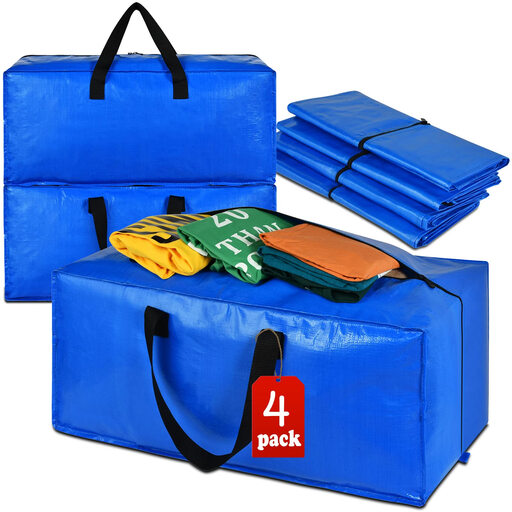
Why this choice suits this profile : This pack of four 73 × 34 × 37 cm bags is suitable for storing clothes and bedding, as well as preparing for a house move or occasional camping trips.
The pack lets you spread the contents across several bags instead of overloading a single container. The handles and fastening make it easier to handle when putting items away.
Pack of 4, stated large size of 73 × 34 × 37 cm, handles and lidded zip fastening.
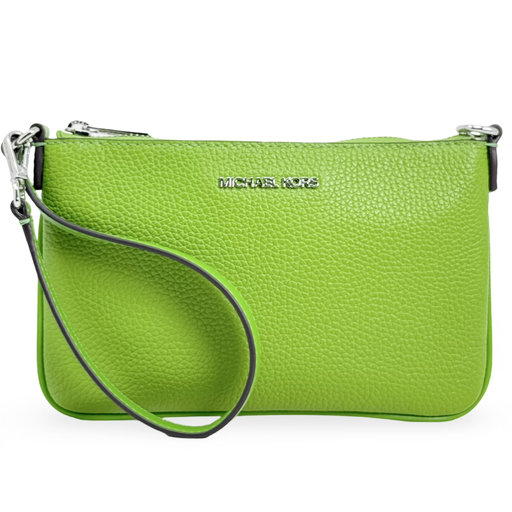
Why this choice suits this profile : This compact pouch is ideal for anyone who wants to organise small personal items inside a larger bag or carry them separately.
With its compact dimensions of 13,5 × 13,3 × 1,9 cm, it prevents a small pouch from becoming a bulky storage solution.
Grained leather exterior, polyester lining, zip fastening, inner pocket and detachable wrist strap.
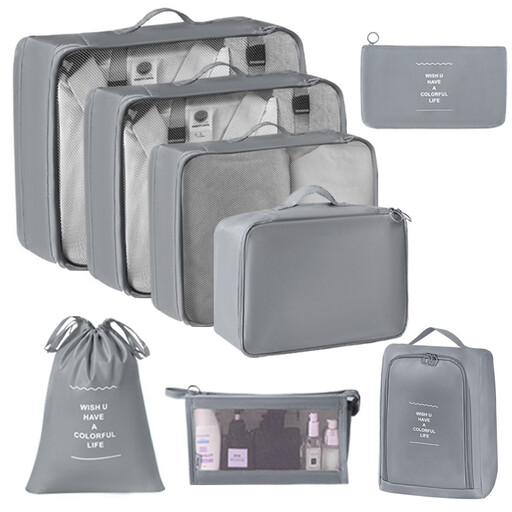
Why this choice suits this profile : Frequent travellers can organise clothes, shoes, accessories and toiletries across eight assorted sizes.
The mesh panels let you identify the contents quickly, while the double-zip fastenings give you access to your belongings without having to empty your suitcase.
Set of 8 cubes, nylon stated to be water- and tear-resistant, carry handles and several sizes.
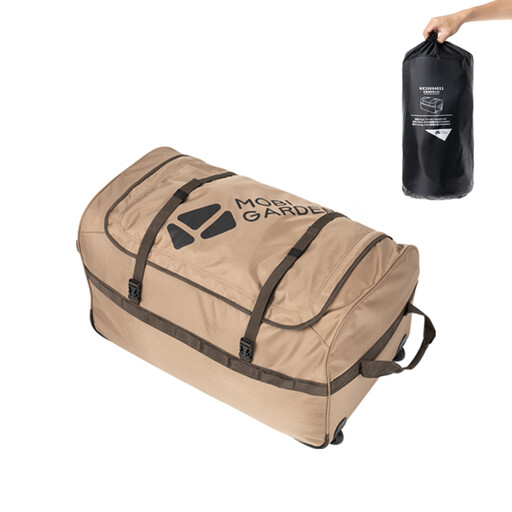
Why this choice suits this profile : Campers and anyone transporting bulky equipment can benefit from a large-capacity bag with integrated wheels.
The wheels save you from having to carry a heavy load all the time. However, the manufacturer recommends pulling it across flat surfaces and carrying it on stairs.
Stated capacity of 110 l, dimensions of 70 × 40 × 40 cm, foldable design and integrated wheels.
A vacuum bag is ideal for duvets, pillows, coats and seasonal clothing that takes up a lot of space. COMPACTOR Aspispace models, available in XL or packs of five, feature a valve compatible with a vacuum cleaner fitted with a flexible hose. Store them in a dry place and keep them away from sharp objects.
A conventional storage bag, such as a PEVA duvet bag, is easier to use every day. It protects against dust, lets you identify the contents quickly and can generally be carried using its handles. However, it does not reduce the volume of the textile.
For travel, packing organisers and cubes are more practical: they divide your belongings into compartments without requiring any equipment. A separate toiletry bag can complete the set by keeping liquids and small accessories separate.
Cyclists and scooter users should check the fastening system, the compatible handlebar diameter and that the bag does not interfere with the brakes or cables. A 2 to 4 l scooter bag can hold a phone, wallet, charger or lightweight lock, but it should not be overloaded.
We have put together a complete, real-time updated list of products that fully meet these strict selection criteria and European safety regulations.
Let clothes and equipment dry completely before storing them. After a camping trip, clean off any mud and sand, then air the bag before storing it for several weeks. Avoid sealing equipment that is still damp for extended periods.
It depends on the condition of the bag, the quality of its seal and the storage conditions. Check the valve regularly and watch for any air pockets developing. For delicate textiles, opt for moderate compression and a cool, dry place.
They generally require a vacuum cleaner for a few seconds while the air is removed. Consumption therefore depends mainly on the appliance’s power and how long it is used. Conventional bags, covers and suitcase cubes, on the other hand, use no energy at all.