
Livraison le jour même ou le lendemain

Qualité garantie

Débloquez vos offres de bienvenue: Livraison GRATUITE | Jusqu'à -80 % | 30 jours d'essai gratuits à JoyPlus
Téléchargez l'application
Finding the right cookware for family meals, comforting soups, or flavourful stews can be overwhelming. Materials, sizes, hob compatibility—there's a lot to consider. This guide is here to help. As the Head of Product Selection at Joybuy, my mission is simple: to give you the insights you need to choose the perfect stockpot for your kitchen, without all the marketing fluff.
Before we dive into our selection, let's review the key factors that will guide your decision.
The material of your stockpot affects not only how your food cooks but also its ease of maintenance and lifespan.
The size of your household and your cooking habits are key factors.
For simmered dishes, a stockpot with a lid is simply essential. A transparent glass lid is a real bonus, allowing you to keep an eye on your cooking without losing heat. Don't overlook the handles! Ergonomic, heat-resistant models will prevent mishaps when moving a full, hot pot.
Here are three options that stand out for their unique features, each catering to specific needs.
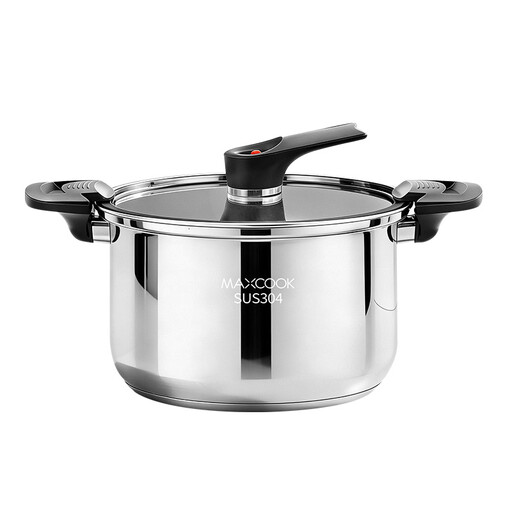
Why it stands out: This smart design combines the versatility of a classic stockpot with the efficiency of micro-pressure cooking. This system reduces cooking times and makes meat more tender, without the complexity of a traditional pressure cooker.
Key features:
Who is it for? For busy families who want to save time in the kitchen without sacrificing the flavour of simmered dishes, and who appreciate the durability of stainless steel.
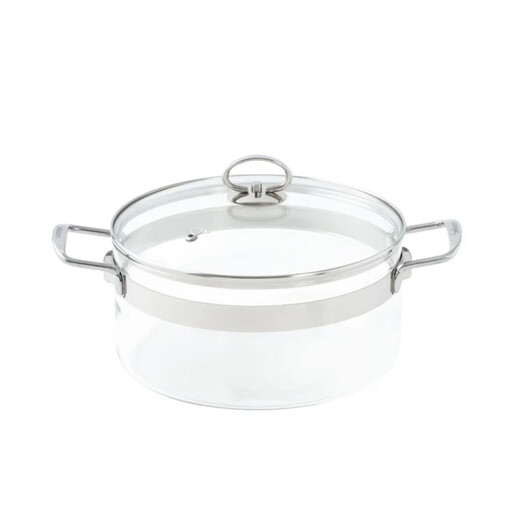
Why it stands out: This glass stockpot champions transparency and purity. Borosilicate glass is non-porous, won't absorb odours or flavours, and is guaranteed PFAS/PTFE-free. It's the ideal choice for health-conscious cooks who love to watch their dishes come to life.
Key features:
Who is it for? For cooks who are particular about the composition of their cookware, appreciate the elegance of glass, and enjoy visually tracking their food's progress. Note: An adapter disc is required for use on an induction hob.
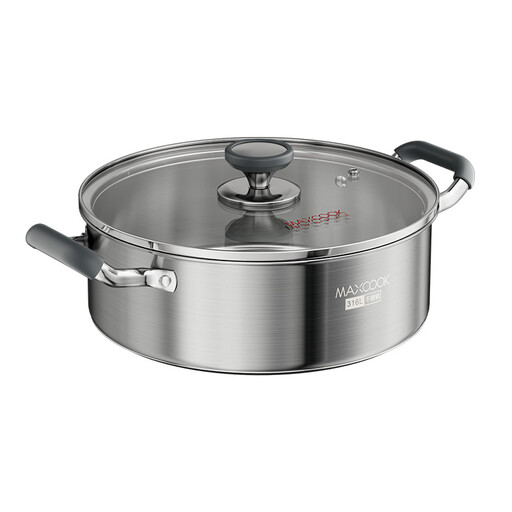
Why it stands out: Its secret? A smart, straight-sided design that increases its capacity by about 30% compared to a flared pot of the same diameter. Made from 316L stainless steel, a grade superior to 304, it offers even better corrosion resistance.
Key features:
Who is it for? For those who cook for a crowd and fans of batch cooking looking for an ultra-durable, spacious, and versatile piece of cookware.
Our selection highlights models with very distinct profiles. If the idea of healthy, visual cooking in transparent cookware appeals to you, feel free to explore our full range.
Discover our collection of glass cooking pots to find other alternatives.
1. What is the difference between a stockpot, a pot, and a Dutch oven? Although they are often confused, there are distinct differences. The stockpot is versatile, roughly as tall as it is wide. A pot (marmite) is generally taller than it is wide, making it perfect for liquids like soups and broths. The Dutch oven (cocotte), often made of enamelled cast iron, is heavier and the undisputed champion of long, slow simmering.
2. How do I care for a stainless steel stockpot to prevent food from sticking? Unlike a non-stick pan, stainless steel is not naturally non-stick. The secret is gradual heating. Never overheat your stockpot while empty, and only add food once it is properly heated. Quick tip: only add salt to water once it's boiling to prevent small pits from forming on the bottom.
3. Is a glass stockpot compatible with induction hobs? No, because glass is not a magnetic material that induction technology can detect. The solution is to use an induction adapter disc, placing it between the hob and the bottom of the glass stockpot. Just be sure to check the manufacturer's recommendations.