Who is this choice for?

People keeping an eye on the salt in their bread

If you’re making savoury flavoured bread, the salt in the stock cube contributes to the total amount in the dough. Knorr’s nutritional information for its salt-free and reduced-salt vegetable stock cubes lets you compare the two options, as long as you take the serving size into account.

Fans of savoury, flavoured breads

For focaccia or savoury bread to serve alongside a meal, you might prefer a vegetable or chicken flavour. A stock cube also contains ingredients other than salt, so it won’t taste the same as simply adding salt to the recipe.

People who pay close attention to ingredients

If you avoid certain allergens or ingredients of animal origin, check the exact product. Knorr, Maggi and Carrefour Original list different ingredients and possible traces, depending on the stock cube.

What should you look for?

Salt-free vegetable

Choose this if: you want to control the salt added to the dough separately; Knorr states that its salt-free vegetable stock contains 0.02 g of salt per serving.

Bear in mind: the cube adds flavour and other ingredients; it isn’t a like-for-like replacement for the salt in a recipe.

Reduced-salt vegetable

Choose this if: you’re after a vegetable flavour with less salt than the standard stock used as the manufacturer’s reference.

Bear in mind: the cube still contains salt: Knorr states that its reduced-salt vegetable stock contains 1.4 g of salt per serving.

Reduced-salt chicken

Choose this if: you specifically want a chicken flavour in savoury bread and are happy to use ingredients of animal origin.

Bear in mind: check the stated salt content and allergen information for the product you choose; its ingredients differ from those in a vegetable stock cube.

What to considerWhat to checkWho is it for?
Salt in the dough Check the amount of salt and the serving size it relates to, then factor in how much stock cube you’ll actually add. I want to flavour my bread without losing track of all the salt added to the dough. Around 50% of consumers would prioritise this.
Flavour profile Choose between vegetable and chicken to suit the bread you’re making; try the stock cube in a small batch of dough before making more. For my savoury bread, I’m mainly looking for a stock flavour that goes well with the dish I’m serving. Around 30% of consumers would put this first.
Ingredient suitability Check the ingredients list, possible traces and whether the specific product contains potassium chloride. I need to avoid certain allergens or animal ingredients, or keep an eye on potassium. Around 20% of consumers would put this compatibility first.

Mistakes to avoid

  • Assuming “reduced-salt” means “salt-free”

    A stated reduction is relative to a comparison product. In its French product information, Knorr lists 1.4 g of salt per serving for its reduced-salt vegetable stock cube, compared with 0.02 g for its salt-free vegetable cube.

    Check the “salt” line in the nutritional information and the serving size before adjusting the salt in your dough.

  • Treating a stock cube as a simple measure of salt

    A stock cube also contains flavourings and, depending on the recipe, sugars or fats. Replacing the amount of salt in a recipe directly with a stock cube would therefore change more than just its saltiness.

    First, choose the flavour you want, then try a small batch of dough. Don’t assume there’s a stock-cube-to-salt equivalent for bread.

  • Overlooking allergens and salt substitutes

    The products covered may contain allergens or state that traces may be present; chicken stock contains ingredients of animal origin. Carrefour’s listing for Maggi’s reduced-salt vegetable stock cube includes potassium chloride.

    Check the ingredients and “may contain” information on the pack you buy. If you’re medically advised to monitor your potassium intake, speak to a healthcare professional before choosing a product that contains it.

Stock cube brands to know

Knorr

The range reviewed includes salt-free and reduced-salt vegetable stock cubes, as well as salt-free chicken stock.

  • Knorr lists 0.02 g of salt per serving for its salt-free vegetable stock cube and 1.4 g per serving for its reduced-salt version. Make sure you read each figure alongside its respective serving size.
  • The reduced-salt version isn’t salt-free; check the ingredients list and allergen information for the specific product you buy.

Maggi

Maggi offers vegetable and chicken stock cubes, among others, labelled as containing 25% less salt.

  • The vegetable version is an option if you want a vegetable stock flavour and would like to compare a reduced-salt recipe with a standard one.
  • The product information for the vegetable version lists potassium chloride and possible traces of allergens. A 25% reduction doesn’t tell you, by itself, how much salt the cube will add to your dough.

Carrefour Original

The product reviewed is a reduced-salt chicken stock, sold in a 120 g box.

  • Its ingredients list includes chicken fat and chicken skin, making it easy to distinguish its flavour profile from vegetable stock.
  • Carrefour’s product information lists several possible allergen traces; this product isn’t suitable if you’re looking for ingredients that are exclusively plant-based.

Stock cubes on Joybuy

This selection features a reduced-salt vegetable stock cube to consider if you want to flavour savoury bread. When adding it to dough, check how much salt the quantity of stock cube you use contains rather than relying on the percentage reduction alone.
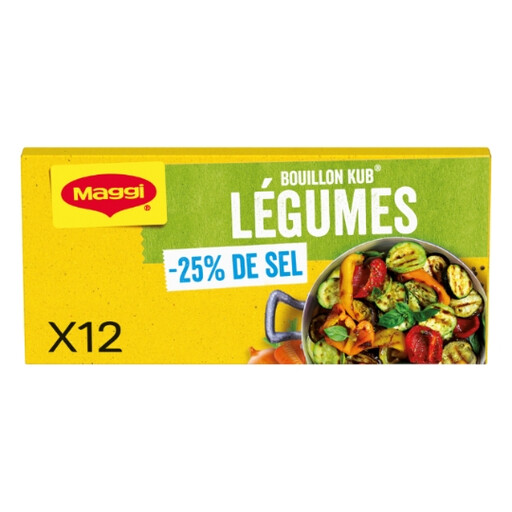
MAGGI KUB vegetable stock cubes, 25% less salt, 120 g

MAGGI KUB vegetable stock cubes, 25% less salt, 120 g

An option to consider if you’re looking for a vegetable flavour in savoury bread. The stated 25% reduction is in salt compared with the average of standard stock cubes; it doesn’t mean these cubes are salt-free.

To work out how much salt you’re adding to the dough, check the pack for the value that corresponds to the number of cubes you’ll use. Also check the information about celery, possible traces of egg, milk and gluten, and the presence of potassium chloride. Try a small batch of dough before making a larger one.

View on Joybuy

Frequently asked questions

Is a reduced-salt stock cube suitable for bread made without added salt?

It may still add salt to the dough. Knorr states that its reduced-salt vegetable stock cube contains 1.4 g of salt per serving, compared with 0.02 g per serving for its salt-free vegetable version. Check the amount for the cube you’ll actually use before deciding how much salt to add to the recipe.

Can I replace the salt in a bread recipe directly with a stock cube?

No, not on a like-for-like basis: a stock cube adds other ingredients and flavours too, and the product information doesn’t give a recommended quantity for bread dough. Count the salt listed on the pack and try a small batch of dough before adjusting the recipe.

Which allergens should I check before adding a stock cube to bread?

It depends on the stock cube you choose. Knorr’s product information for its reduced-salt vegetable stock lists celeriac and possible traces of cereals containing gluten, milk, mustard, egg and soya. Carrefour Original’s product information for its reduced-salt chicken stock also lists several possible traces. Check the information on the pack you’re going to use.

What should I check if a reduced-salt stock cube contains potassium chloride?

First, check the ingredients list for the specific product: Carrefour lists potassium chloride in Maggi’s reduced-salt vegetable stock. Anses advises caution with salt substitutes made with potassium chloride. If your diet or medication means you need to monitor your potassium intake, speak to a healthcare professional.