For Sunday dinner, start by choosing a stock cube that suits your recipe: vegetable for soup or side dishes, poultry for a dish that calls for that flavour, or herbs if you’re looking for an aromatic note. Before stocking up on several boxes, compare the recommended quantities, salt per portion, ingredients and allergens for each product, then check its best-before date and storage instructions.
Who might find these stock cubes useful?
People preparing a slow-cooked dish on Sunday
Whether you’re making soup, a sauce, braised vegetables or a slow-cooked dish, the cube’s flavour should suit what you’re cooking. A herb variety, for example, won’t do the same job as a poultry stock cube.
Households mindful of seasoning and ingredients
When several people are sharing a meal, checking the label on your chosen product lets you keep an eye on salt per portion, allergens and whether it contains any ingredients of animal origin.
People stocking up their store cupboard
A few stock cubes can come in handy when you need to put a meal together at short notice. However, the amount you buy should match the recipes you make, the best-before date on the pack and the product’s storage instructions.
What should you check before buying?
Start with your recipe and who’s coming to dinner, then choose a pack size you can store as directed on the packaging.
| What to consider |
What to check |
Who is this useful for? |
| Salt and ingredients |
Compare the salt per prepared portion and read the ingredients, including allergens and ingredients of animal origin. |
If I’m cooking for people with different needs, I want to be able to adjust the seasoning without assuming that two “vegetable” stock cubes have the same ingredients. Around 31% of consumers would put this check at the top of their list. |
| How it pairs with your recipe |
Check the flavour and recommended amount for the dish you’re making; soup and sauce may need different quantities. |
For a slow-cooked dish or side dishes, I’m looking for a flavour that works with the other ingredients without adding an unwanted herbal note. This would be the main priority for around 25% of consumers. |
| Storage |
Check the best-before date, the condition of the packaging and the storage and after-opening instructions. |
I only cook this kind of dish from time to time, so I’d rather keep stock cubes I can store as directed. Around 25% of consumers would put this kind of store-cupboard management first. |
| Pack size |
Compare the number of cubes, their weight and the amount needed for the recipes you actually make. |
If I only use a few cubes, a large box may not be the right choice. Around 19% of consumers would put choosing the right pack size first. |
Mistakes to avoid
-
Going by the flavour on the box alone
Two vegetable stock cubes can have different ingredients and allergens. The Auchan product information for Maggi KUB DUO Vegetables and Herbs lists celery and possible traces of gluten, eggs and milk; the information for Auchan’s vegetable stock cube lists celery and soya.
Check the label on the exact product if its ingredients matter to anyone you’re cooking for.
-
Confusing “reduced salt” with “no salt”
According to Knorr France product information, its Reduced Salt Vegetable Stock contains 1.4 g of salt per portion, compared with 0.02 g for its No Salt Vegetable Stock. These descriptions therefore refer to different formulations.
Compare the “salt” value for the portion you plan to make, and take the other ingredients in your dish into account.
-
Buying more stock cubes than you need
A box kept for a long time in a warm or damp cupboard may not retain the flavour you expect. Some products specifically need to be stored away from heat and moisture.
Check the best-before date, choose an amount that suits how often you cook and follow the packaging instructions after opening.
Stock cubes that are poorly stored or rarely used may go to waste.
Stock cube brands to know
Recipes and instructions vary within each brand, so compare individual products rather than relying on the range name alone.
Maggi
The KUB range includes vegetable and poultry stock cubes, as well as herb-flavoured and reduced-salt varieties.
- Auchan’s product information for KUB DUO Vegetables and Herbs recommends one cube for 2 L of water for this particular product.
- This product also contains celery and may contain gluten, eggs and milk. These ingredients shouldn’t be assumed to apply to other KUB products.
Knorr
Knorr offers classic vegetable stock cubes, as well as reduced-salt and no-salt varieties.
- Knorr France product information gives the salt per portion for its No Salt Vegetable Stock and Reduced Salt Vegetable Stock, making it easy to compare the two on this basis.
- “Reduced salt” doesn’t mean “no salt”: the product information for the reduced-salt variety lists 1.4 g of salt per portion. Check the allergens on the box you choose, too.
Auchan
The retailer offers vegetable stock cubes, as well as stocks for other recipes.
- The product information for its vegetable-flavoured stock describes a box of 12 cubes weighing 10 g each, with different quantities recommended depending on how you use them.
- This product contains celery and soya, among other ingredients. Its product information also advises protecting it from heat and moisture.
Marque Repère : Rustica et Bio Village
E.Leclerc offers a Rustica vegetable stock cube and a Bio Village vegetable stock cube with herbs and spices, among other products.
- Rustica’s product information details its ingredients, including 6.7% vegetables and celery, so you can compare it with what your recipe calls for.
- Bio Village’s product information lists 49 g of salt per 100 g of unprepared product. Organic ingredients alone don’t tell you how much salt it contains.
Joybuy products for your store cupboard
These products offer a range of flavours for Sunday soups, side dishes and slow-cooked meals. Daesang’s beef bone stock comes in portioned pieces rather than classic cubes, so choose it only if that flavour suits your recipe.
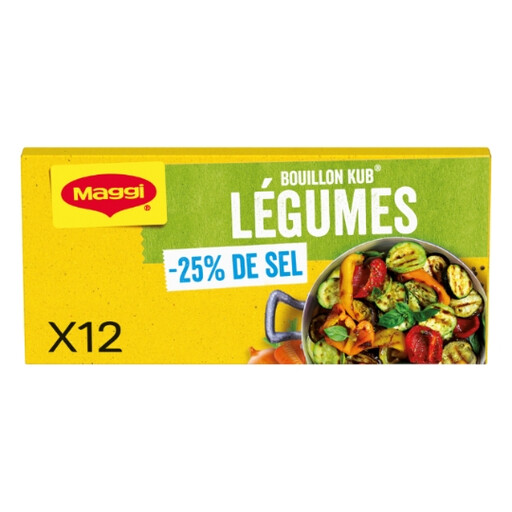 Image unavailable
Maggi KUB vegetable stock cubes, 25% less salt, 120 g
A vegetable stock cube to consider for soup or a slow-cooked dish if you’d like to compare a reduced-salt option. According to the Joybuy product information for this item, the stated value is 0.67 g of salt per 100 ml when prepared. Check how much you’ll need for your dish. The ingredients include celery and may contain traces of eggs, milk and gluten, as well as a potassium mineral salt.
View on Joybuy
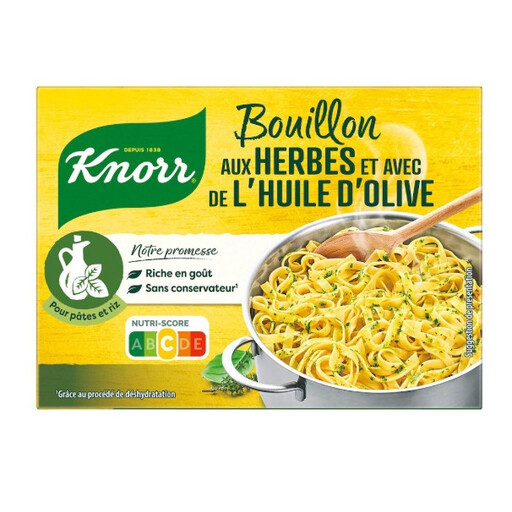 Image unavailable
Knorr herb and olive oil stock cubes, 15 tablets, 150 g
Worth considering for rice, vegetables or soup if an herbal note works with your recipe. This flavour may be less subtle in a dish where you want a neutral stock. The box contains 15 tablets and weighs 150 g. Check the packaging for the recommended amount, salt per prepared portion and allergens.
View on Joybuy
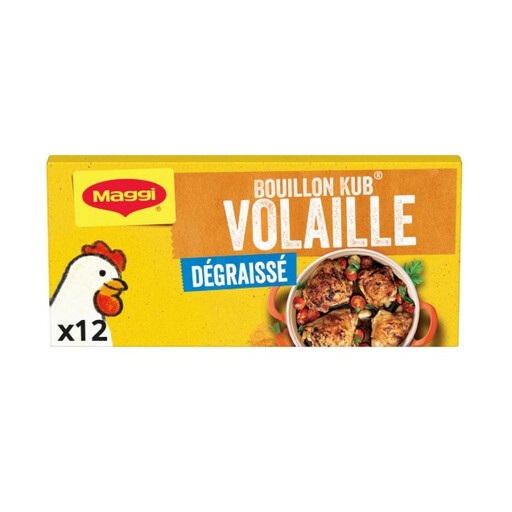 Image unavailable
Maggi defatted poultry stock cubes, 12 tablets
For a slow-cooked dish or soup that calls for a poultry flavour. The box contains 12 tablets. This product contains poultry ingredients and wheat. Check the packaging for other listed allergens and the salt content for the amount you plan to prepare.
View on Joybuy
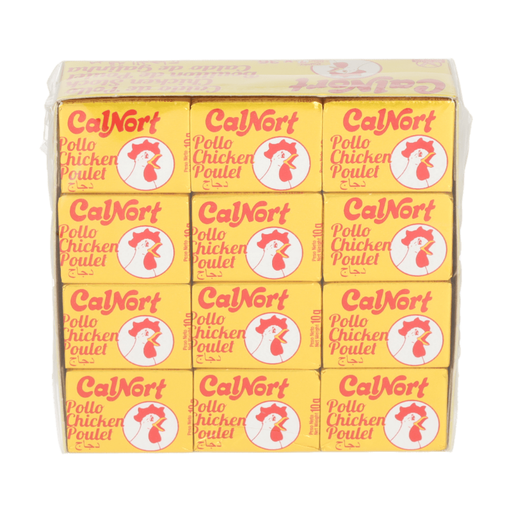 Image unavailable
Calnort 10 g chicken stock cubes
A chicken flavour to consider for a sauce or slow-cooked dish that calls for it. Each cube weighs 10 g; bear in mind the stated salt content of 5.33 g per cube when seasoning your dish. Check the recommended amount, ingredients and allergens on the packaging before use.
View on Joybuy
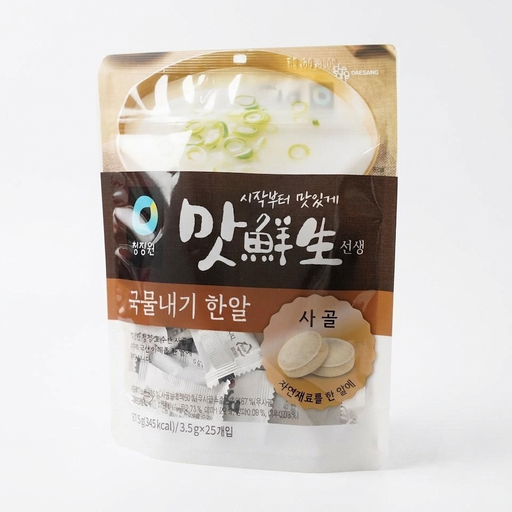 Image unavailable
Daesang beef bone stock pieces, 52.5 g
This stock comes in portioned pieces and is suited to soups or slow-cooked dishes that call for a beef flavour, rather than as an all-purpose vegetable stock cube. The stated pack size is 52.5 g. Check the packaging for the recommended amount and salt content before adding it to your dish.
View on Joybuy
Frequently asked questions
Can you use a stock cube after its best-before date?
A best-before date is not the same as a use-by date. The DGCCRF explains that a product may still be safe to eat after its best-before date if the packaging is intact, although its flavour may have deteriorated. Check the condition of the cubes too, and follow the storage instructions on the box.
How should you store stock cubes after opening?
Follow the instructions for the product you’ve bought. Auchan’s product information for its vegetable-flavoured stock recommends transferring it to an airtight container after opening and warns that it is sensitive to heat and moisture. Maggi’s KUB DUO product information says to store it in a cool, dry place.
Is a “reduced-salt” stock cube the same as a “no-salt” one?
No. According to Knorr France, its Reduced Salt Vegetable Stock contains 1.4 g of salt per portion, while its No Salt Vegetable Stock contains 0.02 g per portion. Compare the values for the portion you plan to make and read the ingredients list, especially if the product contains a salt substitute.
Where can you find the allergens in a stock cube?
Check the ingredients list for the exact product. The DGCCRF says that allergenic ingredients must be highlighted in the list. Don’t assume they are present or absent based only on the flavour shown on the front of the pack.


