Hosts preparing several dishes
You’re planning rice, soups, sauces or slow-cooked dishes and want to have enough cubes for each recipe.


For a world cuisine evening with several dishes, choose the number of cubes according to how much you plan to cook, then pick recipes that suit your guests’ tastes and dietary requirements. A larger pack won’t replace a choice of flavours if your menu calls for several. Compare the dosage, allergens and salt content on the same preparation basis, and check how to store any leftover cubes.
You’re planning rice, soups, sauces or slow-cooked dishes and want to have enough cubes for each recipe.
You adapt the menu to suit your guests’ preferences or declared allergies. The ingredients list and may-contain warnings matter just as much as the advertised flavour.
You’re considering a lower-salt recipe and want to compare the nutritional information while taking the product dosage into account.
First, work out how much you’ll need for each dish. Then check the ingredients in recipes that suit your menu, before comparing their salt content on an equivalent preparation basis.
| Criteria | What to check | Who is this for? |
|---|---|---|
| Quantity and uses | Count the cubes, then compare the stated dosage with the quantities needed for each recipe. A large pack won’t be enough if your dishes call for different flavours. | I’m preparing several cooking bases and want enough cubes without choosing a flavour that won’t work for some dishes. Around 50% of consumers make this a priority. |
| Ingredients and allergens | Read the ingredients list and may-contain warnings on each pack. A “vegetable” or “plant-based” label doesn’t guarantee that a product is free from allergens. | If guests have dietary preferences or declared allergies, I need to choose a recipe that suits their menu. Around 30% of consumers put this compatibility ahead of other criteria. |
| Salt | Compare the nutritional information on the same basis, either as sold or prepared, taking the dosage and the benchmark for any “reduced salt” claim into account. | If I want to limit the salt added to my dishes, I look at how much the prepared stock contributes rather than relying on the claim on the front of the pack. Around 20% of consumers prioritise this criterion. |
A larger box doesn’t necessarily contain enough cubes for all the dishes you have in mind. Cube count, weight and dosage vary from one product to another.
Work out what you need for each dish using the instructions on the pack, then compare the number of cubes and the net weight.
Recipes described as plant-based may contain wheat or carry warnings about traces of other allergens. You can’t tell whether a product is suitable for a guest with dietary restrictions from its flavour alone.
Check the ingredients list and any “may contain” warnings on the exact product before using it in the dish in question.
The percentage reduction is based on the comparator stated for each product. On its own, it doesn’t tell you which one contains less salt once prepared.
Check the benchmark used for the claim, then compare the nutritional values using the same preparation method and dosage.
Storage instructions are particularly important if you plan to use some of the pack after your evening.
Follow the instructions on the pack you receive, reseal the cubes as directed and check the best-before date.
Storing cubes incorrectly can affect the quality of those you were planning to use later.
The Kub Or range includes packs of 32 cubes, as well as a 48-cube option weighing 192 g.
Knorr offers a range of stocks and seasonings, including a reduced-salt vegetable stock.
Carrefour’s range includes a dehydrated beef stock in a box of 15 cubes, each weighing 10 g.
Auchan’s range includes a vegetable-flavour stock in a box of 12 cubes, each weighing 10 g, with suggested uses for a variety of dishes.
These Joybuy products include vegetable, chicken and herb stocks. Choose a flavour to suit your dishes, then check the number of cubes, dosage and ingredients for each variant.
 Image unavailable
Worth considering for several dishes if the advertised plant-based recipe suits your menu.
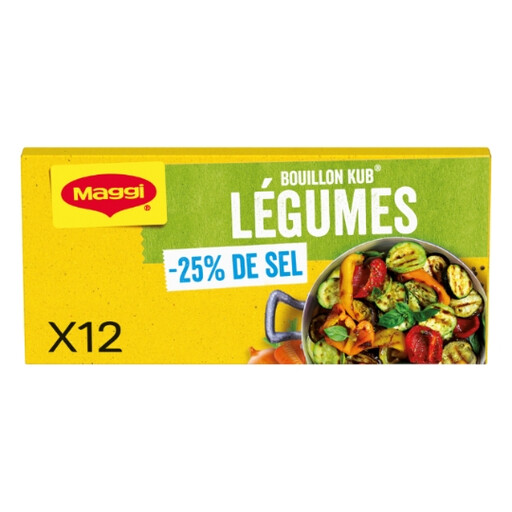 Image unavailable
Worth considering if you’re looking for a vegetable recipe advertised as reduced in salt for your dishes.
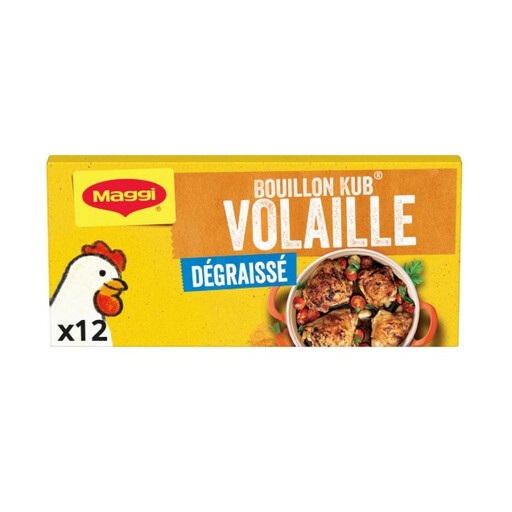 Image unavailable
Worth considering if a poultry flavour would work in the soups, rice or other dishes you have planned.
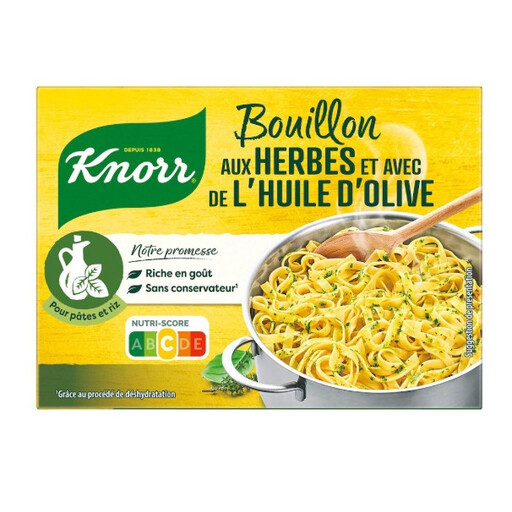 Image unavailable
Worth considering if the herb and olive oil flavour suits the pasta, rice, vegetables or sauces on your menu.
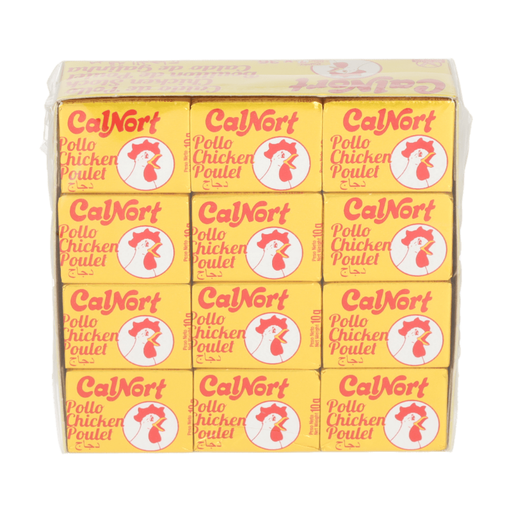 Image unavailable
Worth considering if a chicken flavour suits the soups, sauces, slow-cooked dishes or rice dishes you have planned.
Work out how many cubes you’ll need for each dish using the dosage on the packaging and the quantities you plan to cook. Also check whether one flavour will suit the whole menu or whether you’ll need several different recipes.
Yes. For pre-packed foods sold in France, the DGCCRF specifies that allergenic ingredients must be highlighted. Also check for any may-contain warnings on the exact product.
Compare the nutritional information on the same basis, for example per 100 ml of prepared stock if both labels provide this figure, and take the dosage into account. Read any “reduced salt” claim alongside its comparison benchmark.
No. “Plant-based” doesn’t guarantee that a product is free from allergens. The plant-based Kub Or 128 g contains wheat, among other ingredients, so check each label against any dietary restrictions your guests have mentioned.
Follow the instructions on the pack you choose. For its vegetable-flavour product, Auchan recommends storing it in an airtight container after opening and protecting it from heat and moisture. The Joybuy product listing for Maggi Kub Or 128 g says to store it in a cool, dry place.