For a quick dinner, choose a cube or stock tablet if you can dissolve it into your dish, a stock pot if you prefer to spoon out concentrated stock, or a carton if your recipe calls for ready-to-use liquid stock. If you specifically want a squeezy bottle, check the packaging of the exact product: a carton and a bottle of liquid seasoning may not serve the same purpose.
Who are these formats for?
Anyone who adjusts the amount of stock to suit the dish
For pasta, rice, soup or sauce on a weeknight, how you add the stock matters: dissolving a tablet, spooning out concentrate or pouring in liquid stock all involve different preparation. Check the dosage instructions for your recipe and the amount you’re cooking.
Households keeping an eye on salt and allergens
If you use stock regularly, compare the ‘salt’ line in the nutrition information, then consider how much you’ll use in the dish. Check the ingredients and allergen information for the exact variety, as these can vary between products.
Anyone who likes to keep stock cubes in the cupboard
If you want to keep stock on hand for when you need it, cubes and tablets are formats worth considering. Carrefour, Auchan and E.Leclerc stock dehydrated products; check the packaging and storage instructions for the one you choose.
Which criteria should you compare?
When choosing between a cube, a stock pot and a carton, start with how much stock your dish needs. Then compare how each product is measured out, its ingredients and how it should be stored.
Cube or stock tablet
Worth considering: if you’re making cooking water, soup or sauce and can follow the product’s dosage instructions.
Bear in mind: the cube needs to be dissolved or used as directed, rather than poured in like a liquid.
Stock pot
Worth considering: if you’d rather spoon out a portion of concentrated stock than handle a tablet.
Bear in mind: check the portion size and dilution instructions for the specific product; a stock pot isn’t a squeezy bottle.
Liquid stock in a carton
Worth considering: if your recipe calls for liquid stock and the volume suits your dish.
Bear in mind: check how much you need and how to store it after opening; don’t assume a carton can be used like a squeezy bottle.
| Criteria |
What to check |
Who is it for? |
| Dosage and preparation |
The exact format and dosage instructions for the volume or dish. |
When I’m quickly making rice or a sauce, I want to know how much to use without having to change my recipe halfway through cooking. Around 42% of consumers would put this need for clear dosage instructions first. |
| Salt, ingredients and allergens |
The ‘salt’ figure per 100 g or 100 ml, the amount used and the ingredients list for the exact product. |
If stock features regularly in my meals, I want to be able to check its ingredients before choosing. Around 33% of consumers would prioritise this criterion. |
| Packaging and storage |
The number of portions and storage instructions, particularly after opening. |
I’d rather keep stock to use with different meals, without opening more liquid than I need. For around 25% of consumers, this would be the main priority. |
Common mix-ups to avoid
-
Assuming every liquid product is stock in a squeezy bottle
A carton of stock is for pouring in as a liquid, while liquid seasoning is used to add extra flavour to a dish. Knorr, for example, describes Viandox as a liquid seasoning, so don’t assume it can be used like ready-to-pour stock.
Before choosing, check the product description, packaging and instructions for use.
-
Taking ‘reduced salt’ to mean ‘salt-free’
Maggi and Knorr offer products labelled as reduced in salt. This doesn’t mean you can skip checking the nutrition information or considering how much you’ll actually use.
Check the ‘salt’ figure and dosage for the specific product; don’t rely on the wording on the front of the pack alone.
-
Assuming all stock cubes have the same ingredients
Ingredients vary between products, including whether they contain celery and whether the packaging warns of traces. So if you switch variety or format, check the label again.
Check the ingredients list and allergen information on the packaging of the product you’re going to use.
Brands to consider
These brands offer different stock and seasoning formats. Choose based on the specific product rather than assuming every product in a range has the same features.
Maggi
Carrefour stocks Maggi stock cubes and a 400 ml carton of liquid vegetable stock.
- The cubes and carton suit different ways of preparing a dish.
- Don’t mistake a carton for a squeezy bottle; check the packaging of the product you choose.
Knorr
The Knorr range includes stock, stock pots and liquid seasonings.
- These formats give you options to suit the method your recipe calls for.
- Knorr describes Viandox as a liquid seasoning, not as ready-to-pour liquid stock.
Carrefour
The retailer stocks dehydrated cubes and its own-brand liquid chicken stock.
- The range includes both dehydrated and liquid formats.
- Check the product listing and packaging before deciding how to use the specific product.
Auchan
Auchan stocks dehydrated cubes, including a box of 12 vegetable-flavour cubes.
- The product listing for the vegetable-flavour cubes includes dosage guidance for different preparations.
- Check the dosage and ingredients again for any other variety.
E.Leclerc / Marque Repère
E.Leclerc stocks Marque Repère dehydrated stock, including Rustica stock tablets.
- The tablets are an option to consider for making stock according to the pack instructions.
- Check the dosage and ingredients for the product you choose.
Cubes and stock tablets available on Joybuy
These cubes and tablets are worth considering for adding flavour to a weeknight dinner. Compare their dosage and ingredients to suit your recipe: they don’t replace the convenience of a squeezy bottle or a carton of liquid stock.
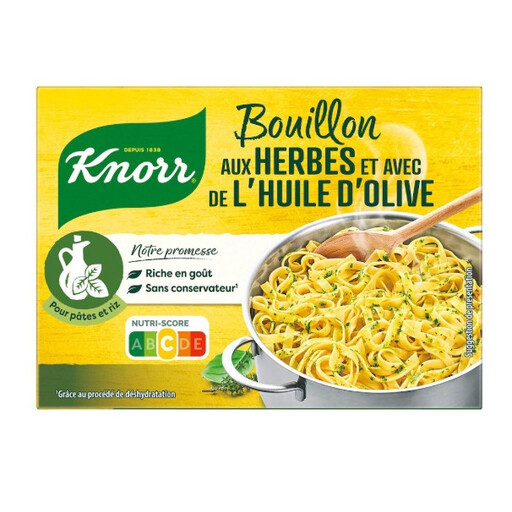 Image unavailable
Knorr Herb & Olive Oil, 15 tablets, 150 g
Worth considering if you want to measure out stock tablets for cooking water or soup. Follow the preparation instructions for your dish and check the ingredients for this product.
View on Joybuy
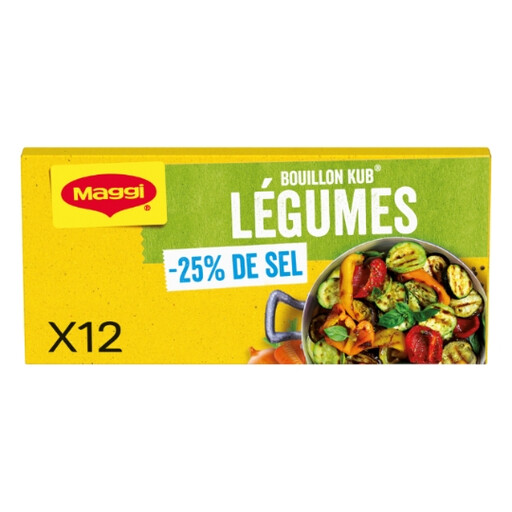 Image unavailable
MAGGI KUB 25% Less Salt Vegetable, 120 g
Worth considering for adding flavour to soup or a vegetable stir-fry. ‘25% Less Salt’ doesn’t mean ‘salt-free’: compare the ‘salt’ figure, check the ingredients and follow the dosage instructions on the packaging.
View on Joybuy
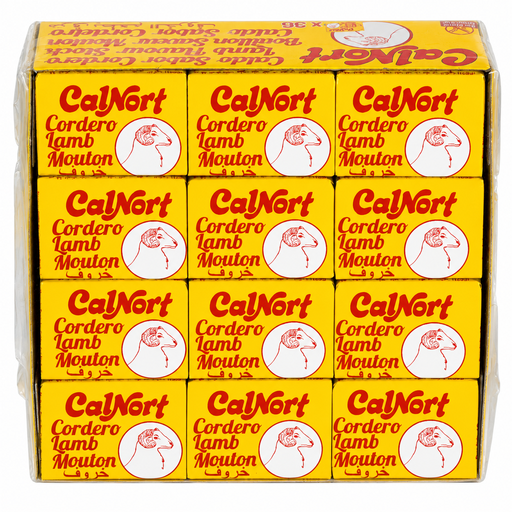 Image unavailable
Calnort Lamb, 36 cubes of 10 g
Worth considering if a lamb flavour would suit your sauce or rice dish. This pack contains 36 cubes of 10 g; check the dosage and ingredients before use.
View on Joybuy
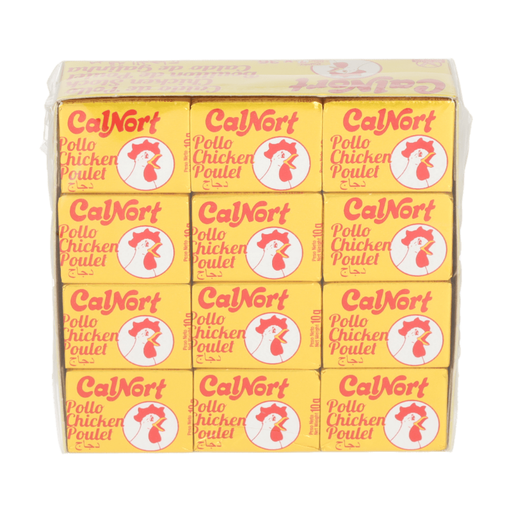 Image unavailable
Calnort Chicken, 10 g cubes
Worth considering if a chicken flavour would suit your soup, sauce or rice. Each cube weighs 10 g; check how many cubes are in the pack, along with the dosage and ingredients for this product, before choosing.
View on Joybuy
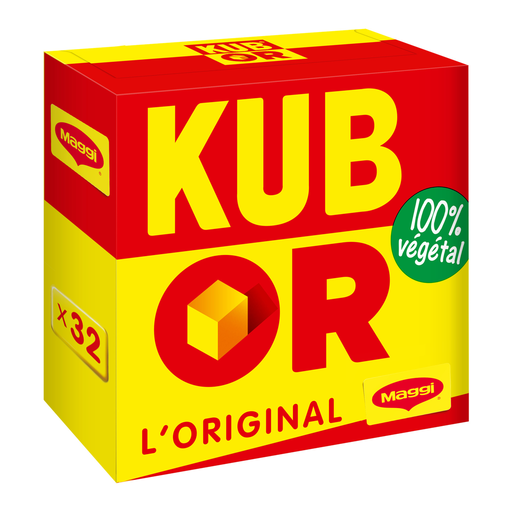 Image unavailable
Maggi Kub Or, stock cubes, 128 g
Worth considering if you’re looking for cubes to add flavour to different dishes. The pack weighs 128 g; read the instructions to work out the right amount for your dish and check the ingredients list.
View on Joybuy
Frequently asked questions
Can a carton of stock replace a squeezy bottle?
A carton contains ready-to-use liquid stock, but its packaging doesn’t necessarily make it as easy to measure out as a squeezy bottle. Check how much your recipe needs, how the stock is poured and what the instructions say about storage after opening.
How do you compare the salt content of two stocks?
Compare the ‘salt’ figure on the same basis, then take into account how much you’ll use in your dish. The DGCCRF notes that nutrition information for pre-packed foods includes salt per 100 g or 100 ml. This makes products easier to compare, but you should also consider the portions you prepare.
What should you check for allergens in a stock cube?
Before use, read the ingredients list and allergen information for the exact variety. Carrefour product listings for vegetable stocks include celery, for example; check the packaging of any other product for its own ingredients.
How should you store stock cubes after opening?
Follow the instructions on the pack you’ve bought. For its vegetable-flavour cubes, Auchan recommends transferring the tablets to an airtight container after opening. Follow the storage instructions for any other product you choose.


