Households that cook regularly
If you often use stock in soups, rice dishes, pasta or sauces, compare the recipes and number of cubes before choosing a large box.


Choose a stock to suit the savoury dishes you make, then pick a pack size based on how often you use it. A large box is little use if you like to switch between different stocks. Also check the salt content, ingredients and allergens for the exact product you’re considering. Stock cubes are used in soups, sauces and slow-cooked dishes; they’re not for the same purpose as spreads and jam.
If you often use stock in soups, rice dishes, pasta or sauces, compare the recipes and number of cubes before choosing a large box.
A recipe described as ‘reduced salt’ isn’t the same as ‘salt-free’. Read the exact wording and nutrition information for the stock you’re thinking of buying.
Depending on the product, the ingredients list and allergen information may include wheat, celery, eggs, milk or mustard. Check the packaging for the exact product, even if it’s described as plant-based.
For savoury meals, start with the recipe you’ll actually use. Then compare pack sizes and check the labelling to suit your household’s needs.
| Criteria | What to check | Who it matters to |
|---|---|---|
| Pack size | Number of cubes, net weight and whether the recipe suits the dishes you make. | If I use stock regularly in soups or sauces, I look for a box I’ll finish. Around 42% of consumers put this pack-size consideration first. |
| Salt | Look for ‘reduced salt’ or ‘salt-free’, then check the value in the nutrition information. | If I want to limit the salt in my cooking, I need to distinguish between a relative reduction and a salt-free recipe. This is the top priority for around 33% of consumers. |
| Ingredients and allergens | Check the ingredients list and allergen information for the exact product. | To cook in a way that takes my household’s dietary needs into account, I can’t rely on a name such as ‘vegetable’ or ‘plant-based’ alone. Nearly 25% of consumers prioritise this check. |
A higher cube count doesn’t make a recipe useful if you rarely use that type of stock or often switch between flavours.
Estimate how many cubes you’ll use in the dishes you usually make, then compare the cube count and net weight of each box.
A plant-based description doesn’t tell you everything about the ingredients or any ‘may contain’ warnings.
Check the ingredients and allergen information on the packaging for the product you choose, even if you switch recipe or pack size.
Carrefour’s listing for a MAGGI vegetable stock says it contains 25% less salt than the average stock that isn’t reduced in salt. This comparison doesn’t mean the product is salt-free.
If this distinction matters to you, look for wording that matches your needs and compare the ‘salt’ entry in the nutrition information.
These cubes are intended for savoury dishes such as soups, sauces and slow-cooked meals, rather than sweet spreads.
Choose stock to suit the savoury meals you’re planning, separately from breakfast products.
KUB OR and vegetable stock products are available in different pack sizes. Carrefour lists, for example, a 64-cube KUB OR box weighing 256 g, as well as a vegetable recipe described as reduced in salt.
The range featured by Knorr France includes traditional, organic and salt-free stocks.
Carrefour lists a dehydrated, flavoured Carrefour Original vegetable stock in a pack of 12 cubes, each weighing 10 g.
E.Leclerc lists RUSTICA chicken stocks and cooking stocks in packs of 12 tablets weighing 120 g.
These products are for savoury cooking: one vegetable stock described as reduced in salt and two tablet stocks. If you’re looking for a family-size pack, check the cube count and box weight rather than assuming they apply to this selection.
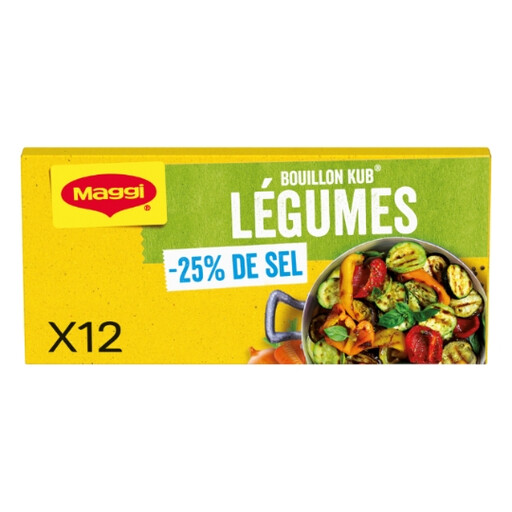 Image unavailable
Worth considering for savoury dishes if you’re looking for a vegetable stock described as reduced in salt.
120 g box. ‘25% less salt’ doesn’t mean ‘salt-free’. Check the nutrition information, allergens and number of cubes on the box.
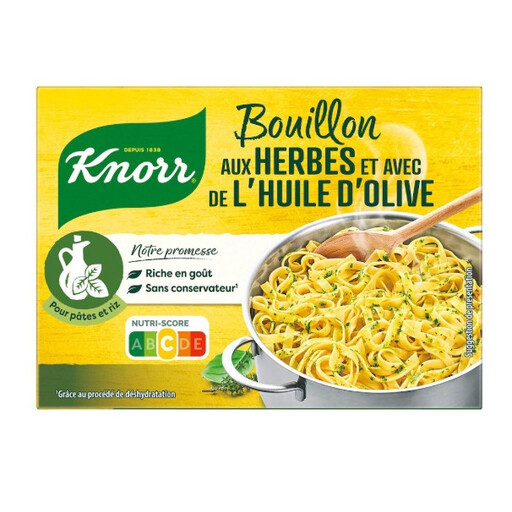 Image unavailable
A recipe to consider for savoury dishes if you’re looking for a stock with herbs and olive oil.
Box of 15 tablets, weighing 150 g. Check the ingredients and salt content on the packaging to make sure they suit your needs.
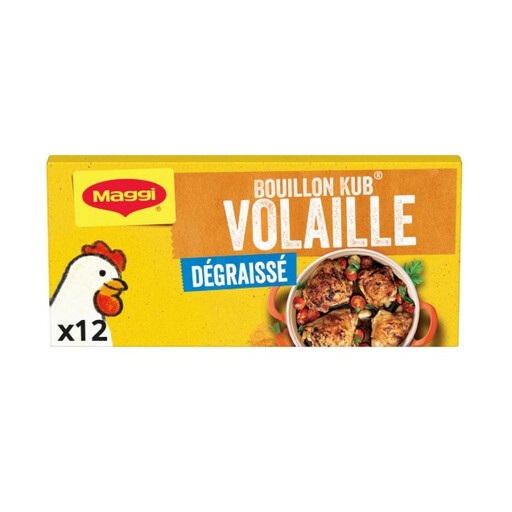 Image unavailable
Worth considering if you’re looking for a chicken stock for savoury dishes.
Box of 12 tablets. The product title describes it as ‘fat-free’, but its ingredients list includes chicken fat, so check this claim against the box labelling. Also check the allergens.
No. These stocks are intended for savoury cooking, including soups, pasta, rice dishes and sauces. Choose them to suit the meals you plan to make, separately from the spreads and jam you buy.
A large box is best if you often use the same recipe. Compare the number of cubes and net weight, then consider whether a smaller box would suit you better if you rarely cook with stock or like to change flavours.
No. A reduction in salt is a comparison, not an absence of salt. Carrefour lists a MAGGI vegetable stock described as containing 25% less salt than the average stock that isn’t reduced in salt. Check the wording and nutrition information on the box you choose.
Yes, because the recipe name alone doesn’t tell you everything about its ingredients. Depending on the products listed by Carrefour, allergen information may include wheat, celery, eggs, milk or mustard. Check the ingredients list and allergen information on the exact product packaging.