When stocking your cupboard with stock cubes ordered online, start with the dishes you cook most often: a vegetable flavour for a range of uses, a chicken or beef option if your recipes call for it, and a more specific flavour only if you use it regularly. Before adding a pack to your basket, compare the salt content per prepared serving, check the ingredients and allergens, then choose a quantity that suits how you use them and the best-before date on the pack.
Who are these stock cubes for?
People who need to cook quickly during the week
For soups, rice, pasta, sauces or quick one-pot dishes, an easy-to-use stock cube can be a handy addition to your online grocery order. However, check the ingredients before stocking up on several boxes.
Households keeping an eye on added salt
If you’re adding stock to a dish that already contains salty ingredients, compare the salt content per prepared serving of the same size. Standard, reduced-salt and salt-free recipes aren’t interchangeable.
People who check ingredients and allergens
The flavour or brand alone won’t tell you what’s in a recipe. Wheat, celery and other ingredients or possible traces vary between products, so read the details for the exact product you’re ordering.
What should you check before buying?
First, choose a recipe that suits your dishes and any ingredient requirements. Then compare the recommended quantity, salt content and pack size before stocking up.
| What to consider | What to check | Who is it for? |
|---|
| Added salt |
The amount of salt per prepared serving of the same size, and the recommended quantity. |
When other ingredients already make my dish salty, I want to know how much the stock cube adds. Around 31% of consumers prioritise checking the salt content. |
| Ingredients and allergens |
The ingredients list and any “may contain” warnings for the exact product. |
If some ingredients aren’t suitable for my household, the flavour name doesn’t tell me enough. Around 25% of consumers prioritise choosing a recipe that meets their requirements. |
| Flavour and uses |
The dishes the recipe is intended for and its preparation instructions. |
I mostly make soups and rice, or perhaps dishes that call for a specific flavour. I want a stock cube I’ll actually use. Around 25% of consumers prioritise flavour when making their choice. |
| Pack size and storage |
The number of cubes, the best-before date and the storage instructions on the pack. |
When shopping online, I prefer a pack I can use before its best-before date, without filling the cupboard with boxes. Around 19% of consumers prioritise this practical aspect. |
Mistakes to avoid
-
Comparing only the labels “standard”, “reduced salt” and “salt-free”
These labels alone don’t tell you how much salt will be in your serving. According to Carrefour’s product page for the KUB OR in question, its advertised 25% reduction is measured against the average salt content of stock cubes on the market, excluding reduced-salt products—not against every standard stock cube.
Compare the salt content per prepared serving of the same size, check what the claim is being compared with, and taste your dish before adding salt.
-
Assuming a product is allergen-free just because it’s labelled as plant-based
A recipe described as plant-based may contain wheat or celery and may list other possible allergens. Ingredients vary from one product to another, even within the same brand.
Check the ingredients list and any trace warnings for the product you’re ordering, rather than relying on the flavour description alone.
-
Stocking up on flavours you’ll only use in a few dishes
A flavoured stock cube may suit the dishes listed on its product page, but it might not be as easy to use in other everyday recipes.
Start with a recipe that suits the dishes you make often; add a more specific flavour if you regularly cook the dishes it’s intended for.
Packs bought for just one dish may end up sitting in the cupboard until their best-before date.
Brands to know when comparing recipes
Maggi
The click-and-collect grocery listings reviewed include Maggi KUB OR stock cubes, vegetable recipes and flavoured or reduced-salt options.
- Carrefour’s product page for the reduced-salt KUB OR specifies the product range used as the basis for its advertised 25% reduction.
- Standard KUB OR contains wheat and may contain traces of egg, milk, celery and mustard, among other allergens. Check the recipe you choose.
Knorr
The range includes standard stock cubes and recipes described as salt-free, as well as products to crumble or dissolve depending on the dish.
- Knorr lists 1.7 g of salt per serving for its standard Vegetable Stock and 0.02 g per serving for its Salt-Free Vegetable Stock. Check the recipe and serving size before comparing them.
- Ingredients and potential allergens vary between products; information about one Knorr stock cube doesn’t apply to the whole range.
Carrefour
The grocery section reviewed includes stock cubes under the Carrefour brand, including vegetable recipes.
- These products can be compared with other stock cubes listed when placing a Carrefour Drive order.
- To compare two recipes, check their individual product pages and packaging rather than assuming what they contain from the listing alone.
Auchan
The Auchan grocery section reviewed includes stock cubes under the Auchan and Auchan Bio brands, alongside other brands.
- The grocery section page makes it easy to spot different recipes to consider for an online order.
- Check the range available at your selected store and the product page for each item before choosing.
Stock cubes available on Joybuy
These Joybuy products include a herb and olive oil recipe, a vegetable stock cube advertised as reduced salt, a standard KUB OR and a chicken stock cube. Choose according to the dishes you’re planning, then check the recommended quantity, ingredients and information on the pack you receive.
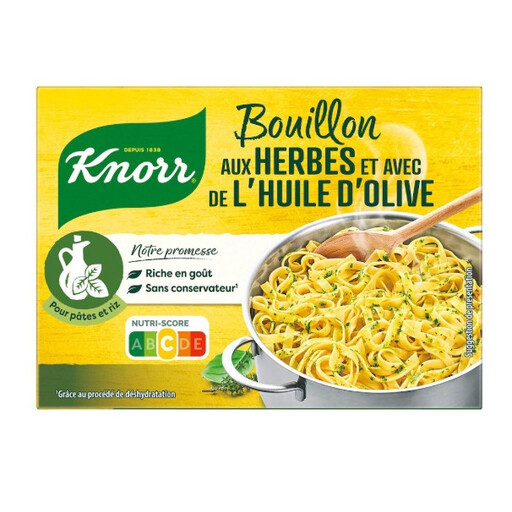 Image unavailable
Knorr herb and olive oil stock cubes, 15 cubes, 150 g
Worth considering if you’d like this flavour in dishes such as pasta, rice or vegetables.
The pack contains 15 cubes and weighs 150 g. Check the recommended amount for your recipe, along with the ingredients, allergens and date on the pack.
View on Joybuy
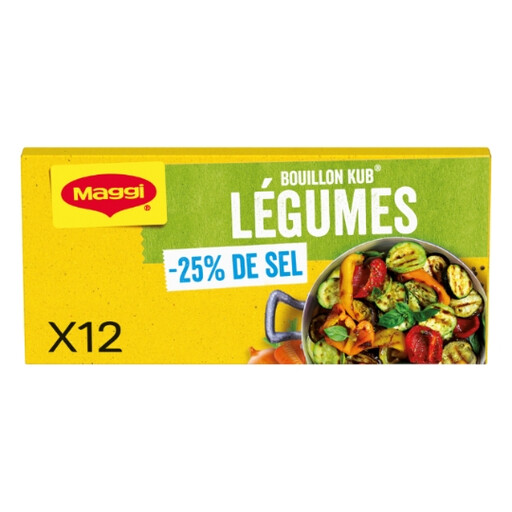 Image unavailable
Maggi KUB vegetable stock cubes, “25% less salt”, 120 g
Consider this for soups or slow-cooked dishes if you’re looking for a vegetable recipe advertised as reduced salt, rather than a salt-free stock cube.
The pack contains 120 g. The advertised reduction is based on the average salt content of stock cubes on the market, excluding reduced-salt products. Check the recommended amount and salt per prepared serving before comparing this stock cube with another.
View on Joybuy
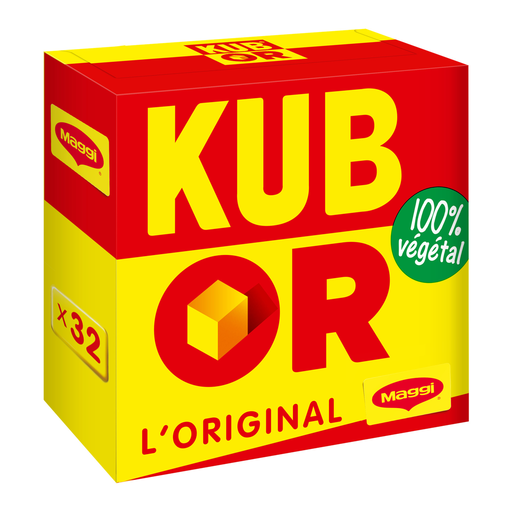 Image unavailable
Maggi KUB OR stock cubes, 128 g
Worth considering as a stock base for a range of dishes, including soups, sauces and rice.
The pack weighs 128 g. This recipe contains wheat and may contain egg, milk, celery and mustard. Also check the recommended amount, salt per prepared serving and best-before date on the pack.
View on Joybuy
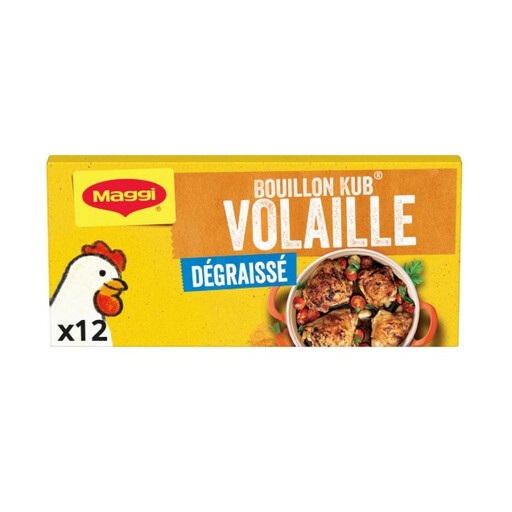 Image unavailable
Maggi Fat-Free chicken stock cubes, 12 cubes
Consider this if chicken stock suits the soups, pasta, rice or slow-cooked dishes you usually make.
The pack contains 12 cubes. The recipe lists wheat and celery, and may contain traces of egg or milk. Check the label, salt per serving and storage instructions before use.
View on Joybuy
Frequently asked questions
Can you keep stock cubes in a cupboard?
Yes, as long as you follow the storage instructions for the product you’ve chosen and the best-before date on the pack. The Joybuy product page for Maggi KUB OR 128 g says to store it in a cool, dry place. Also check that the pack you receive is in good condition.
Is a reduced-salt stock cube the same as a salt-free one?
No. “Reduced salt” is a comparative claim, whereas a recipe described as “salt-free” is a different product. Carrefour says that the advertised 25% reduction for the KUB OR in question is based on the average salt content of stock cubes, excluding reduced-salt products. Check the salt per serving when comparing products you’re considering.
What should you read on the pack before ordering?
First, check the exact recipe, its ingredients list, highlighted allergens, nutritional information, recommended amount and the date shown. The DGCCRF reminds consumers that allergenic ingredients in prepacked foods must be emphasised in the ingredients list.
Should you add salt to cooking water after adding a stock cube?
Not automatically. Check how much salt the stock cube and other ingredients add, then taste the dish before adding any more. The Anses advises reading food labels and limiting added salt.


