
Livraison le jour même ou le lendemain

Qualité garantie

Débloquez vos offres de bienvenue: Livraison GRATUITE | Jusqu'à -80 % | 30 jours d'essai gratuits à JoyPlus
Téléchargez l'application
Your child is asking for a Stitch backpack for the back-to-school season, and you find yourself lost in a jungle of options. While they only care about the design, you're focused on durability, comfort, and practicality. Navigating the choices can quickly become a headache, and it's easy to fall into the classic traps that turn a fun purchase into a future disappointment.
As product experts, our mission is to help you see things more clearly. Let's break down the mistakes to avoid and the criteria that truly matter, so you can find the perfect backpack that will delight your child without sacrificing your peace of mind.
Before you fall for a colourful pattern, keep in mind the most common flaws found in this type of product.
To make the right choice, focus on a few technical points. This is where the quality and longevity of your child's Stitch backpack are truly determined.
The backpack's size should be proportionate to the child's build and what they need to carry.
While almost all kids' backpacks are made of polyester—a good choice for its lightness and resistance—the quality of the fabric and finishes varies enormously from one model to another. Here are the points to inspect:
Comfort is non-negotiable. A good Stitch school bag should offer:
To illustrate these criteria in action, here are a few models that meet specific needs while avoiding the classic pitfalls.
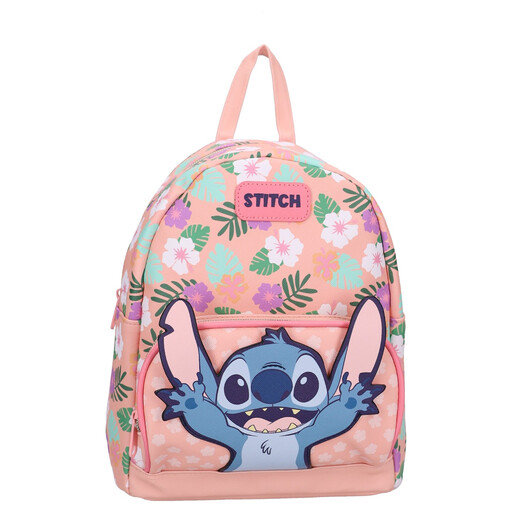
Why it's perfect for this age: Extremely lightweight, its dimensions (26 x 22 x 11 cm) are ideal for toddlers. They can slip in a snack and a cuddly toy without it hindering their movement.
Its compact size is perfectly suited for children from age 3, eliminating the risk of a backpack that's too big and uncomfortable.
A simple main compartment and a front pocket, both easy to access to encourage independence.
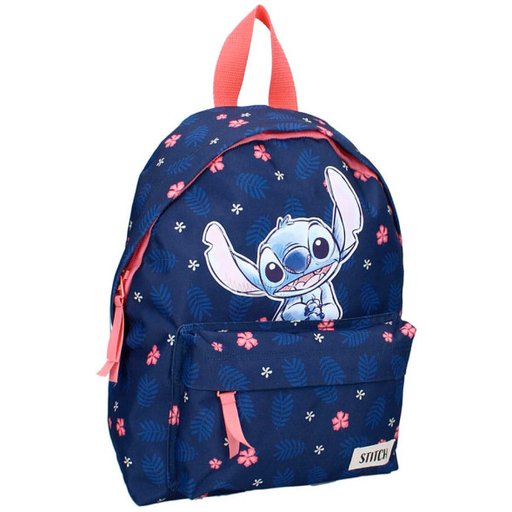
Why it's a good choice: With its 31 x 22 x 9 cm dimensions and padded back, this backpack is an excellent compromise for the first years of primary school. It offers enough space for the first notebooks while remaining very comfortable.
Thanks to its padded back panel, it doesn't fall into the trap of sacrificing comfort, ensuring it's pleasant to carry even when full.
The main compartment is equipped with a dual zip, which greatly simplifies a child's daily routine.
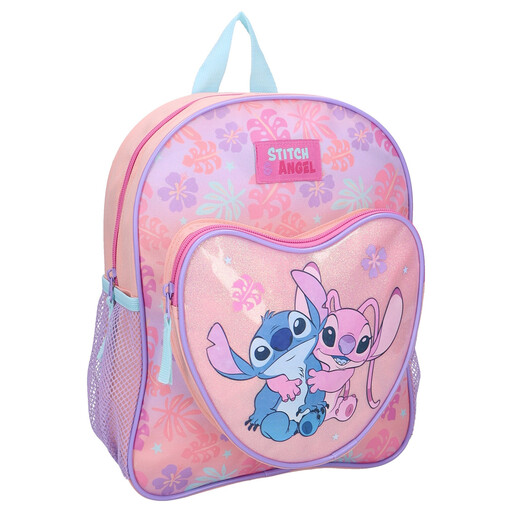
Why it stands out: Ideal for outings or for kids who want a look that's out of the ordinary. Its shiny, heart-shaped front pocket makes it stand out, while it remains a functional bag for light daily use.
It doesn't sacrifice practicality for design: the side mesh pockets, often missing from "novelty" backpacks, are present and as useful as ever.
Its unique design, combined with practical details like water bottle pockets, makes it an excellent compromise between style and functionality.
We've compiled a full selection of backpacks that meet our quality criteria and safety standards.
For a preschooler (ages 3-5), the backpack should not be wider than their back. Aim for dimensions around 30?cm high and 25?cm wide. The most important thing is that it's lightweight and the child can open and close it by themselves.
Machine washing is not recommended for most polyester backpacks. Hand cleaning with a damp cloth and a little mild soap is generally advised. Let it air dry, away from any heat source, to preserve the colours and shape of the bag.
It all depends on the grade level. For the first year, a small backpack around 35?cm high might be sufficient. But starting from the second or third year, with the introduction of large-format notebooks (A4 size) and textbooks, you'll need to upgrade to a larger primary school backpack (40?cm or more) to avoid damaging supplies.