For quick clean-ups on hard floors
You want to quickly pick up dust, crumbs and small bits of debris between full cleans. Being able to get the vacuum out, use it and put it away easily matters more than its maximum runtime.


If you regularly need to pick up crumbs and dust, then store your vacuum in a small space, a cordless stick vacuum is usually the most practical choice. However, check the runtime in the mode you’ll actually use, as well as the dust container and storage requirements of the specific model. According to UFC-Que Choisir, the maximum quoted runtime is measured at the lowest power setting. If your cleaning sessions tend to run longer, a corded stick vacuum or a compact cylinder vacuum may be a better fit for uninterrupted cleaning, although it won’t be as quick to grab and use.
You want to quickly pick up dust, crumbs and small bits of debris between full cleans. Being able to get the vacuum out, use it and put it away easily matters more than its maximum runtime.
You might start with a quick spot clean, then move on to several rooms or carpets. In that case, pay closer attention to the runtime in the mode you use and whether you can swap the battery.
You want to be able to maintain your vacuum and replace wear-and-tear parts. Access to filters, the battery and other parts for the specific model matters just as much as its original specifications.
For frequent quick clean-ups, first choose a design that’s easy to get out and put away, then check whether its runtime is long enough for your usual cleaning sessions.
Consider this: for frequent, short clean-ups when not having a cable makes the vacuum easier to use.
The trade-off: one charge may not last for a longer clean, especially if you turn up the power.
Consider this: if you want to keep cleaning without stopping to recharge a battery.
The trade-off: the plug and cable make it less convenient to move between rooms for quick clean-ups.
Consider this: if quick clean-ups regularly turn into longer cleaning sessions.
The trade-off: you’ll need to handle it more and check how much storage space it needs.
| Feature | What to check | Best for |
|---|---|---|
| Handling and storage | Weight in stick configuration and the space the vacuum takes up with its stand, if included. | When small bits of debris appear, I want to be able to get the vacuum out and put it away without reorganising the cupboard; around 42% of shoppers prioritise this ease of use. |
| Usable runtime | Runtime with the brush and power setting you plan to use; for a cordless model, check how many batteries are included and how long they take to charge. | If my quick clean-ups cover several rooms or carpets, I’d rather finish without stopping; around 33% of shoppers prioritise this uninterrupted cleaning. |
| Dust container and maintenance | Dust container capacity and how easy it is to empty, access to the filters and availability of parts for the exact model. | I don’t want frequent emptying or a hard-to-replace part to make everyday use more difficult; around 25% of shoppers put maintenance and long-term use first. |
According to UFC-Que Choisir, this runtime is measured at the lowest power setting. Les Numériques tests normal and boost modes separately, and the results can differ significantly for the same model.
Compare runtimes measured with the brush and setting you plan to use, rather than comparing two maximum figures without knowing the conditions in which they were recorded.
A removable battery lets you carry on cleaning by swapping batteries only if you have a second compatible, charged battery; it doesn’t extend the runtime of a single battery.
Check which battery is compatible, how many batteries are included and how long they take to charge before relying on this option.
A dust container that’s awkward to empty can mean more interruptions, even during quick clean-ups. Easy access to the filter and brush roll also matters for regular maintenance.
Check the container’s capacity and what you need to do to empty it and clean the parts you can access.
France’s repairability index considers factors such as documentation, disassembly and spare parts, but the score doesn’t replace checking whether a specific part is available for your model.
Check the model numbers for the filters, charger and battery when you buy. At the end of their life, ADEME directs used batteries and electrical appliances to their dedicated collection schemes.
The X-Force Flex range may appeal if you’re looking for a cordless stick vacuum with a removable battery and a bendable tube; specifications vary by model.
The Unlimited range is worth considering if you want to swap batteries during longer cleaning sessions, but check compatibility for each model.
The V12 Slim Absolute and V15 Detect Absolute feature in a general buyer’s guide published by Les Numériques in October 2026, which isn’t specifically aimed at smaller homes.
The R20 shows why it’s important to distinguish between operating modes when runtime is a factor in your choice.
These cordless stick vacuums and this corded model suit two different approaches to everyday quick clean-ups: move around without a cable or avoid charging breaks. Compare their storage requirements and features to find the right fit for your space and the length of your cleaning sessions.
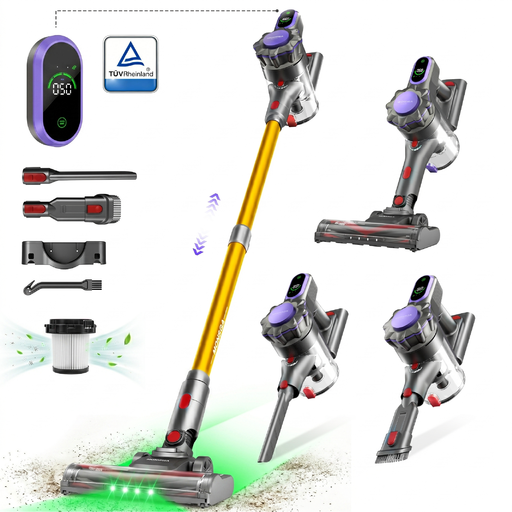 Image unavailable
Worth considering for frequent quick clean-ups if you want to store and charge your vacuum on its station.
The product name lists 550 W, 55 kPa and 55 minutes of runtime, but doesn’t specify the conditions for that figure. Confirm the ME03 model and its corresponding specifications before buying.
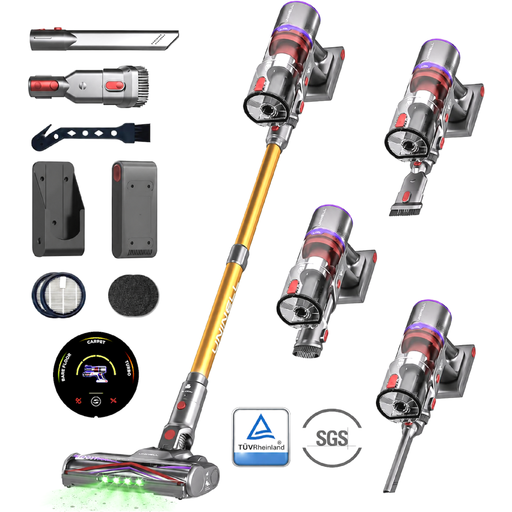 Image unavailable
The freestanding design can be handy for putting the vacuum down between quick clean-ups; check how much room it’ll take up when stored.
The product name quotes up to 65 minutes of runtime and 60,000 Pa. This figure doesn’t replace a runtime measurement in the mode and with the brush you’ll use.
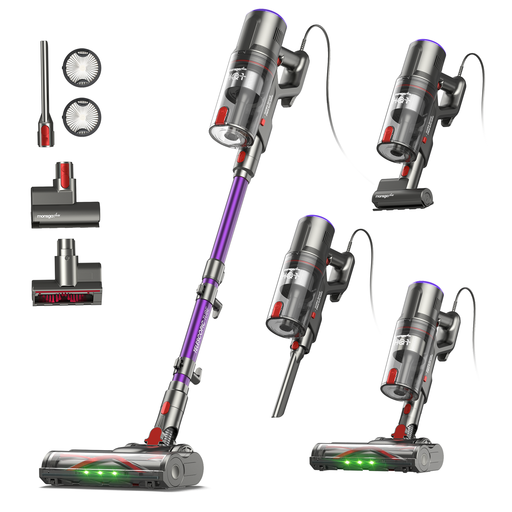 Image unavailable
Worth considering if your cleaning sessions are getting longer and you’d rather not rely on a battery; check where your plug sockets are and how much room you’ll need to store the cable.
The product name lists 600 W and 65 kPa. These figures alone aren’t enough to compare its cleaning performance with cordless models.
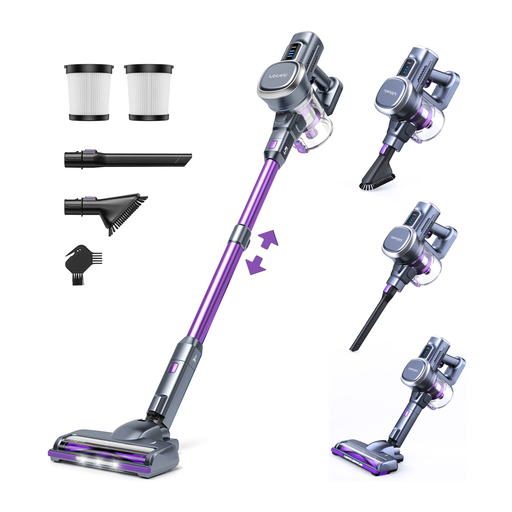 Image unavailable
The freestanding design and removable battery may suit frequent quick clean-ups, provided you have enough storage space and are happy with the option of an additional battery.
The product name quotes 50 minutes of runtime without specifying the operating mode. Also check the dust container capacity if you want to avoid emptying it too often.
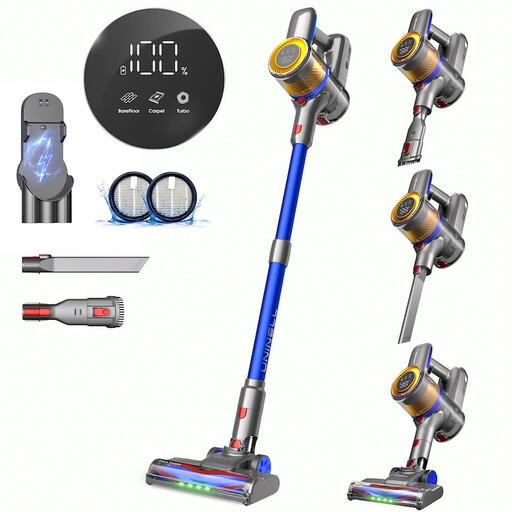 Image unavailable
The freestanding design can make it easier to take a break between cleaning sessions; however, check the vacuum’s size and weight in stick configuration.
The product name lists a removable battery, 450 W and 60 minutes of runtime. Check the runtime in the mode you plan to use, as well as the dust container capacity.
It’s a maximum runtime, not necessarily how long your usual cleaning session will last. UFC-Que Choisir says that quoted maximum runtimes are measured at the lowest power setting; look for a runtime measured with the brush and mode you’ll use.
It lets you carry on cleaning if you have a second compatible, charged battery, but it won’t extend the runtime of a single charge. Check which battery is included, the model number of any additional battery and how long it takes to charge.
Start with the vacuum’s exact model number and look for its filters, brush, charger and battery. In France, the repairability index considers factors such as disassembly, documentation and spare parts; the score alone doesn’t guarantee that the part you may need will be available.
Take it to a suitable collection point, not to household rubbish or packaging recycling, following ADEME’s guidance. The vacuum itself can be taken to an electrical equipment collection scheme, including at a shop or recycling centre.