
Livraison le jour même ou le lendemain

Qualité garantie

Débloquez vos offres de bienvenue: Livraison GRATUITE | Jusqu'à -80 % | 30 jours d'essai gratuits à JoyPlus
Téléchargez l'application
Preparing soup, sauce, mash or a smoothie without getting out a bulky appliance: that is the main appeal of a stick blender. But with manufacturers’ promises and long lists of accessories, it is not always easy to separate what really matters. A high power rating does not necessarily guarantee an appliance that is pleasant to use, while a complete set of accessories can quickly end up at the back of a cupboard if you mainly make smooth soups.
Before buying a stick blender, it is therefore worth looking beyond the wattage alone. Here are the criteria that really matter, the common mistakes to avoid and a selection of models suited to different everyday uses.
A motor rated at 1,000 or 1,200 W may automatically seem more powerful than a 600 W model. In practice, wattage alone is not enough to assess blending performance. The blade design, shape of the blending foot, movement of the ingredients and permitted operating time also play a decisive role.
For soup, compote or sauce, a 600 W stick blender can do the job perfectly well. Thicker mixtures, fibrous ingredients and repeated use require more control, as well as regular breaks to prevent the motor from overheating.
A stick blender supplied with a whisk and chopper can replace several kitchen utensils, provided you actually use them. The whisk is particularly useful for whipping egg whites or cream, while the chopper is handy for herbs, onions, nuts and small quantities.
Check exactly which accessories are included, their capacity and their compatibility with the motor unit. A set described as multifunctional does not necessarily include a masher or a container large enough to prepare meals for the whole family.
A blending foot that is difficult to detach will often discourage its owner. To choose a stick blender that is easy to clean, prioritise removable parts that can be washed in accordance with the manufacturer’s instructions, along with a motor unit that can simply be wiped with a damp cloth.
Another point to check is the maximum continuous operating time. Several models in this selection specify around one minute of use before a break. This instruction protects the motor from overheating and should be followed, particularly when working with a thick mixture.
A single speed makes an appliance easy to get to grips with. Two speeds, a dial or variable-speed control allow you to work more precisely, reduce splashing and adjust the texture. The turbo mode can be useful for a short burst of power, but it does not remove the need to follow the instructions in the manual.
A stainless steel stick blender generally has a stainless steel blending foot, valued for its resistance to corrosion and ease of maintenance. Plastic blending feet can also be suitable for household use, particularly with lukewarm preparations, provided you stay within the permitted maximum temperature.
The guard surrounding the blades is also important: an anti-splash design helps limit splashes on the worktop. If you blend directly in a saucepan, always immerse the blades before switching the appliance on and avoid containers that are too shallow.
A 500 to 800 ml beaker is suitable for individual portions and small quantities. For a family-sized soup, it is often more practical to blend directly in a saucepan or a tall, sufficiently wide container.
The weight, handle shape, cord length and accessory attachment system have a direct impact on comfort. A push-button or quick-twist mechanism makes it easier to switch from the blending foot to the whisk or chopper.
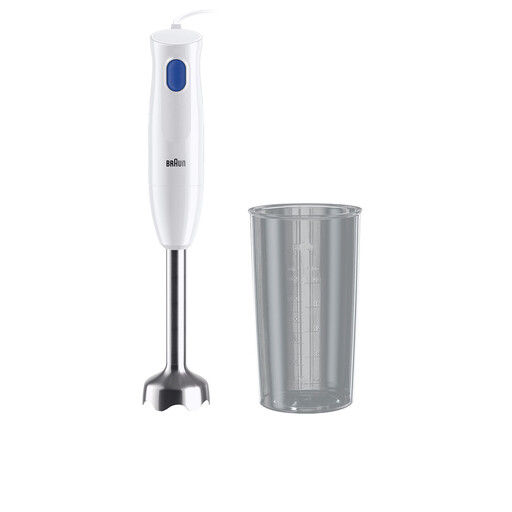
Why this choice suits this profile : With its 450 W motor, single-speed control and 600 ml beaker, this model focuses on the essentials for everyday preparations and is immediately easy to use.
Its design avoids a build-up of unnecessary accessories, and the blending foot can be removed using the EasyTwist system.
Simple controls, a stated weight of 0,626 kg and dishwasher-compatible parts.
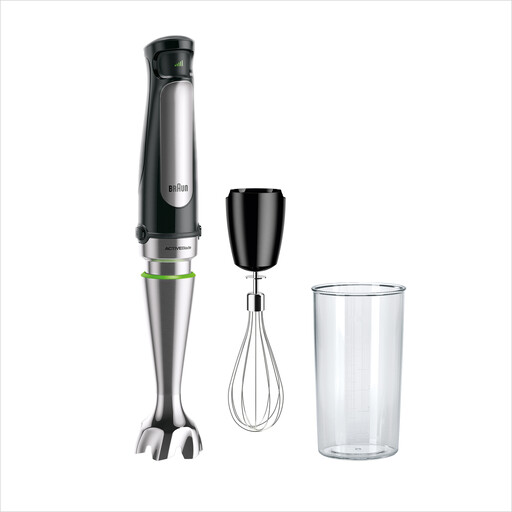
Why this choice suits this profile : With its 1,000 W motor, SmartSpeed control and accessories for whisking, chopping and mashing, it is aimed at kitchens where varied recipes are prepared regularly.
The accessories are clearly identified: blending foot, whisk, chopper, masher and beaker.
ACTIVEBlade technology, pressure-controlled speed adjustment and the EasyClick Plus system.
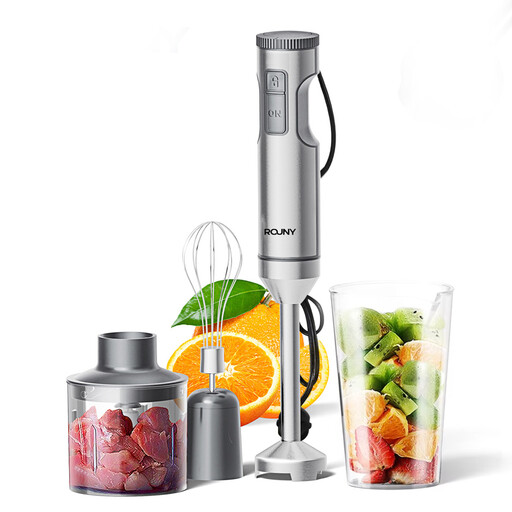
Why this choice suits this profile : With a stated rated power of 1,000 W, a maximum power of 1,200 W and variable-speed control, it is suitable for those who switch between soups, sauces, smoothies, whipped preparations and chopping.
The product details specify a maximum operating time of one minute, followed by one minute of rest. This makes it easier to plan preparations without running the motor continuously.
Stainless steel blending foot and blades, 500 ml chopper bowl, 700 ml beaker and accessories that can be washed at 60 °C.
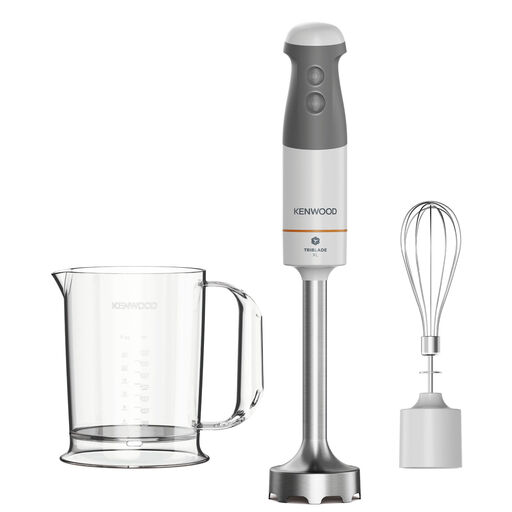
Why this choice suits this profile : Its blending foot is stated to be 35 % wider and its shaft 20 % longer, making it easier to reach the bottom of deep containers.
The dimensions of the blending foot are specified, allowing you to check that it is compatible with your saucepan before buying.
850 W motor, adjustable speed with turbo mode, whisk and 500 ml beaker included.
To achieve a smooth texture with a soup blender, cut the vegetables into similarly sized pieces and gently move the blending foot up and down. Never start the appliance outside the preparation. For a smoothie, add enough liquid and avoid hard foods unless the instructions specifically allow them.
After use, unplug the appliance before removing an accessory. Rinse the blending foot promptly to prevent residue from drying on it. The motor unit must never be immersed in water. For hot preparations, allow them to cool in line with the maximum temperature specified by the manufacturer: some Philips models state a limit of 80 °C, while the BLACK+DECKER BXHBA601E model specifies a limit of 60 °C.
We have put together a complete, real-time updated list of products that meet these strict selection criteria and the requirements of European safety regulations.
For everyday use, 600 to 700 W is a comfortable range for soups, compotes, sauces and simple smoothies. If you often prepare thick foods or use several accessories, a higher power rating can offer greater flexibility. However, you still need to observe the recommended breaks.
Yes, provided the instructions allow it and the container is deep enough. The blending foot must be fully immersed before switching the appliance on to help prevent splashes. When working with a hot preparation, check the permitted maximum temperature and handle the saucepan carefully.
The duration depends on the model and the accessory being used. Several products specify a maximum one-minute cycle, while others have different limits. Always consult the instructions, allow the motor to cool between cycles and stop the appliance if you notice an unusual smell or excessive heat.