
Livraison le jour même ou le lendemain

Qualité garantie

Débloquez vos offres de bienvenue: Livraison GRATUITE | Jusqu'à -80 % | 30 jours d'essai gratuits à JoyPlus
Téléchargez l'application
After sterilisation, many adult cats tend to gain weight, particularly if they live mainly indoors. When choosing food for a sterilised cat, however, it is best not to rely solely on the wording on the packaging. The ingredients, daily portion and bag size are just as important as the marketing claims.
Food for sterilised adult cats may contain a moderate level of fat without preventing weight gain if the portion served is too large. The manufacturer’s recommendations are only a starting point: they should be adjusted according to your cat’s weight, activity level, age and body condition.
‘With chicken’, ‘with salmon’ or ‘with beef’ does not necessarily mean that the ingredient in question makes up most of the recipe. Check the full ingredients list and verify the stated proportions. For example, some beef food for sterilised cats lists 16% beef by-products, while a chicken recipe may mention 17% chicken.
Grain-free food for sterilised cats generally replaces wheat or maize with peas, tapioca or other sources of starch. This feature alone does not prove that the recipe will be better tolerated or nutritionally superior. If your cat has a particular sensitivity, ask your vet for advice before changing its diet.
For everyday use, look for the wording ‘complete food’ for sterilised or neutered adult cats. This indicates that the product is designed to meet your cat’s nutritional needs when fed according to the recommended guidelines. The information on the packaging must comply with the applicable European rules for pet food, particularly regarding ingredients, additives and analytical constituents.
Pay particular attention to:
Values are not directly comparable when moisture levels vary significantly. This is particularly important when comparing dry food with wet food for sterilised cats.
An indoor cat often uses less energy than one that regularly goes outside. Food for indoor cats should therefore be served in measured quantities, ideally using kitchen scales rather than relying on volume.
If the packaging recommends a portion for a 4 to 5 kg cat, use it as a guide, then monitor changes in your cat’s weight and body shape. Treats should also be included in its daily calorie intake.
Dry food contains little water. It is therefore essential to provide several bowls of fresh water, or to install a fountain if your cat drinks more from this type of container. Some recipes highlight urinary health support or contain ammonium chloride. These claims describe the product’s formulation, but do not replace a diagnosis or prescribed veterinary diet.
Difficulty urinating, frequent urination or blood in the urine requires prompt veterinary attention.
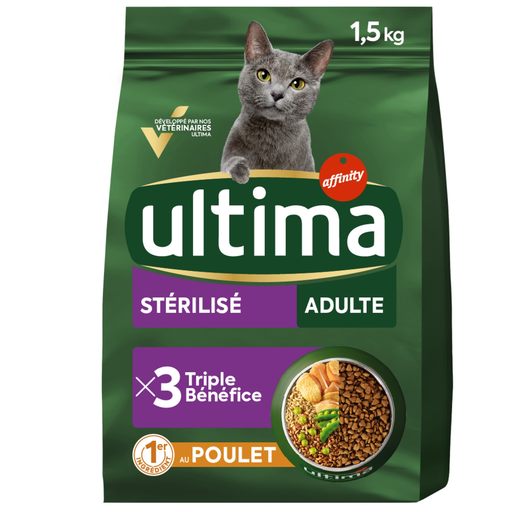
Why this choice suits this profile: At 1.5kg, this bag lets you try a recipe for sterilised cats without ending up with bulky supplies taking up space at home.
The product details state 35% protein, 12% fat and a detailed portion guide of 25 to 80g depending on your cat’s weight.
A recipe with 17% stated chicken, 1,100mg/kg of taurine and fibre from peas and beetroot.
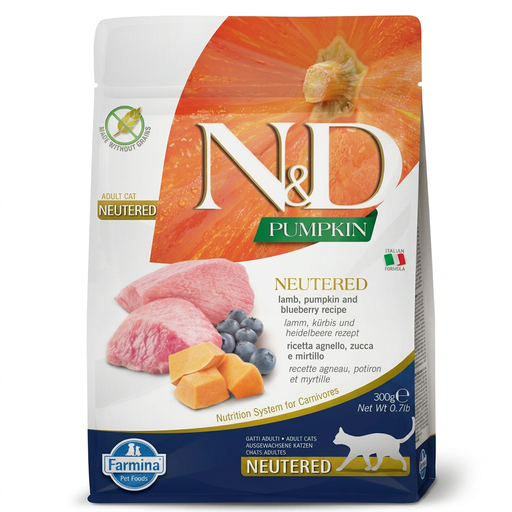
Why this choice suits this profile: The 300g pack lets you check how your cat tolerates a lamb recipe before moving on to a larger bag.
The ingredients list is detailed: lamb, herring, pumpkin, fibre and nutritional additives are all clearly stated.
The product details state 5,000mg/kg of taurine and 400mg/kg of L-carnitine, as well as psyllium fibre.
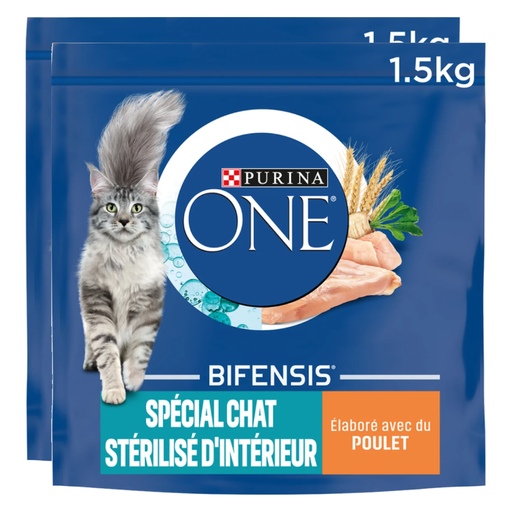
Why this choice suits this profile: The 3kg pack is suitable for households whose indoor cat regularly eats the same recipe.
The recipe is explicitly intended for sterilised adult cats living mainly indoors, with a transition over 7 days recommended.
The product details state 37% protein, 13% fat, 5.5% fibre and 15% chicken.
We have compiled a complete, real-time updated selection of products that meet these strict criteria, as well as European safety requirements.
The amount depends on your cat’s weight, age, activity level and chosen recipe. As a guide, some product details recommend around 40 to 50g per day for a 3 to 4kg cat. Then adjust the portion according to changes in its body shape and the amount of treats it eats.
It may contain minerals or additives intended to support urinary balance, but it is not a treatment. Good hydration remains essential. If your cat shows urinary symptoms, contact a vet promptly.
This is possible if the bag is properly resealed and kept dry, but the food may lose freshness after opening. For a single cat, a 1 to 1.5kg pack is often more practical. Larger bags are better suited to households that regularly use the same recipe, provided they are stored in a clean, airtight container.