
Livraison le jour même ou le lendemain

Qualité garantie

Débloquez vos offres de bienvenue: Livraison GRATUITE | Jusqu'à -80 % | 30 jours d'essai gratuits à JoyPlus
Téléchargez l'application
After sterilisation, an adult cat’s nutritional needs may change. An indoor cat may sometimes get less exercise while still having a healthy appetite. Choosing food for a sterilised cat therefore means looking beyond a prominent claim on the packaging or a marketing promise.
Here are the criteria to consider when comparing dry food, wet food and larger pack sizes intended for sterilised adult cats.
The word “sterilised” means that the recipe is aimed at this category of cats. On its own, it does not guarantee weight loss or even weight stability. Daily portions, activity levels, age and body shape remain the real determining factors.
For example, some products contain 12 to 13% fat, while others contain as much as 16%. These figures should be considered alongside the amount served and the cat’s body condition, never interpreted in isolation.
A high level of crude protein can be beneficial in the diet of a neutered cat, but its source matters just as much. A recipe may combine dehydrated animal proteins with cereals, maize protein or pea protein.
Not all high-protein dry foods are therefore equal. Take the time to check the ingredients list, the order in which they appear and the analytical constituents.
Dry food for sterilised cats is convenient, but it contains far less water than wet food. A clean bowl of water, refreshed regularly, should always be available. For pouches and trays, follow the instructions for refrigerating the food after opening, as well as the storage period stated on the packaging.
For a sterilised adult cat, choose a product clearly labelled complete food and suitable for its age. The products featured here are generally aimed at sterilised or neutered adult cats, with some specifying a minimum age of one year.
Complete food provides the nutrients your cat needs when served according to the manufacturer’s recommendations. Kittens, pregnant or nursing cats and cats being monitored for a particular condition have different nutritional requirements.
When comparing dry foods designed to help with weight control, check at least the following:
As a guide, Purina One Bifensis Sterilised Adult contains 37% protein, 13% fat and 4% crude fibre. The Ultima Sterilized salmon and chicken products list 35% protein and 12% fat.
Grain-free dry food for sterilised cats may suit some animals, but the absence of cereals alone does not validate a recipe. You should also check which ingredients replace them, along with the overall protein, fat and fibre levels.
Access to water is essential for supporting your cat’s urinary health. Some recipes also mention the addition of ammonium chloride or methionine. However, these ingredients are not a substitute for veterinary advice if your cat shows unusual symptoms, pain or difficulty urinating.
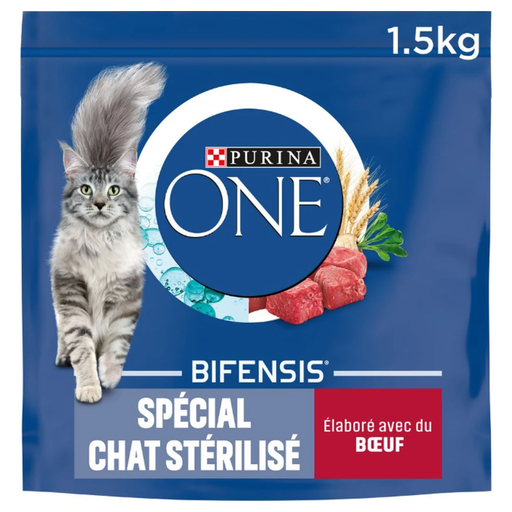
Why this product suits this profile : The 1.5kg bag lets you try a new recipe and make a gradual change without being left with stock that is difficult to use up. The recipe contains 37% crude protein and 13% fat.
The analytical values are clearly displayed, and the manufacturer recommends a gradual transition over seven days.
An accessible pack size, 37% crude protein, 4% fibre and chicory root in the recipe.
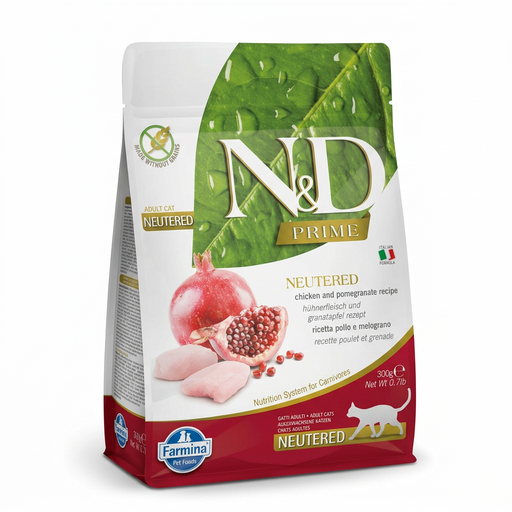
Why this product suits this profile : This small pack lets you try a grain-free chicken recipe with a stated protein content of 46% and fat content of 11%.
The grain-free claim is supported by a detailed ingredients list, so it can be assessed alongside the fat and fibre levels.
A grain-free recipe with a stated fat content of 11%, plus taurine and L-carnitine.
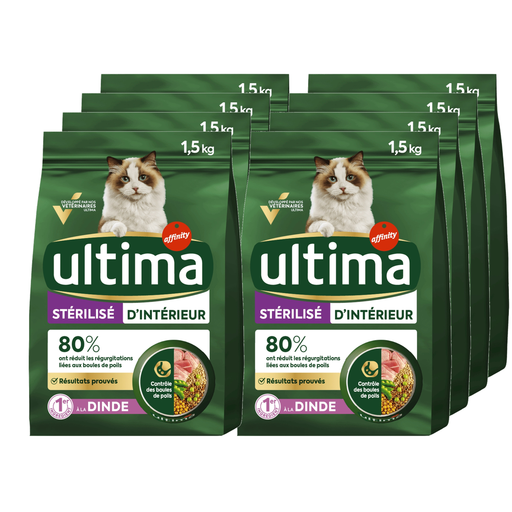
Why this product suits this profile : The 12kg bag is suitable for households feeding several cats or looking to shop less often, provided it is stored in a dry place and an airtight container.
The family-size pack reduces the risk of running out, while also highlighting the need to protect the dry food from moisture and loss of freshness.
A recipe for sterilised indoor cats, containing 15% turkey, 8% barley, plant fibre and 0.7% inulin.
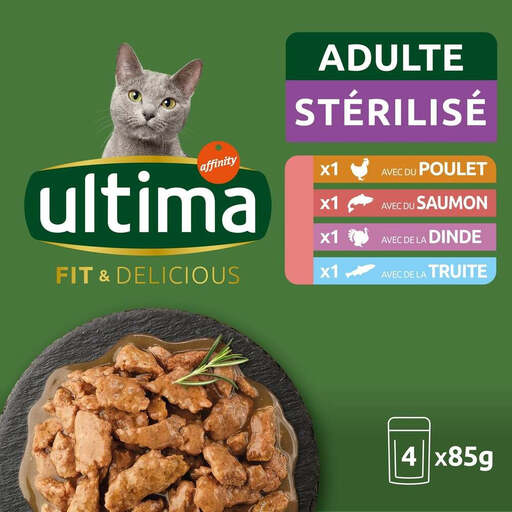
Why this product suits this profile : These pouches provide an individual portion of wet food, making them convenient for varying textures or complementing the dry food given to a sterilised cat.
Each pouch contains 85g, and the packaging describes the recipe as complete for sterilised adult cats. However, the daily portion still needs to be recalculated.
Four varieties, a stated moisture content of 82% and refrigeration for up to two days after opening.
We have put together a complete, real-time-updated selection of products that meet these demanding criteria, as well as European safety standards.
The amount depends on your cat’s weight, age, activity level and the energy density of the dry food. As a guide, some products recommend around 25 to 40g per day for a 2 to 3kg cat, then 40 to 50g for a 3 to 4kg cat. These figures should be adjusted according to the animal’s body condition.
Yes, provided both foods are complete and the total daily portion is recalculated. Do not simply add a portion of wet food to the usual amount: you need to reduce the quantity of dry food accordingly. This combination may also support hydration, but every cat has its own preferences and digestive tolerance.
No, it is not essential. A recipe with or without cereals should be assessed as a whole, taking its ingredients, analytical values and your cat’s tolerance into account. The priority remains a complete food, a carefully controlled portion and sufficient hydration.